
Dental Implants in Mobile, AL — Permanent Tooth Replacement at Rabbit Creek Dental
If you're missing a tooth and wondering whether an implant is right for you, you're in the right place. Rabbit Creek Dental offers dental implants in Mobile, AL for patients across Tillman's Corner, Theodore, Grand Bay, and the surrounding area — and Dr. G will give you a straight answer about whether you're a candidate, what it costs, and what the process actually looks like. No pressure, no overselling. Here's what to expect.
“Made the hour commute from Baldwin County well worth it.”
“Dr. G and Shannon listened to my concerns and goals to restore my smile and quickly laid out a feasible plan that was affordable. They even found a way to fit me in to perform some last minute extractions during my first visit.”— Amber M.
What Is a Dental Implant?
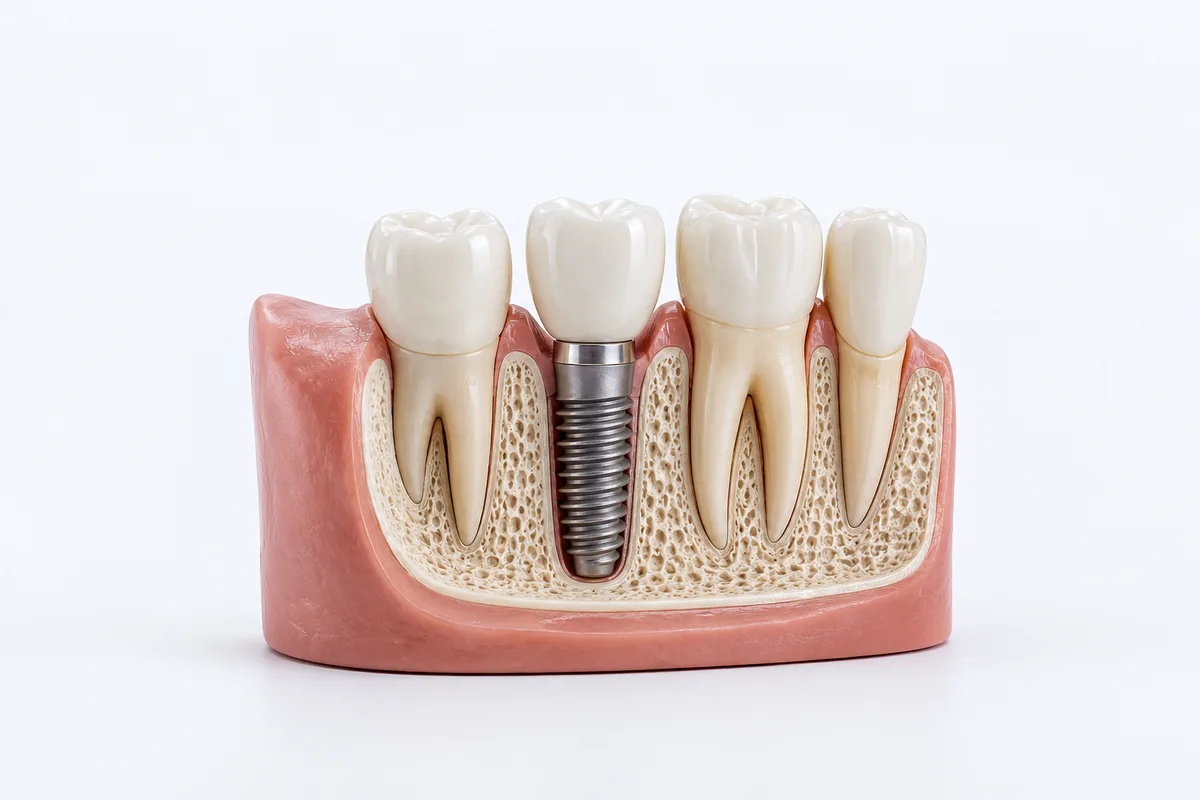
A dental implant is a small titanium post surgically placed into the jawbone to replace a missing tooth root. Once the implant integrates with the bone — a process called osseointegration — it acts as a permanent anchor for a crown, bridge, or denture.
Unlike traditional bridges or removable dentures, implants don't require altering neighboring teeth and prevent the bone loss that naturally occurs when a tooth is missing.
With proper care, dental implants can last a lifetime.
Implants vs. Other Options
Missing a tooth and comparing options? Call us and we'll walk through what makes sense for your situation — no pressure, just honest answers.
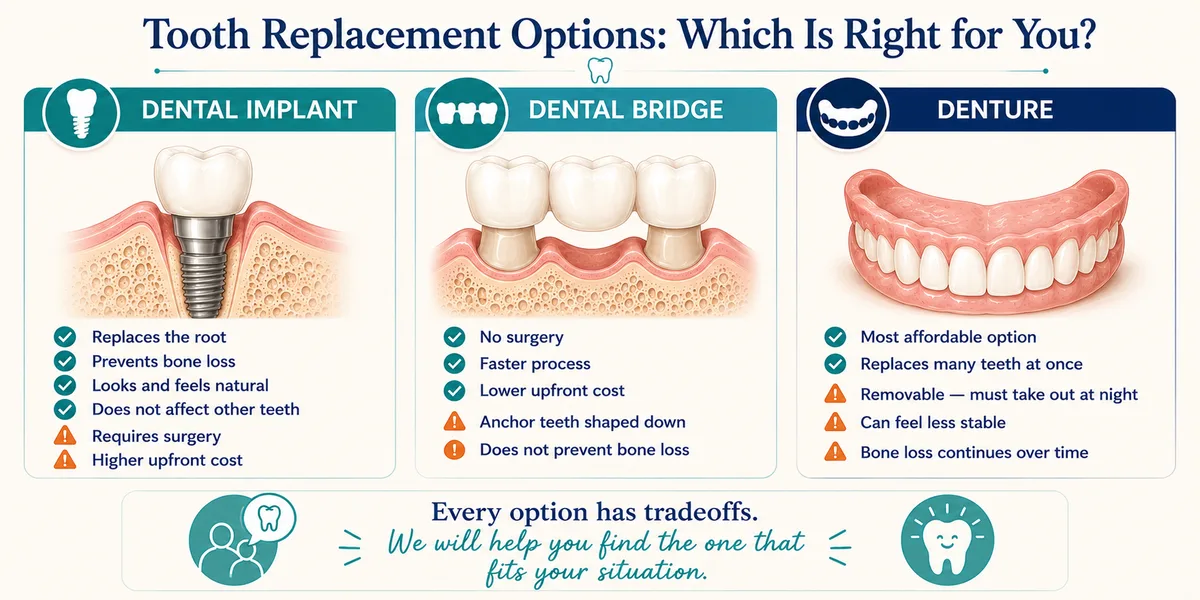
Dental Implant
- Replaces the tooth root and prevents bone loss
- Looks and feels like a natural tooth
- Doesn't affect neighboring teeth
- Requires surgery and higher upfront cost
Dental Bridge
- No surgery, faster process
- Lower upfront cost than implants
- Anchor teeth must be shaped down
- Doesn't prevent jawbone loss underneath
Denture
- Most affordable option, replaces many teeth at once
- Removable — must be taken out at night
- Can feel less stable than fixed options
- Bone loss continues over time
Every option has tradeoffs. We'll help you find the one that fits your situation.
Look and Feel Natural
Implant crowns are custom-crafted to match your existing teeth in color, shape, and size — nobody needs to know.
Preserve Jawbone
When a tooth is lost, the jawbone beneath it begins to resorb. Implants stimulate the bone just like natural tooth roots, preventing this deterioration.
Lifetime Investment
While bridges may need replacement every 10–15 years, dental implants can last a lifetime with good oral hygiene — making them highly cost-effective long-term.
No Diet Restrictions
Eat what you love. Implants function like natural teeth — no limitations on hard or sticky foods that can dislodge dentures.
Advanced Planning Technology
We use CBCT 3D X-ray imaging for precise implant placement planning — evaluating bone density, nerve positions, and sinus locations before any surgery. Learn more about our advanced dental technology, including the CBCT 3D scanner we use for every implant case.
Keep Neighboring Teeth Intact
Traditional bridges require grinding down adjacent healthy teeth. Implants stand alone — your surrounding teeth are never compromised.
The Implant Process, Step by Step
Most implant cases take 3–6 months from start to finish, with relatively little discomfort during healing phases.
-
1
Consultation & 3D Imaging
We start with a comprehensive exam and CBCT 3D scan to evaluate your bone structure and determine candidacy. We'll review the full treatment plan, timeline, and costs before you commit to anything, and we'll explain how to prepare for your implant so you arrive ready.
-
2
Implant Placement
The titanium implant post is surgically placed into the jawbone under local anesthesia. Most patients report minimal discomfort afterward, managed easily with over-the-counter medication.
-
3
Osseointegration (Healing)
Over the next 3–6 months, the implant fuses with your jawbone — creating a permanent, stable foundation. You'll have a temporary restoration during this period, and our guide to what to expect after implant surgery walks you through the recovery day by day.
-
4
Crown Placement
Once healing is complete, a custom-crafted porcelain crown is attached to the implant. We use digital impressions for a precise, natural-looking fit. Your smile is complete.
Go Deeper
These guides walk through the implant process, recovery, and how implants compare to other options — so you can come to your consultation with the right questions.
Dental Implants vs. Dentures vs. Bridges: Which Is Right for You?
Comparing dental implants, dentures, and bridges in Mobile, AL? Learn the pros, cons, costs, and long-term differences at Rabbit Creek Dental.
How Long Does the Dental Implant Process Take? A Complete Timeline
Wondering how long dental implants take in Mobile, AL? Here's a complete timeline from consultation to final crown at Rabbit Creek Dental.
What to Eat (and Avoid) After Dental Implant Surgery
Just had dental implant surgery in Mobile, AL? Here's exactly what to eat, what to avoid, and how long to stay on soft foods for the best healing…
Dental Implants vs. Bridges: Which Is Right for You?
Both can replace a missing tooth — but they work very differently. Here's how to think through the decision.
Read Article →Getting Ready for Your Dental Implant
What to do before surgery — medications, supplements, smoking, and what the day looks like.
Read Article →What to Expect After Dental Implant Surgery
A week-by-week guide to healing — what's normal, what to watch for, and how to protect the implant.
Read Article →Caring for Your Implant Healing Abutment
The week-by-week cleaning routine and the one rule that matters most during healing.
Read Article →Implant-Supported Restorations
Implants can anchor more than single crowns — they're used to stabilize bridges and full dentures without altering healthy neighboring teeth.
Implant-Supported Bridge
When two or more adjacent teeth are missing, implants placed at each end support a bridge — no preparation of natural teeth required. See how implants compare to traditional bridges.
Implant-Retained Dentures
Traditional dentures slip and move. Implant-retained dentures snap onto implants for stability — eliminating adhesive, restoring full chewing power, and slowing the bone loss that occurs under conventional dentures.
What to Expect — Cost, Candidacy, and Timeline
How much do dental implants cost?
A single implant in Mobile typically runs $3,500–$5,500 when placement and restoration are handled in the same office. The final cost depends on whether bone grafting is needed, how many teeth are being replaced, and what your insurance covers. We provide a written cost estimate before any treatment begins. We verify your insurance benefits before your consultation — but insurance coverage can change, and carriers sometimes make different determinations than expected. We'll walk you through what your plan is likely to cover and what to budget out of pocket, so you're not caught off guard. See our insurance and financing options for details, or check out our RCD Dental Savings Plan — members save 20% on treatment costs.
Am I a candidate?
Most adults in good general health are candidates for dental implants. The main requirements are adequate bone volume to support the post and healthy gum tissue. Patients with bone loss from long-term tooth absence may need grafting first, and our overview of healing after a bone graft explains what that recovery looks like. Uncontrolled diabetes, active gum disease, and smoking increase risk but don't automatically disqualify you — these are conversations we have at your consultation after reviewing your 3D imaging.
How long does treatment take?
Most cases run 3–6 months from placement to final crown. The longest phase is osseointegration — the 3–6 month healing period while the implant fuses with the bone. Appointments in between are short. If bone grafting is needed first, add 3–4 months before placement.
Flexible Financing Available
Get the care you need now and pay over time with Cherry financing. Apply in minutes with no hard credit pull.
See If You Qualify“Dr. Gegzna and his staff are top-notch.”
“Dr. Gegzna and his staff are top-notch. They're thorough, kind, and do great work. Can't speak highly enough of them!”— David C.
Dental Implant FAQs
Most adults with a missing tooth are candidates. The main requirements are adequate jawbone density, healthy gums, and no uncontrolled systemic conditions like unmanaged diabetes. The best way to find out is a consultation with 3D imaging — we can assess your bone volume and gum health in one visit and tell you exactly where you stand.
A single dental implant in Mobile, AL typically ranges from $3,000–$5,000, which includes the implant post, abutment, and crown. The final cost depends on whether you need bone grafting, the location of the tooth, and the type of restoration. We provide a detailed treatment plan with pricing before any work begins — no surprises.
From placement to final crown, most implants take 3–6 months. The implant post needs 2–4 months to fuse with the jawbone before the crown is placed. If bone grafting is needed first, add another 3–4 months. Some patients qualify for same-day or immediate-load implants — we'll let you know at your consultation.
The procedure is done under local anesthesia, so you won't feel pain during surgery. Afterward, most patients describe mild soreness for 2–4 days, manageable with over-the-counter pain relievers. Most patients are surprised by how comfortable the recovery is compared to a tooth extraction.
Bone loss doesn't automatically disqualify you. A bone graft can rebuild the jawbone to support an implant — this is one of the most common procedures we do alongside implant planning. Our 3D scan tells us exactly how much bone is present and whether grafting is needed before we recommend a path forward.
Yes. Dental bridges and partial dentures can replace missing teeth without surgery. A bridge uses the adjacent teeth as anchors and is a good option for patients who aren't implant candidates or prefer to avoid surgery. We'll walk you through all options at your consultation so you can make the choice that fits your life.
The implant is the titanium post that goes into your jawbone — it replaces the root of the tooth. The crown is the visible tooth-shaped cap that attaches on top. They're placed in separate stages: the implant first, then the crown after the post has fully integrated with the bone, typically 2–4 months later.
Brush and floss around your implant exactly as you would a natural tooth. Implants don't decay, but the gum tissue around them can still get infected if plaque builds up. Regular cleanings every 6 months are essential for catching early signs of inflammation before they become a problem.
Yes — daily. Use a soft-bristle toothbrush and floss or an interdental brush to clean around the implant and under the crown where it meets the gum. Water flossers work well for implants. Skipping this allows bacteria to accumulate at the gum line, which is the leading cause of implant failure over time.
Implant failure is uncommon — success rates are above 95% at 10 years. When failure does occur it's usually due to infection, smoking, uncontrolled diabetes, or insufficient bone integration. Early-stage failure typically shows as implant mobility or pain, which is why we schedule follow-up visits after placement. Most failed implants can be replaced after the site heals.
Most dental insurance plans don't cover implants, though some cover the crown portion. We'll verify your benefits before your appointment so you know exactly what's covered. If insurance doesn't cover your implant, Cherry patient financing is available, and the RCD Dental Savings Plan gives you 20% off treatment costs.
A standard 2D X-ray doesn't show bone depth, width, or the precise location of nerves and sinuses — all critical for safe implant placement. Our CBCT cone beam 3D scan gives us a full map of your jawbone so we can place the implant in exactly the right position, avoiding complications and maximizing long-term stability.
Yes, and this is more common than you'd think. Oral surgeons place the implant post but don't always provide the final crown — that's a restorative step. Bring your surgical records and implant specs to your appointment and we'll take it from there. We work with implants placed by any surgeon.