
Porcelain Veneers in Mobile, AL — Custom-Crafted at Rabbit Creek Dental
Porcelain veneers are one of the most effective ways to change the look of your smile — fixing chips, gaps, and permanent stains that whitening can't touch. At Rabbit Creek Dental in Mobile, AL, Dr. G will look at your teeth and tell you honestly whether veneers, whitening, bonding, or aligners would actually get you the result you want. If you're exploring your options, our cosmetic dentistry page walks through the full picture. No pressure, no upselling.
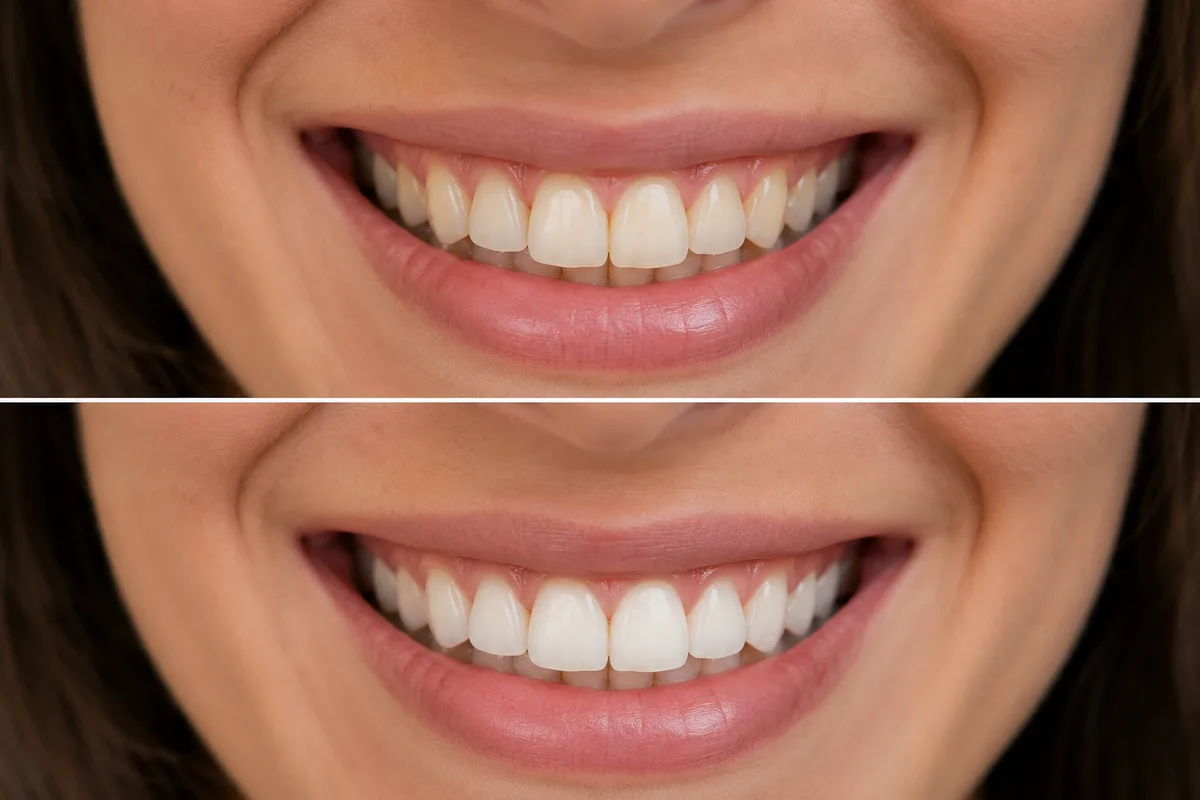
One Solution for Several Concerns at Once
Porcelain veneers are ultra-thin shells of dental porcelain bonded to the front surface of your teeth. What makes them powerful is that a single set can address several things at the same time — chips, cracks, gaps, permanent staining that won't whiten, and teeth that are slightly crooked or uneven.
Each veneer is custom-crafted to match the shape, size, and shade that looks most natural for your face — the goal is a smile that looks like you, not a row of identical bright-white blocks. If you're weighing your choices, it helps to understand how veneers actually work and how they compare to other options before you decide.
Honest take from Dr. G: veneers are a wonderful tool for the right situation, but they involve permanently reshaping healthy enamel. We'll only recommend them when they're genuinely the best way to get you the result you're after.
“The work done on my teeth are magnificent.”
“The dental office and staff are very sweet and professional. The work done so far on my teeth are magnificent. Feel like I've known each and everyone forever, that's how comfortable they make you feel.”— Temeka S.
The Veneer Process, Step by Step
Getting veneers usually takes a few visits. Here's how it works from your first consultation to your final smile.
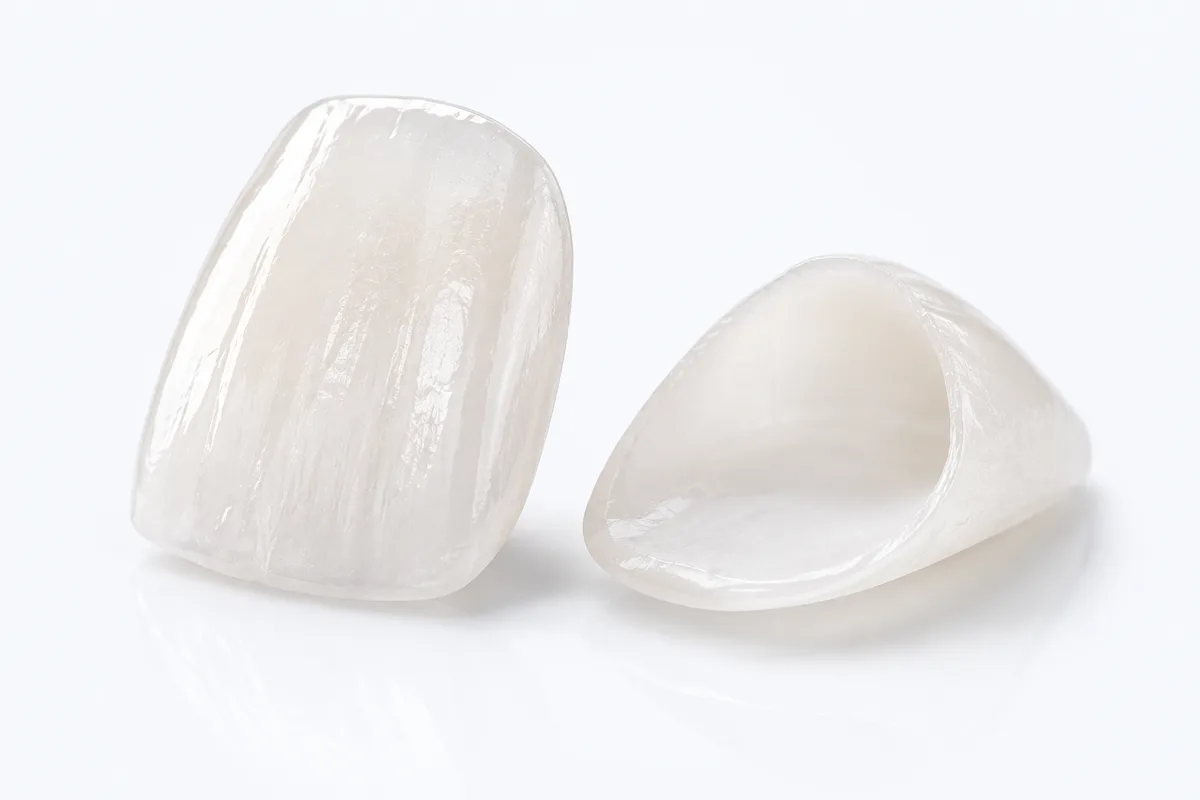
1. Consultation & Smile Design
We start by listening to what you want to change, then examine your teeth and gums to make sure they're healthy enough for veneers. Together we plan the shape and shade that will look natural for your face — this is where your new smile is designed.
2. Preparation & Temporaries
We gently remove a very small amount of enamel so each veneer sits flush and looks natural, then take digital impressions. You'll wear temporary veneers while your custom set is crafted, so you can preview the look and never leave without a smile.
3. Final Placement
When your custom veneers are ready, we check the fit and color, bond them permanently, and fine-tune your bite so everything feels comfortable. You walk out with the finished result — a smile designed specifically for you.
Are Veneers Right for You? An Honest Look
Veneers get marketed heavily, and they're not always the right call. We'd rather have an honest conversation up front than sell you something you didn't need. A few things worth knowing before you decide:
They're not reversible. Because we remove a thin layer of enamel — and enamel doesn't grow back — veneers are a permanent commitment. That's not a reason to avoid them; it's a reason to be sure they're the right choice first.
Sometimes a simpler option gets you there. If your main concern is color, professional teeth whitening may be all you need. If your teeth are slightly crooked, clear aligners can straighten them without touching the enamel. For a single chip, cosmetic bonding is often quicker and more affordable. We'll point you to the most conservative option that will actually work.
Healthy foundation first. Veneers go on healthy teeth and gums. If there's decay, gum disease, or a bite issue, we take care of that first — otherwise even beautiful veneers won't last.
If you grind your teeth, we'll usually recommend a nightguard to protect your investment. Grinding is one of the fastest ways to chip porcelain.
Veneers may be a great fit if you:
- Have chips, gaps, or permanent stains that whitening won't fix
- Want to change the shape or size of several teeth at once
- Have healthy teeth and gums and don't grind heavily
- Want a lasting change and understand it's a permanent one
Which One Does Your Tooth Actually Need?
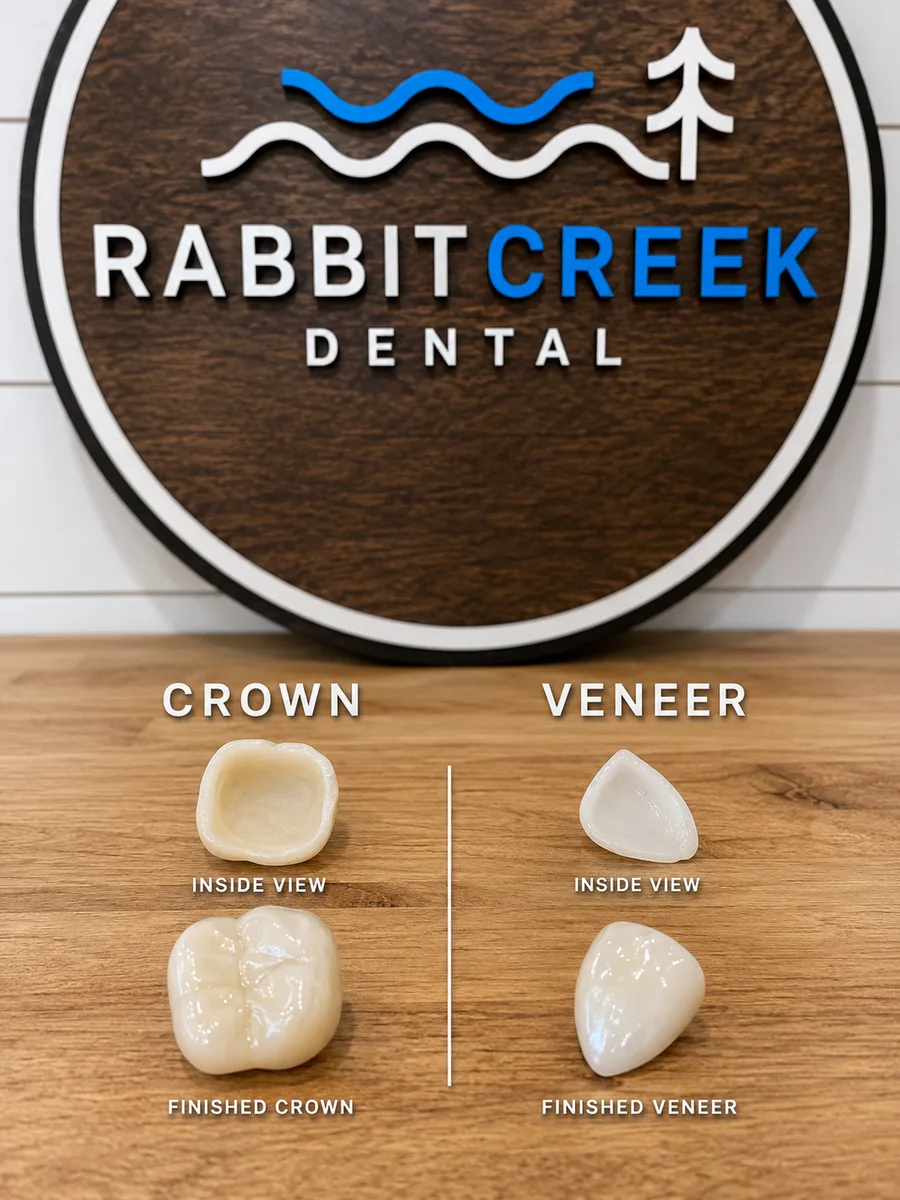
People often use these words interchangeably, but they solve different problems. A veneer covers just the front of a tooth — a cosmetic upgrade for a healthy tooth you want to look different. A crown wraps the entire tooth, and it's what you need when a tooth is cracked, heavily filled, or structurally weak and needs protection.
The simplest way to remember it: veneers are about appearance, crowns are about strength. Plenty of smiles use a mix of both. During your consultation we'll tell you honestly which one each tooth actually needs — we won't put a veneer on a tooth that needs the protection of a crown.
“Consistently excellent care each time.”
“Had multiple procedures over several visits this year. Consistently excellent care each time. Both Dr. Gegzna and Dr. Shipp are outstanding. Billing has always been clearly explained. Staff are gems!”— Irene B.
Learn More Before You Decide
How veneers work, how they compare to crowns, and the other ways to improve your smile.
Porcelain Veneers: What to Know Before You Get Them
What veneers can and can't fix, what the process is really like, and how to know if they're right for you.
Read Article →The Truth About Teeth Whitening: What Actually Works
If your main concern is color, whitening might get you there without veneers. Here's the honest breakdown.
Read Article →Clear Aligners vs. Braces: Which Is Right for You?
For crooked teeth, straightening with aligners can be a more conservative option than veneers.
Read Article →Frequently Asked Questions About Porcelain Veneers
Veneers are priced per tooth, so the total depends on how many you are doing and the specifics of your case. We give you an exact quote after an exam — no surprises. To make it manageable, we offer Cherry financing and an in-house RCD Dental Savings Plan. Book a consultation and we'll walk you through the real numbers before you commit to anything.
Placing veneers usually involves removing a very small amount of enamel so the veneer sits flush and looks natural — and because enamel doesn't grow back, that step is not reversible. We take a conservative approach and only recommend veneers when they're genuinely the right tool. If a more conservative option like whitening or bonding would get you there, we'll tell you.
With good care, porcelain veneers typically last 10 to 15 years or more before they need replacing. Avoiding biting hard objects (ice, pens, fingernails), wearing a nightguard if you grind your teeth, and keeping up with regular cleanings all help them last. Porcelain resists staining well, so they tend to hold their color.
A veneer covers just the front surface of a tooth and is mainly cosmetic — ideal for a healthy tooth you want to look different. A crown covers the entire tooth and is used when a tooth is cracked, heavily filled, or structurally weak and needs protection. In short: veneers are for appearance, crowns are for strength. We'll recommend whichever actually fits your tooth.
That's the whole goal. Each veneer is custom-crafted to match the shape, size, and shade that looks right for your face — not a row of identical bright-white blocks. We design your smile with you and place temporaries first so you can preview the look before the final veneers are made.
No — whitening gel only works on natural tooth enamel, not porcelain. That's why we sequence cosmetic work carefully: if you want whiter teeth and veneers, we whiten your natural teeth first, then match the veneers to your new shade. If you whiten after veneers are placed, the natural teeth will lighten but the veneers won't, creating a mismatch.
Thinking About Veneers?
Start with a consultation and we'll tell you honestly what would actually get you the smile you want — whether that's veneers, whitening, aligners, or something simpler. Serving Mobile, Tillman's Corner, Theodore, Grand Bay, and Dauphin Island.