
Root Canal in Mobile, AL — Stop the Pain, Save the Tooth
We know root canals have a bad reputation. But here is the truth — most patients tell us it was nowhere near as bad as they expected. The goal is simple: save your tooth and stop the pain.
“I was terrified going in. I can honestly say it was painless.”
“Dr. Shipp performed a root canal on me and I can honestly say it was painless. I was terrified going in but he was so calm and reassuring. The whole team made the experience so much better than I expected.”— Jessica L.
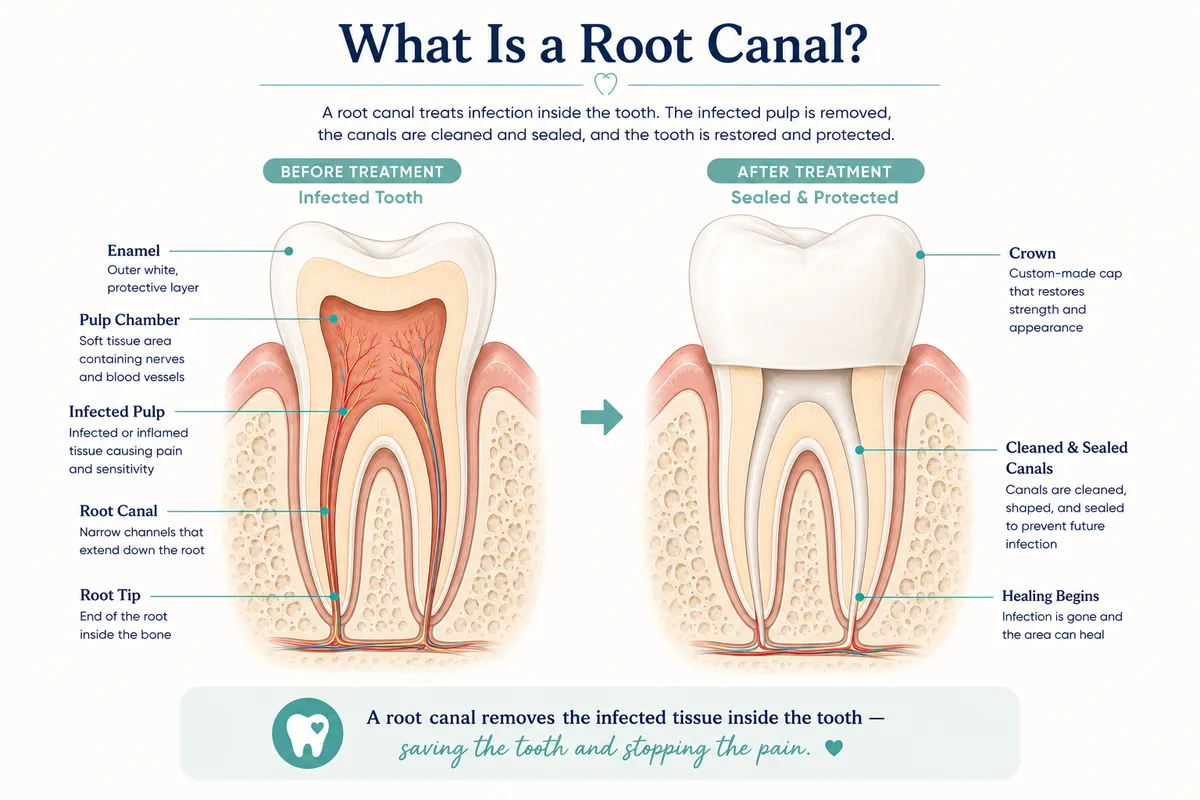
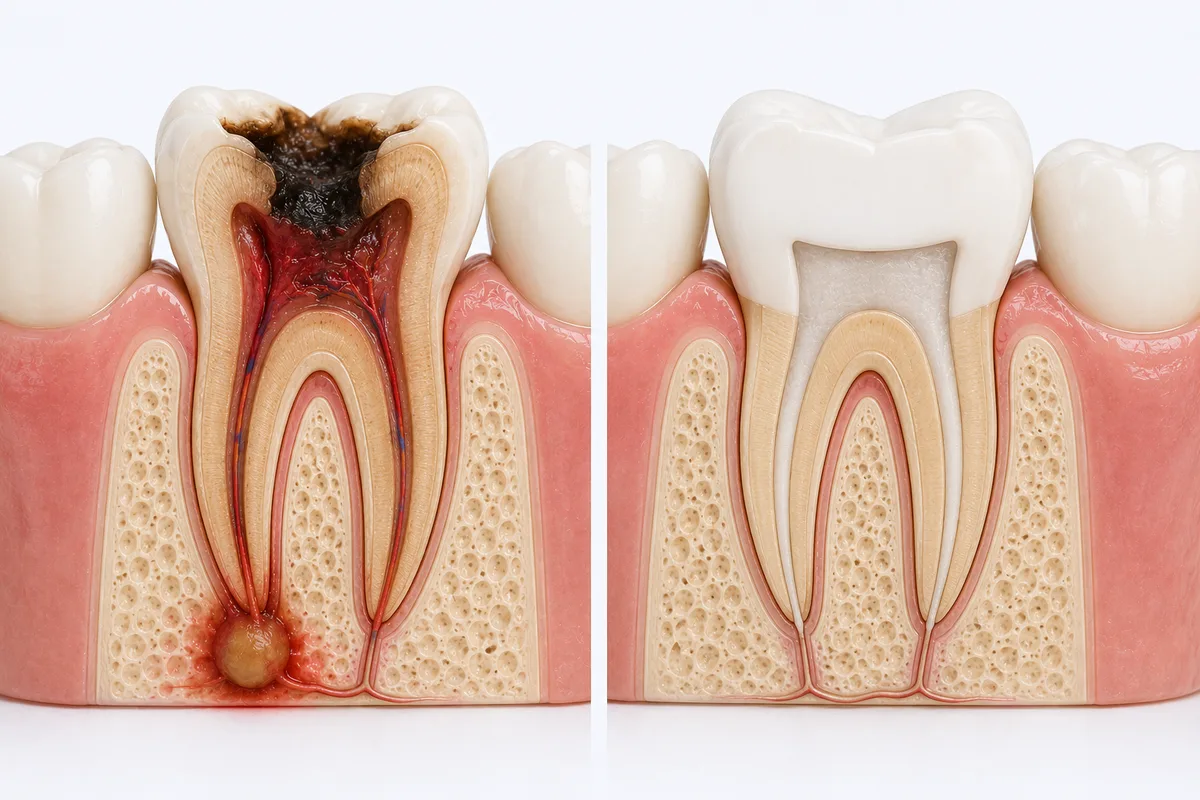
Left: infected pulp and abscess. Right: canals cleaned, sealed, and crowned.
What Is a Root Canal?
Inside every tooth there is a soft tissue called pulp — it contains nerves and blood vessels. When that pulp gets infected or inflamed (usually from a deep cavity, a crack, or an injury), it causes serious pain and can lead to an abscess if left alone.
A root canal is how we fix that. We remove the infected pulp, clean out the inside of the tooth, seal it up, and put a crown on top to protect it. The tooth stays in your mouth and works just like it always did — just without the nerve inside.
The procedure is done under local anesthesia. Most patients feel pressure but not pain. And most are surprised by how straightforward the whole thing is.
“Amazed at how manageable it was.”
“Had a root canal done here and was amazed at how manageable it was. Dr. Gegzna was patient, skilled, and reassuring. Staff checked on my comfort throughout. Clear recovery instructions. Excellent dental office!”— Evangeline C.
Root Canal or Pull the Tooth — Which Is Right for You?
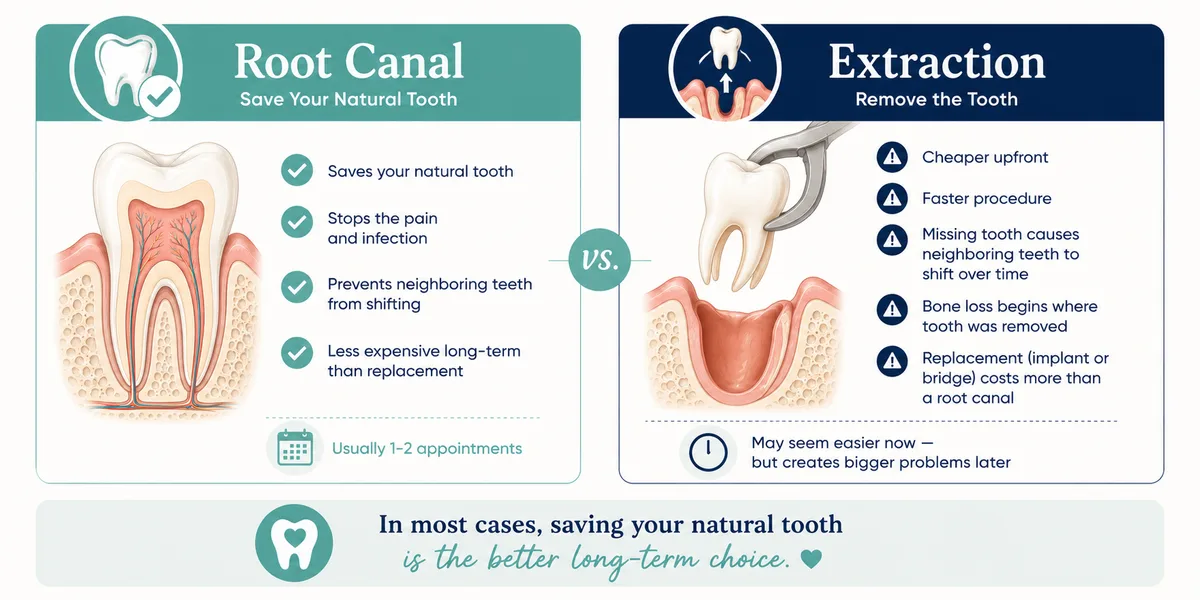
Root Canal
Save your natural tooth
- Saves your natural tooth
- Stops the pain and infection
- Prevents neighboring teeth from shifting
- Less expensive long-term than replacement
Extraction
Remove the tooth
- Cheaper upfront and faster procedure
- Missing tooth causes neighboring teeth to shift
- Bone loss begins where the tooth was removed
- Replacement (implant or bridge) costs more long-term
In most cases, saving your natural tooth is the better long-term choice.
When a tooth gets infected, you have two main options — save it with a root canal, or pull it.
Pulling the tooth is faster and cheaper right now — and if you want to understand the full trade-off, our tooth extractions page walks through what that path actually looks like. We get it. But here is what most people do not think about: once that tooth is gone, the neighboring teeth start to shift toward the gap. The jawbone in that area starts to shrink. And if you want to replace the tooth later — with an implant or a bridge — it costs a lot more than a root canal would have.
A root canal saves the tooth you already have. Your natural tooth is always the best option when we can save it.
That said — sometimes a tooth is too far gone and pulling it really is the right call. We will always give you our honest recommendation and explain your options before anything is done.
“Needed a root canal and was terrified. The procedure was remarkably pain-free.”
“Needed a root canal and was terrified. Dr. Gegzna was patient, skilled, and the procedure was remarkably pain-free. The staff kept checking in on my comfort. Clear instructions for recovery. Excellent dental office!”— Wayne H.
What Happens During a Root Canal
-
1
Numbing the Area
We start by completely numbing the tooth and surrounding tissue. We do not move forward until you are fully numb. Most patients feel nothing more than some pressure during the procedure.
-
2
Removing the Infected Pulp
We make a small opening in the top of the tooth and carefully remove the infected or inflamed pulp from inside. The canals are then cleaned and shaped.
-
3
Sealing the Tooth
Once the canals are clean, we fill and seal them with a material called gutta-percha to prevent future infection. A temporary filling goes on top while you heal.
-
4
Crown Placement
Most teeth that have had a root canal need a crown to protect them afterward. We will schedule that as a separate appointment — usually a couple of weeks later.
Most root canals are completed in one or two appointments. The tooth may be a little sore for a few days after — that is normal and manageable with over-the-counter pain relievers, and our guide on what to expect after a root canal covers how recovery typically unfolds.
“I can barely believe how smooth it went.”
“Dr. Shipp performed a root canal and I can barely believe how smooth it went. No pain, great communication throughout, and clear recovery instructions. The dental team is top notch. Will be my dentist for life!”— Rufus F.
How Do You Know If You Need One?
Severe Toothache
Pain that is sharp, throbbing, or does not go away — especially when chewing or putting pressure on the tooth.
Sensitivity That Lingers
If hot or cold temperatures cause pain that lasts more than a few seconds after the source is removed, that can be a sign the nerve is involved.
Swollen Gums
Swelling or tenderness near a tooth — sometimes with a small pimple-like bump on the gum — can indicate infection at the root.
Darkening Tooth
A tooth that is getting noticeably darker than surrounding teeth may have nerve damage or internal bleeding.
Cracked or Chipped Tooth
A crack or chip that goes deep enough can expose the inner pulp to bacteria, leading to infection over time.
No Symptoms At All
Sometimes infected teeth cause no pain whatsoever. That is why regular X-rays matter — we can catch problems before they become emergencies.
If you are not sure whether what you are feeling is serious, just call us. We would rather you call and it be nothing than wait and have it turn into something bigger.
“I absolutely HATE going to the dentist. These were the nicest people ever.”
“I absolutely HATE going to the dentist and had to have some dental work done. These were the nicest people ever and put me completely at ease.”— Amy S.
Learn More About Root Canals
What to expect during and after treatment — and how to know if you actually need one.
How Much Does a Root Canal Cost in Mobile, AL?
Find out what a root canal costs in Mobile, AL. Real price ranges from FAIR Health Consumer data, plus what affects your cost at Rabbit Creek Dental.
Is a Root Canal Painful? What to Really Expect
Worried a root canal will hurt? Learn what the procedure actually feels like, how long it takes, and what recovery looks like.
What to Expect After a Root Canal
A dull ache for a few days afterward is normal. What to expect and why the crown matters.
Read Article →Do I Need a Crown or a Filling?
Dr. G explains the difference and how to know which one your tooth actually needs.
Read Article →Frequently Asked Questions About Root Canals
The procedure itself should not hurt — we numb everything completely before we start. The tooth may be sore for a few days afterward, but most patients manage that fine with ibuprofen or acetaminophen. The pain you feel before the root canal — from the infection — is almost always worse than the procedure itself.
Common signs include a toothache that won't go away, pain when biting or chewing, prolonged sensitivity to hot or cold, a pimple-like bump on the gum near a tooth, darkening of the tooth, or swelling in the jaw. But some teeth that need root canals have no symptoms at all. The nerve can die quietly without causing pain, and the infection shows up on an X-ray before you ever feel it. That's one of the reasons regular exams matter.
We numb the tooth completely with local anesthetic — most patients are surprised by how comfortable the procedure is. We then access the inside of the tooth, remove the infected or inflamed nerve tissue, clean and shape the canals, and seal them to prevent reinfection. The tooth is then restored, usually with a crown to protect it from cracking. Most root canals take one appointment, though complex cases may require two.
Most root canals take about 60 to 90 minutes. Some complex cases may require a second appointment. We will give you a clear idea of what to expect at your exam.
Most patients go back to normal activities the same day or the next day. Some soreness is expected for two to three days. Avoid chewing hard foods on that side until your crown is placed.
In most cases, yes. A tooth that has had a root canal is more brittle than a healthy tooth, and a crown protects it from cracking. We will let you know at your appointment whether a crown is needed.
Extracting the tooth is an option, but it comes with long-term consequences — shifting teeth, bone loss, and the cost of replacement down the road. In most cases we recommend saving the tooth if we can. We will give you our honest opinion at your exam.
Yes. A root canal removes the nerve and cleans the canals, but the tooth is still vulnerable to new decay, a cracked crown, or a failed seal over time. If bacteria find a way back in — through a leaking restoration or a new cavity — the infection can return. This is called reinfection and may require retreatment or extraction if it can't be resolved.
Retreatment means reopening a tooth that previously had a root canal to clean and reseal the canals again. It's needed when a root canal fails — either because of reinfection, a missed canal, or a restoration that allowed bacteria back in. Retreatment is more complex than the original procedure. We refer most retreatment cases to an endodontist (a root canal specialist) who has specialized equipment for working inside a previously treated tooth.
Most dental insurance plans cover root canals at least partially. Coverage varies by plan. We will verify your benefits before your appointment so you have a clear estimate of your out-of-pocket cost.
Yes, in most cases. Root canals are done under local anesthetic, which wears off within a few hours. You'll be numb but alert. If you've requested sedation, you'll need a driver. Plan for some soreness for a day or two after — over-the-counter pain medication handles it for most patients.
“Absolutely dreading it. Dr. Shipp made it so much easier than I imagined.”
“I had a root canal done here and was absolutely dreading it. Dr. Shipp made the entire process so much easier than I imagined. Pain management was perfect, staff was supportive, and the result was great!”— Betty C.
“Far better than I anticipated.”
“Had a root canal performed by Dr. Shipp and the experience was far better than I anticipated. He was patient, skilled, and reassuring. Staff were supportive. Clear recovery instructions. I highly recommend this dental office!”— Melisande R.
Tooth Pain That Will Not Go Away?
Do not wait on it. Call us and we will figure out what is going on — same day if we can get you in.