
- A dull ache for a few days after is completely normal
- Don't eat while numb, and avoid sticky or hard foods until fully restored
- Getting your crown placed quickly is critical — don't put it off
- Call us if pain or swelling isn't controlled by your medicine
The words "root canal" make a lot of people nervous, but here's the truth: it's a lot like getting a regular filling, and most patients do very well. Let's walk through what it is and what to expect afterward.
What a Root Canal Actually Does
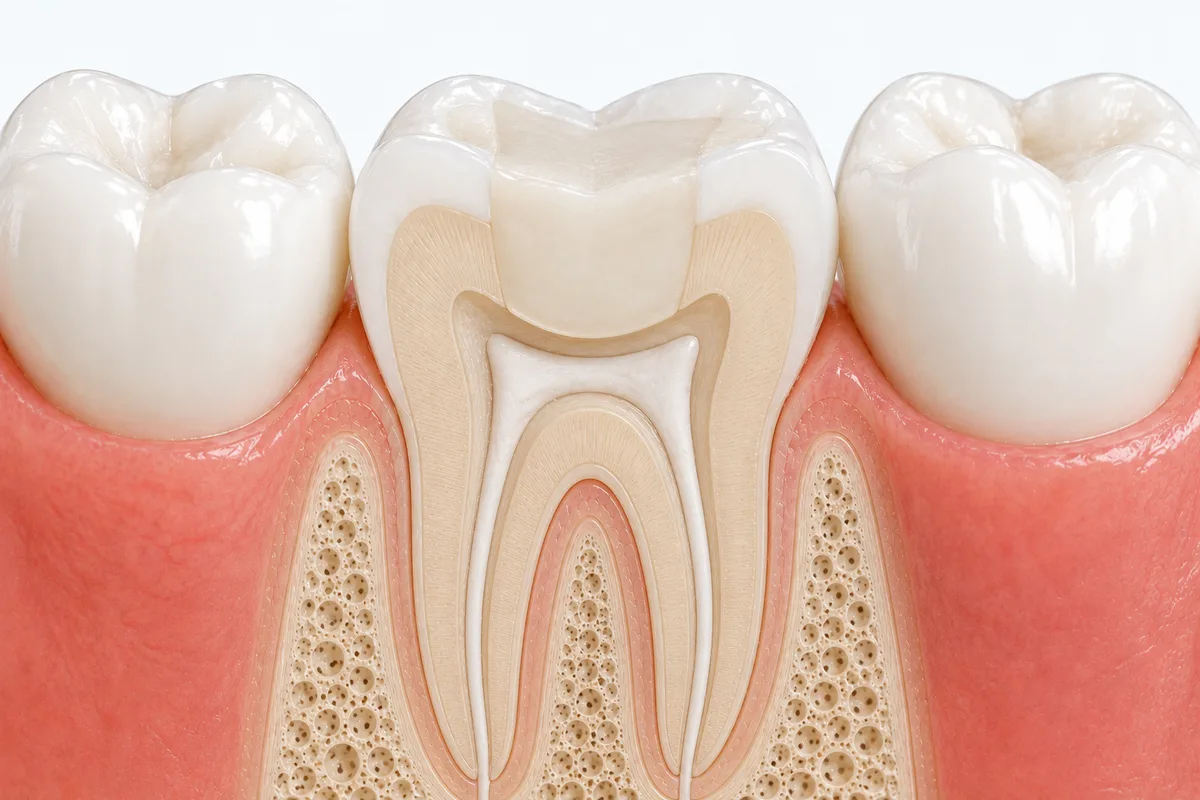
We usually recommend a root canal when decay reaches into or close to the nerve of a tooth, when you've got a toothache that won't quit, or when there's swelling around a tooth. The procedure itself is a lot like a filling. We remove all the decay (which often reaches the nerve), take out the nerve (that's the source of the pain and infection), seal up the space, and place a filling to rebuild the tooth. A root canal can take one or two visits to finish. They work about 90% of the time. Now and then one doesn't fully work — usually because of a hidden crack or a tiny nerve that was hard to spot — but those odds are very much in your favor.
A Little Soreness Is Normal
It's normal to feel some discomfort after a root canal. The tooth may have a dull ache right after, even if it didn't hurt before. For most folks, that soreness sticks around a few days. For some, it can last up to a couple of weeks. That's still within the normal range.
Why You'll Likely Need a Crown
Most of the time, the last step is placing a crown on the tooth. A crown covers the tooth like a ring around a barrel and protects it from cracking. Unless we tell you otherwise, it's really important to get that crown made as soon as possible. Waiting too long can lead to a fracture or even loss of the tooth. Think of the crown as an insurance policy on all the work you just had done.
Taking Care of It
A few simple things:
- Take your pain medicine and antibiotics just how we tell you. An anti-inflammatory like ibuprofen (Advil) can be taken along with them for extra relief if you need it.
- Keep brushing and flossing. Crowns don't last forever, and good habits help protect them.
- Keep up with cleanings every six months and an exam and x-rays once a year.
What to Avoid
- Don't eat while you're still numb, so you don't accidentally bite your lip, cheek, or tongue.
- Stay away from sticky or hard foods that could damage the tooth or pull off your temporary crown before the tooth is fully restored.
Frequently Asked Questions
The procedure itself feels a lot like getting a filling. Afterward, a dull ache for a few days is normal and usually eases up with over-the-counter pain medicine.
In most cases, yes. A root canal tooth can become brittle, and the crown protects it from cracking. Putting it off is the main way these teeth get lost.
Usually a few days, sometimes up to a couple of weeks. If your pain or swelling isn't getting better with your medicine, call us.
About 90% are successful. The small number that don't work out are usually from a hidden crack or an undetected nerve. We'll keep an eye on it for you.

Dr. Joseph Gegzna, DMD is the founder and lead dentist at Rabbit Creek Dental in Mobile, Alabama. He earned his Doctor of Dental Medicine degree from the University of Louisville School of Dentistry and has been a licensed dentist in Alabama since 2014, with more than 12 years of experience in general, restorative, and implant dentistry. After several years practicing as an associate, he founded Rabbit Creek Dental in 2022 to build the kind of patient-first practice he believed in. He has completed advanced implant training through a 92-hour Implant Pathway program with live patient surgery and additional surgical training in impacted third molar extractions through the Koerner Center for Surgical Instruction. He is a member of the American Dental Association and is currently in his third year of the Bulletproof Dental Mastermind program, a continuing education group focused on delivering an exceptional patient experience. Before dentistry, Dr. Gegzna was a licensed pilot, bringing a calm, detail-oriented approach to patient care. Rabbit Creek Dental serves families throughout Mobile.
This article is for educational purposes only and does not constitute medical advice. For personalized guidance about your dental health, please contact our office at (251) 308-0584.