Advanced Dental Technology

Most people leave a dental appointment not fully understanding what was found or why treatment was recommended. We think that's a problem — and we built our office around fixing it.

Technology That Works for You

Every piece of equipment at Rabbit Creek Dental was chosen because it directly improves something about your care: the accuracy of our diagnosis, the precision of our treatment, the speed of your appointment, or the comfort of your visit. Not because it looks impressive in a brochure.

When you can see your own X-rays on the screen, watch the intraoral camera tour your own teeth in real time, and have areas of concern highlighted by AI — dentistry stops being something that happens to you and starts being something you understand.

★★★★★

“I trust this team completely.”

“Excellent dental practice! Dr. Gegzna is outstanding — skilled, patient, and personable. Shannon is a wonderful hygienist. No long waits, clean modern office, transparent billing. I trust this team completely. Highly recommend!”
— Thaddeus R.
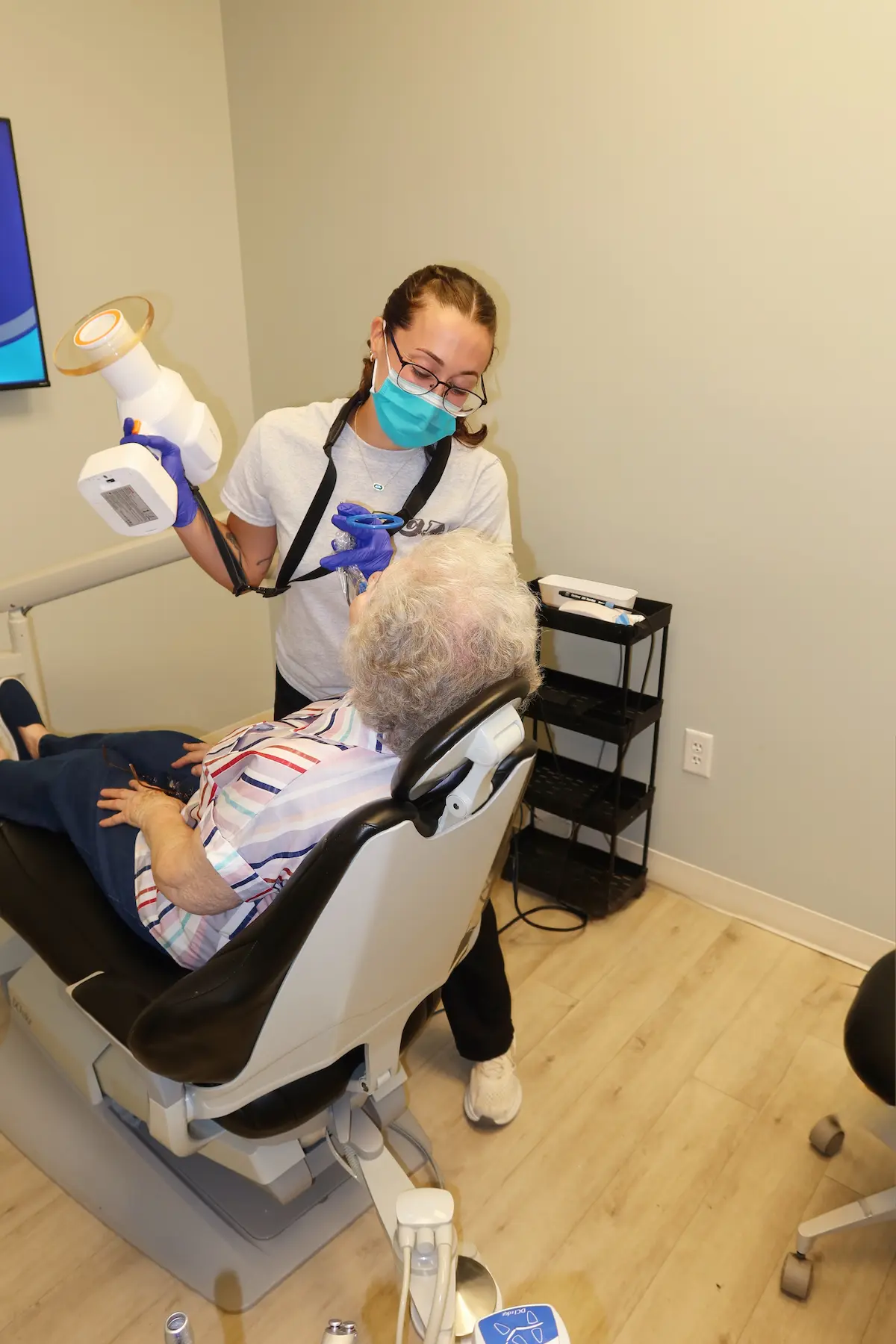
Shannon taking a digital X-ray at Rabbit Creek Dental in Mobile Alabama

Diagnostic Imaging

Digital X-Rays

Our digital X-ray system delivers instant, high-definition images with up to 90% less radiation than traditional film X-rays. Images appear on the screen in seconds, so you and your doctor can review them together in real time — making it easier to understand your diagnosis.

Digital X-rays also allow us to zoom, adjust contrast, and compare images over time to catch changes early. No waiting for film to develop, no chemical processing, and far less radiation exposure.
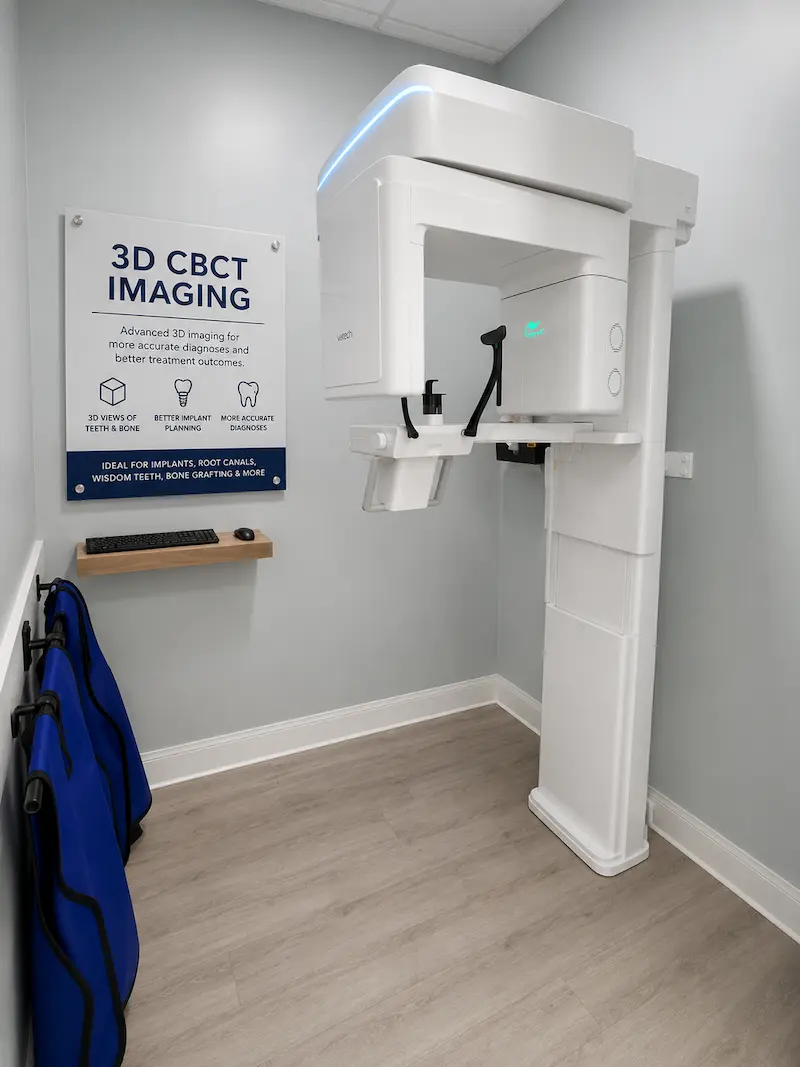
CBCT 3D imaging machine at Rabbit Creek Dental in Mobile Alabama

3D Imaging

CBCT Cone Beam 3D X-Ray

Our CBCT (cone beam computed tomography) scanner creates a three-dimensional image of your teeth, bone, nerves, and surrounding structures. This level of detail is critical for implant planning, complex extractions, and evaluating issues not visible on traditional 2D X-rays.

Before placing a dental implant, we use CBCT to evaluate bone density, identify nerve and sinus positions, and plan the precise angle and depth of placement — dramatically improving safety and long-term outcomes.

Learn about dental implants →

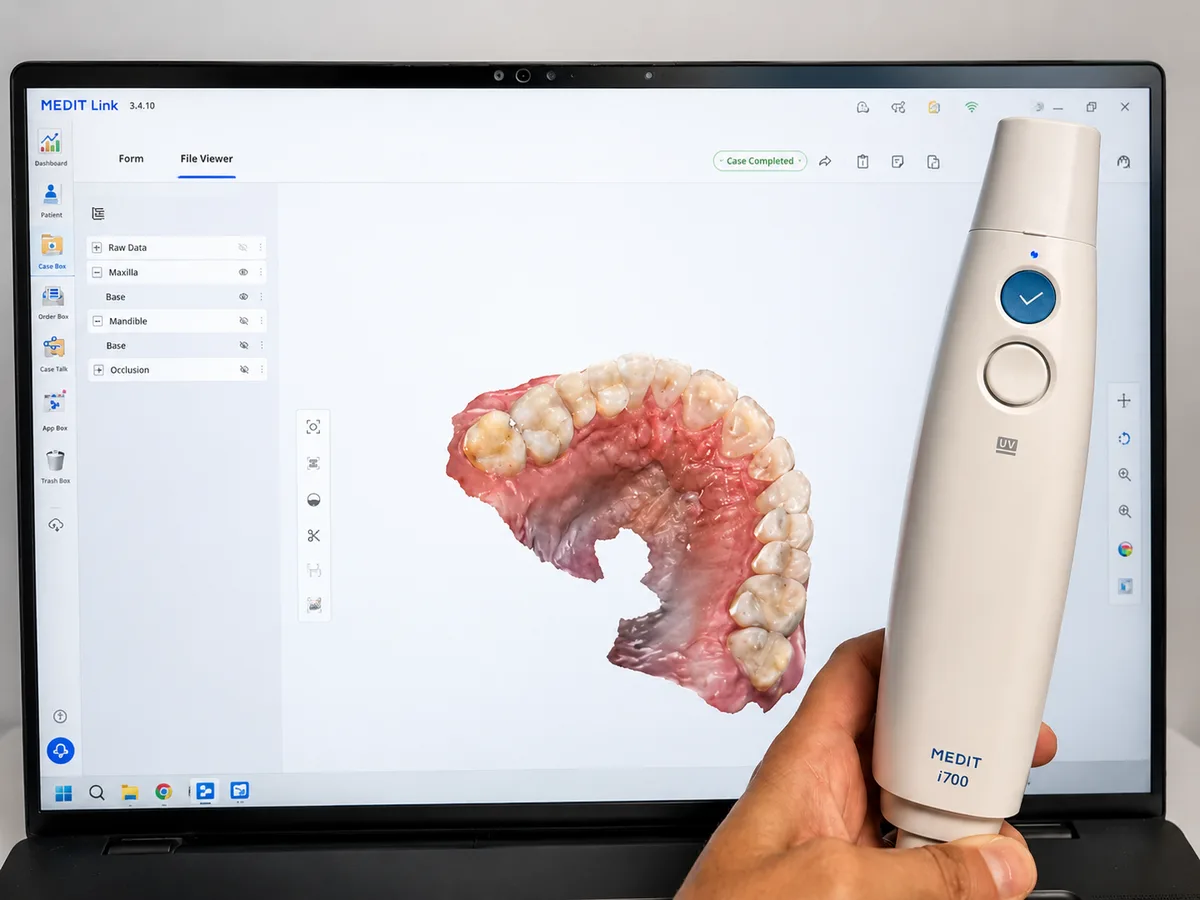
Medit i700 intraoral scanner with 3D scan displayed on screen at Rabbit Creek Dental

Digital Impressions

Intraoral Scanner

Traditional dental impressions involve trays filled with putty-like material — messy, uncomfortable, and sometimes triggering a gag reflex. Our intraoral scanner replaces this process with a small wand that scans your teeth digitally, creating a precise 3D model in minutes.

Digital impressions are used for crowns, veneers, aligners, night guards, and any other restoration requiring a custom fit. The result is more accurate, more comfortable, and faster from scan to final product.

Learn about crowns & bridges →  |  Learn about veneers →

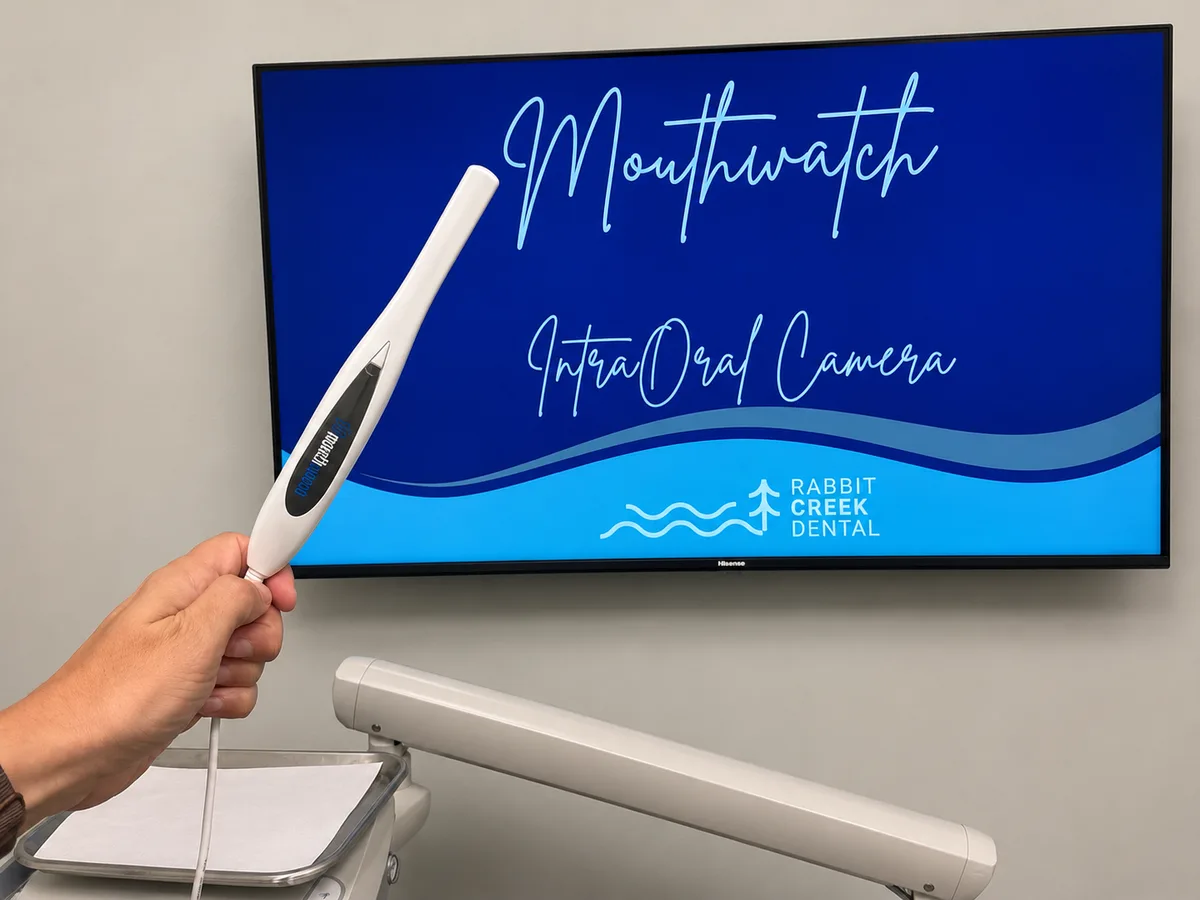
Mouthwatch intraoral camera used at Rabbit Creek Dental in Mobile, AL

Patient Education

Intraoral Cameras

An intraoral camera is a small, pen-sized device with a tiny camera at the tip that gives both you and your doctor a close-up, real-time view of the inside of your mouth on the room's TV screen.

This dramatically changes how dentistry is communicated. Instead of hearing that a tooth has a crack or that a crown is needed, you can see it for yourself. Patients consistently tell us this makes treatment recommendations feel much more understandable and trustworthy.

AI-Assisted Diagnosis

AI X-Ray Analysis

You shouldn't have to just take your dentist's word for it. We use FDA-cleared artificial intelligence software that analyzes your X-rays and highlights areas of concern directly on the image — cavities appear in pink, bone loss measurements appear in red — so you can see the same things we see, not just hear about them.

Our doctors still evaluate every finding and make every treatment recommendation. What AI analysis adds is transparency and consistency — a second set of eyes trained on millions of dental images, making sure nothing gets missed and making it easier for you to understand exactly what's going on in your own mouth.

★★★★★

“I have been a patient here for two years and could not be happier!”

“Outstanding dental practice! Dr. Gegzna is highly skilled and kind. Shannon is a fantastic hygienist. Zero wait times, clean modern office, honest billing. I have been a patient here for two years and could not be happier!”
— Araminta W.
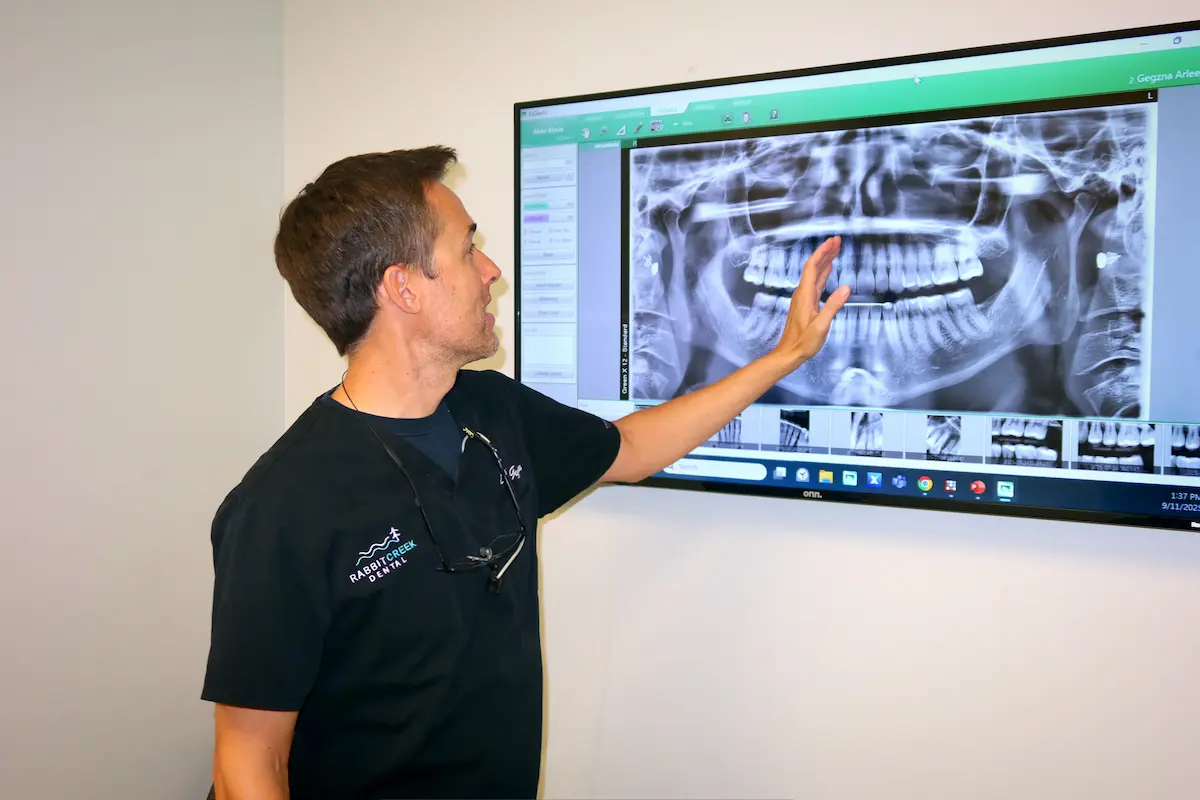
Dr. Gegzna explaining an X-ray on the operatory TV at Rabbit Creek Dental in Mobile Alabama

Patient Education

TVs in Every Operatory

Every patient room has a wall-mounted TV used for patient education and music. During your visit, your doctor can pull up your X-rays and intraoral camera images directly on the screen — so you can see exactly what we see and understand your diagnosis without guesswork.

We also play music to keep the atmosphere relaxed. Patients consistently tell us that being able to see and understand what's happening in their own mouth changes how they feel about treatment.

★★★★★

“They use a large screen to show your X-rays with newer technology. We were very impressed.”

“My 17 year old daughter was seen today and we were very pleased with how attentive, kind, and knowledgeable the staff were. They also use a large screen to show your X-rays with newer technology. We were very impressed and will be back.”
— Roselee F.
FAQ

Frequently Asked Questions About Our Technology

Yes, but very minimally. Digital X-rays emit a fraction of the radiation of traditional film X-rays — a full set of bitewing X-rays exposes you to less radiation than a short airplane flight. We follow the ALARA principle and only take X-rays when they are clinically necessary.

It depends on how recent they are and the quality. We can review X-rays from another office if they were taken within the last 6 months. Printed copies or low-resolution images usually aren't diagnostic quality. Have your previous dentist email the original digital files directly to info@rabbitcreekdental.com before your appointment — that's the fastest way to get us what we need. If your X-rays are older than 6 months, we'll need to take new ones to get an accurate picture of what's going on.

A bitewing X-ray shows the upper and lower back teeth in close contact — the way they bite together. It's the best tool we have for catching cavities between teeth and checking the bone level where your teeth meet your gums. Most insurance plans cover bitewings every 6–12 months because they're that important for routine monitoring.

A panoramic X-ray (sometimes called a "pan" or OPG) is a single wide image that shows your entire mouth — all your teeth, both jaws, your sinuses, and the surrounding bone — in one shot. It gives us a broad overview of your oral health and is especially useful for spotting impacted teeth, bone loss, cysts, and jaw problems. It's usually one of the first X-rays we take for a new patient.

A periapical X-ray shows one or two specific teeth from the crown all the way down to the tip of the root and the surrounding bone. We use it when we need to look closely at a particular tooth — for example, if you're having pain, we suspect an infection, or we're planning a root canal, extraction, or implant in that area.

A panoramic X-ray gives us a broad overview of your jaw, bone levels, sinuses, and overall structure — but it doesn't show the detail between your teeth where cavities most commonly hide. Bitewing X-rays are specifically designed to catch decay between teeth and check the bone levels up close. Periapical X-rays show the full root and surrounding bone of a specific tooth. Each type shows us something different. We only take what we need to make an accurate diagnosis — not as a routine add-on.

A CBCT scan is a 3D cone beam X-ray that gives us a detailed view of your bone structure, nerve positions, and sinus locations. We use it specifically for implant planning and complex extractions — not for routine exams. If we recommend one, we will explain exactly why it is needed for your specific treatment.

An intraoral scanner is a small wand that creates a precise 3D digital model of your teeth, replacing traditional putty impressions. It is faster, more comfortable, and more accurate. We use it for crowns, bridges, implant restorations, and clear aligners.

A small camera about the size of a pen that lets us show you exactly what we see inside your mouth on a screen. If we find a crack, a failing filling, or early decay, you can see it yourself rather than just taking our word for it. It's one of the best tools we have for helping patients understand their own oral health.

We offer lead aprons to patients who want them and use them routinely for pregnant patients. For most patients, the radiation from digital X-rays is low enough that a lead vest isn't clinically required — but we're always happy to use one if it makes you more comfortable.

We recommend X-rays based on your clinical needs, not your insurance schedule. If you're due for X-rays but your insurance won't cover them yet, we'll let you know the out-of-pocket cost upfront so you can decide. We'll never pressure you — but we also won't skip X-rays we believe are clinically necessary without explaining why we think they matter for your care.

We use AI software that analyzes your X-rays alongside the dentist, flagging areas that may warrant a closer look. It does not replace the dentist's judgment — it acts as a second set of eyes. Patients can see the AI highlights on the screen during their exam.

No. Digital X-rays, intraoral cameras, and AI-assisted analysis are part of every routine visit at no additional charge. The CBCT 3D scan is used only when clinically indicated for procedures like implant planning — we will always tell you if there is an associated cost before proceeding.

★★★★★

“Up to date equipment, overall enjoyable experience.”

“Friendly staff, up to date equipment, overall enjoyable experience.”
— Amanda & Stephen H.

See What We See

You deserve to understand exactly what's happening in your own mouth before agreeing to any treatment. At your first visit we'll walk you through your X-rays, show you what the intraoral camera finds, and make sure everything makes sense before we recommend anything.