
Gum Disease Treatment in Mobile, AL — Scaling, Root Planing & Periodontal Care
If your gums bleed when you brush, feel puffy, or have pulled away from your teeth, you may have gum disease — and you're not alone. It's one of the most common conditions we treat at Rabbit Creek Dental in Mobile, AL. With scaling and root planing and ongoing periodontal maintenance, we can stop the damage, protect your teeth, and keep things from getting worse. Our dental cleanings and exams are also where we catch gum disease early, before it requires deeper treatment.
“The procedure sounds scary. The staff made it completely manageable.”
“Had a deep cleaning (periodontal) and while the procedure sounds scary the staff made it completely manageable. They explained each step, checked in on my comfort, and the numbing was effective. Healing well!”— Jennifer B.
Understanding Gum Disease
Gum disease (periodontal disease) is a bacterial infection of the gum tissue and bone that supports your teeth. It starts as gingivitis — redness, swelling, and bleeding gums — and can progress to periodontitis, which causes permanent bone loss and, eventually, loose or missing teeth.
Research also links periodontal disease to systemic health conditions including heart disease, diabetes, and stroke. Treating gum disease isn't just about your mouth — it's about your overall health.
The good news: when caught and treated early, gum disease can be managed effectively without surgery in most cases.
How Gum Disease Progresses
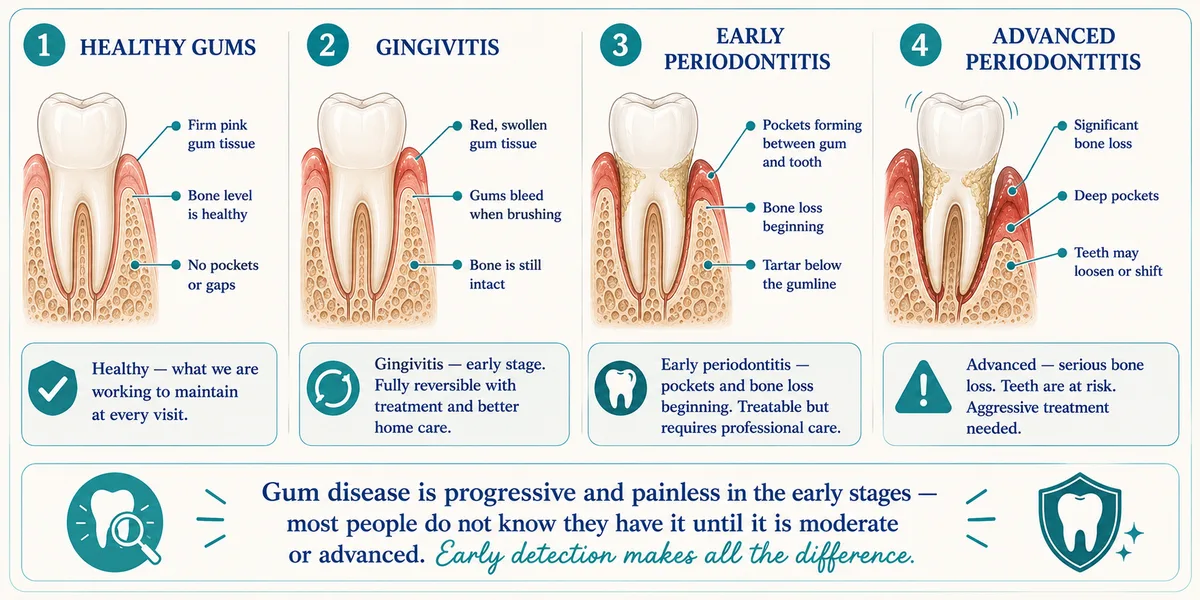
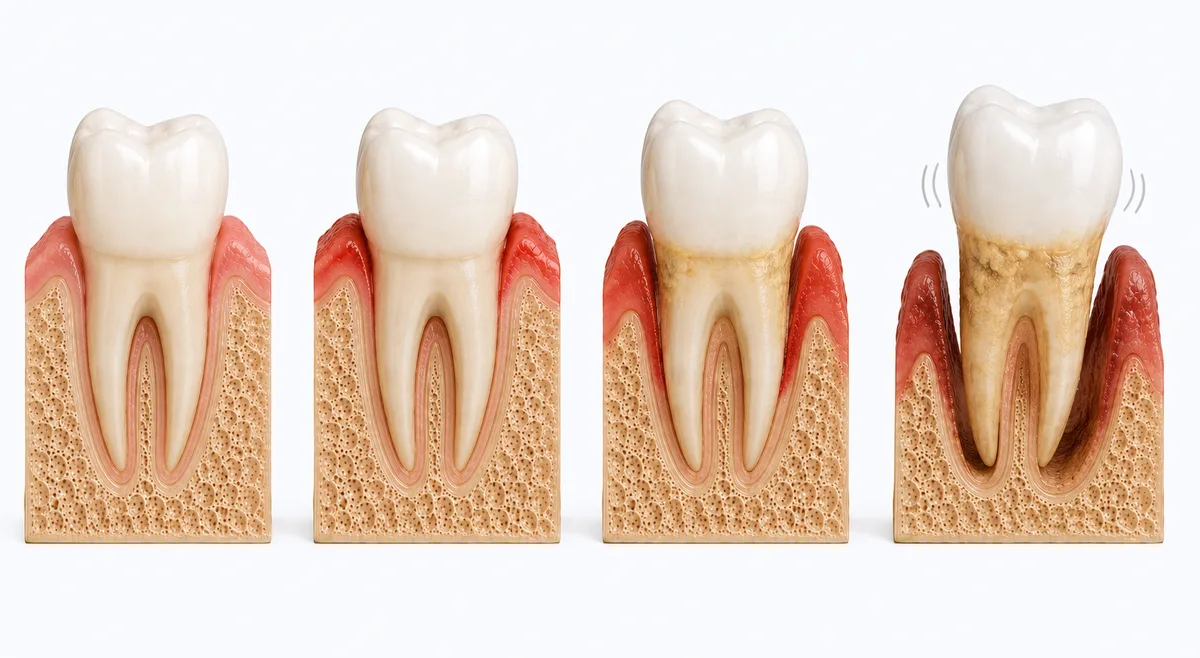
Left to right: healthy gums → gingivitis → early periodontitis → advanced periodontitis.
“I have severe fear of the dentist and EVERY SINGLE TIME they are so kind.”
“Staff is always friendly and caring. I have severe fear of the dentist and EVERY SINGLE TIME they are so kind and accommodating working with me every step of the way. From cleanings to fillings they are truly compassionate. 10/10 love RCD!”— Ciara F.
How We Treat Gum Disease
We tailor periodontal treatment to the stage and severity of your condition. For most patients, non-surgical treatment is highly effective.
Scaling & Root Planing
The most common non-surgical treatment for periodontitis. We use specialized instruments to remove tartar and bacterial deposits from below the gumline (scaling), then smooth the root surfaces (root planing) so gum tissue can reattach. Most patients are treated one quadrant at a time with local anesthesia for comfort, and our guide on what to expect after a deep cleaning covers the soreness and recovery that follow.
Periodontal Maintenance
After completing active gum disease treatment, patients transition to a periodontal maintenance schedule — typically every 3–4 months instead of the standard 6-month recall. These appointments are more thorough than routine cleanings and are critical for preventing recurrence. Gum disease is a chronic condition that requires ongoing management.
Gingivitis Treatment
In its earliest stage, gum disease (gingivitis) is fully reversible with a professional cleaning and improved home care. If we catch gingivitis at your routine exam, we'll clean thoroughly, walk you through better brushing and flossing technique, and schedule a follow-up to confirm your gums have responded.
“I've struggled with dental anxiety my whole life. Rabbit Creek is the first office where I feel genuinely comfortable.”
“I've struggled with dental anxiety my whole life. Rabbit Creek Dental is the first office where I feel genuinely comfortable. They never rush, always explain everything, and Shannon is so gentle during cleanings. Life changing!”— Deborah C.
Who Is at Higher Risk for Gum Disease?
Anyone can develop gum disease, but certain factors increase your risk significantly.
Tobacco Use
Smoking or chewing tobacco is one of the most significant risk factors for gum disease, and it also impairs healing after treatment.
Diabetes
People with diabetes have higher rates of periodontal disease, and untreated gum disease can make blood sugar harder to control.
Certain Medications
Some medications reduce saliva flow, which protects gum tissue from the bacterial buildup that causes disease.
Genetics
Some people are more susceptible to gum disease regardless of home care habits — if it runs in your family, more frequent monitoring matters.
Hormonal Changes
Pregnancy, menopause, and puberty can make gums more sensitive and reactive to bacterial plaque.
Poor Nutrition
Low vitamin C intake is associated with increased gum disease risk and slower healing after treatment.
Stress
Chronic stress can impair the immune system's ability to fight infection, including the bacteria that cause periodontal disease.
If you have risk factors, more frequent cleanings and careful monitoring are especially important.
Gum Disease Isn't Just a Mouth Problem
Research has established strong links between periodontal disease and serious systemic health conditions. Treating gum disease is not just about saving teeth.
Heart Disease
People with gum disease are significantly more likely to develop heart disease. The inflammatory response triggered by periodontal bacteria has been linked to arterial inflammation and increased risk of heart attack and stroke.
Diabetes
The relationship goes both ways. Diabetes increases the risk of gum disease, and untreated gum disease makes blood sugar harder to control. Patients with both conditions often see improvement in diabetes management when gum disease is treated.
Pregnancy Complications
Periodontal disease during pregnancy has been linked to preterm birth and low birth weight. Pregnant patients with gum disease are encouraged to have it treated promptly.
Respiratory Disease
Bacteria from infected gums can be inhaled into the lungs, contributing to respiratory infections and worsening conditions like COPD and pneumonia.
Alzheimer's Disease
Emerging research suggests a link between periodontal bacteria and the development of Alzheimer's. The evidence is still developing but the association is being studied seriously.
“No judgment at all. Dr. G put together a treatment plan that made sense and was affordable.”
“Came for an exam after years away from the dentist. No judgment at all. Dr. G was incredibly kind and put together a treatment plan that made sense and was affordable. Shannon did my cleaning gently and professionally.”— Mark A.
“Very caring, non-judgmental, and helped with my anxiety.”
“AMAZING first experience there! Very caring, non-judgmental, and helped with my anxiety!”— Abby W.
Learn More About Gum Disease Treatment
What to expect after a deep cleaning and how to care for your gums during recovery.
Frequently Asked Questions
Bleeding gums are not normal — they're one of the earliest signs of gum disease. Healthy gums don't bleed with normal brushing and flossing. If your gums bleed regularly, schedule an appointment so we can evaluate what's causing it. In many cases, improved home care combined with a thorough cleaning is all that's needed.
That's exactly the problem — gum disease is usually painless until it's advanced. Bleeding when you brush, puffy or receding gums, persistent bad breath, and teeth that feel loose are all warning signs. But many patients have active gum disease with no symptoms at all. That's why measuring your gum pockets at every exam matters — it's the only reliable way to catch it early before bone loss becomes significant.
Gum disease is caused by bacterial buildup — plaque and tartar — along and below the gumline that triggers inflammation in the gum tissue and surrounding bone. The most common contributors are inconsistent brushing and flossing, smoking, diabetes, dry mouth, certain medications, and genetics. Some patients do everything right and still develop gum disease because of how their immune system responds to bacteria.
Scaling and root planing (sometimes called a deep cleaning) is a non-surgical procedure to treat active gum disease. We remove plaque and tartar from below the gumline and smooth the root surfaces so the gums can reattach and bacteria have less surface area to cling to. It's typically done in two appointments — one side of the mouth at a time — with local anesthetic so you're comfortable throughout.
Scaling and root planing is performed with local anesthesia, so the procedure itself should be comfortable. After treatment, you may experience some soreness, sensitivity, or mild bleeding for a few days. Over-the-counter pain relievers and a soft diet usually manage this well. Most patients are surprised at how much more comfortable it is than they expected.
Gum disease doesn't go away on its own. Without treatment, the infection progresses — gum pockets deepen, bone is destroyed, and teeth can loosen and eventually be lost. Gum disease has also been linked to systemic health issues including heart disease, diabetes complications, and stroke. Treating it early is almost always simpler and less expensive than waiting.
Gingivitis (the earliest stage) is completely reversible with professional treatment and improved home care. More advanced periodontitis cannot be fully "cured" — but it can be controlled. With proper treatment and consistent periodontal maintenance appointments, most patients successfully stop the progression of the disease and keep their teeth for life.
For scaling and root planing, we typically treat the mouth in two appointments — two quadrants at a time, spaced about one week apart. After completing active treatment, we schedule a re-evaluation 4–6 weeks later to assess how your gums have responded. From there, we establish your ongoing periodontal maintenance schedule.
Not right away — and this surprises a lot of patients. After scaling and root planing, you'll be placed on a perio maintenance schedule, typically every 3–4 months. Perio maintenance is different from a routine prophy cleaning — it includes monitoring your gum pockets, cleaning below the gumline, and making sure the disease stays controlled. Most insurance plans cover perio maintenance at 80% rather than 100%, and many only cover 2 visits per year even though 3–4 is the clinical standard. We'll help you understand what your plan covers and what to expect out of pocket so there are no surprises.
Most dental insurance plans cover scaling and root planing, typically at 50–80% after the deductible. Coverage for periodontal maintenance varies by plan. We'll verify your benefits before treatment and give you a clear cost estimate. If you don't have insurance, ask about our financing options.
The majority of gum disease cases can be treated effectively at a general dental office. We handle non-surgical periodontal treatment in-house. If your case is severe or involves significant bone loss requiring surgical intervention, we will refer you to a trusted periodontist in the Mobile area. We'll always be transparent with you about what level of care your situation requires.
Gum Disease Treatment Near You
Rabbit Creek Dental is located in Tillman's Corner and serves patients from across southwest Mobile County and beyond.
Tillman's Corner
Our home — right off Rangeline Road
West Mobile
Minutes away via Airport Blvd
Semmes
Easy access via Highway 98
Theodore
A short drive south on Rangeline
Grand Bay
Serving the Grand Bay community
Saraland & Chickasaw
North Mobile County patients welcome
5000 Rangeline Xing Dr S Suite D, Mobile, AL 36619 | (251) 308-0584
Related Services at Rabbit Creek Dental
Dental Cleanings & Exams
Routine cleanings are the best prevention against gum disease — and the first step in monitoring your gum health.
General Dentistry
Fillings, crowns, root canals, extractions, and everything else your teeth need — all in one place.
Dental Implants
Lost a tooth to gum disease? Dental implants can restore your smile — once your gum health is stabilized.
Concerned About Your Gum Health in Mobile, AL?
Don't wait until gum disease becomes a bigger problem. Call Rabbit Creek Dental today — we'll evaluate your periodontal health and explain your options clearly.