
Dental Crowns in Mobile, AL — Same-Day Appointments at Rabbit Creek Dental
Cracked tooth? Large failing filling? Need a crown after a root canal? Dr. G and Dr. Shipp at Rabbit Creek Dental on Rangeline Road place zirconia and porcelain crowns that look natural and hold up — and we can usually get you in fast. Below is exactly what the process looks like and what to expect.
“Dr. G fixed a gap in my molars — now I can eat steak without it getting caught!”
“The staff are excellent! Dr. G fixed a gap in my lower right molars and now I can eat steak without it getting caught in the gap! The assistants here are also amazing! The front desk staff make you feel at home every visit!”— Kristi G.
“Had a crown done and it looks and feels perfect.”
“Had a crown done and it looks and feels perfect. Dr. Gegzna is very skilled. The temporary crown process was explained clearly, and billing was transparent throughout.”— Jessica B.
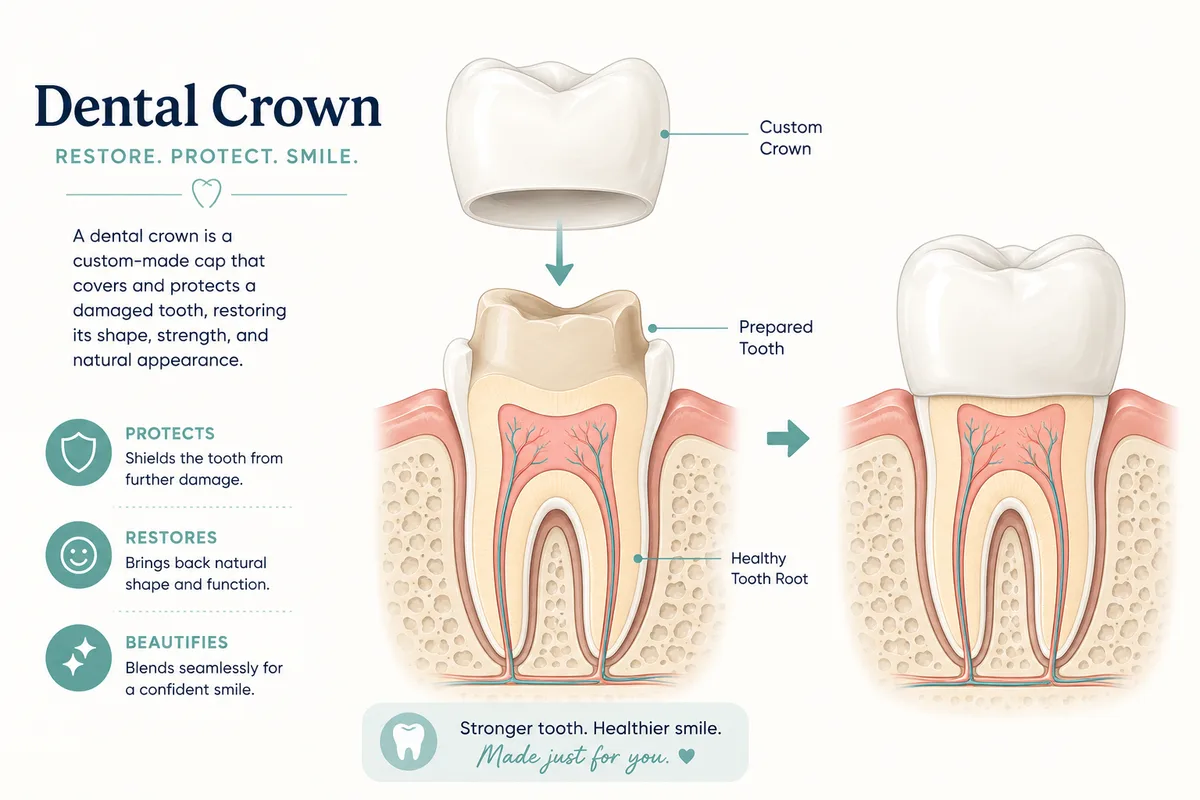
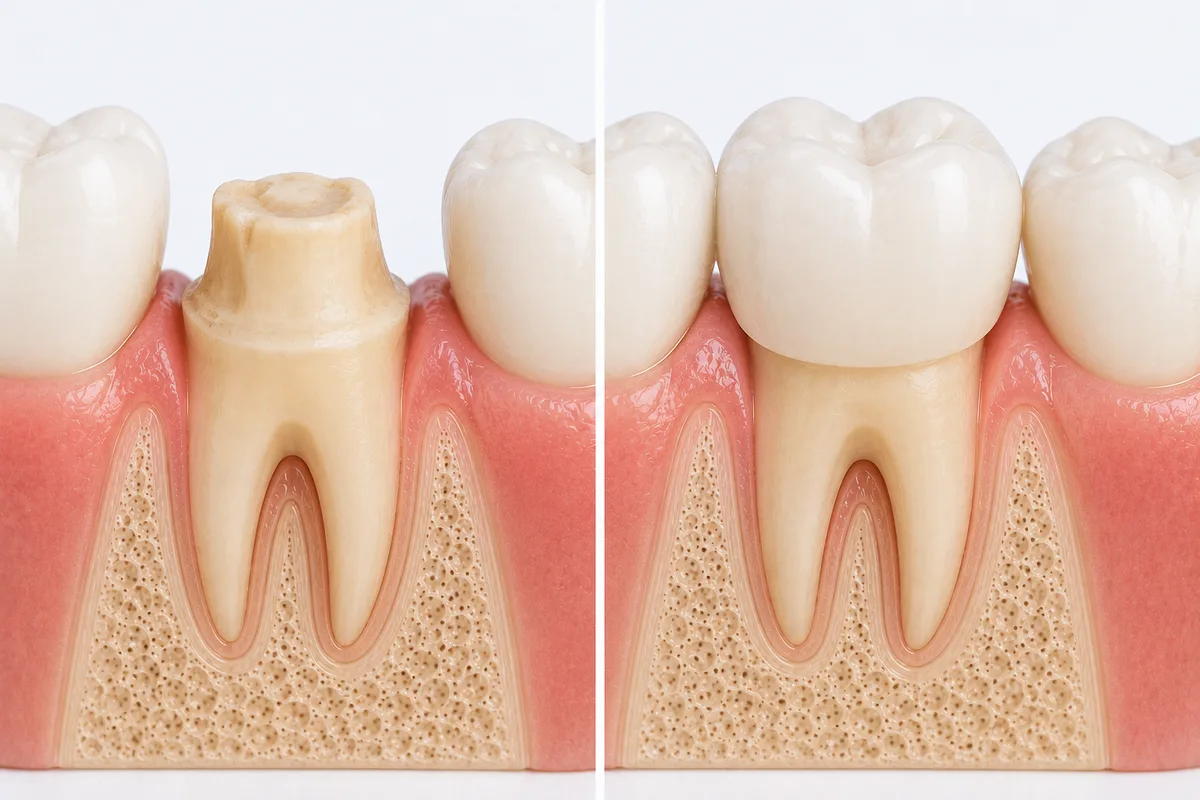
Left: tooth prepared for the crown. Right: finished crown in place.
What Is a Dental Crown?
A dental crown is a custom-made cap that fits over a damaged, cracked, or weakened tooth. Once it is placed, the crown covers everything above the gum line — protecting what is left of the tooth and restoring it to its normal shape and function.
Most people need a crown when a tooth has a crack, a large cavity that is too big for a filling, or when a tooth has already had a root canal and needs extra protection. If Dr. G or Dr. Shipp recommends a crown, it is because the tooth needs more support than a filling alone can provide.
Which Type of Crown Is Right for You?
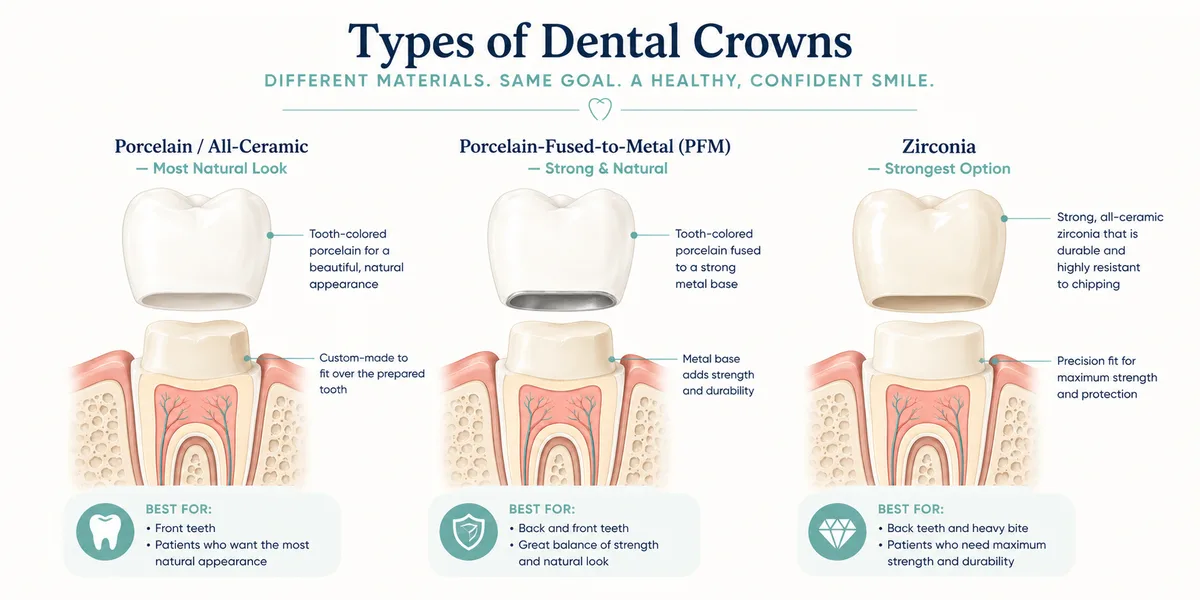
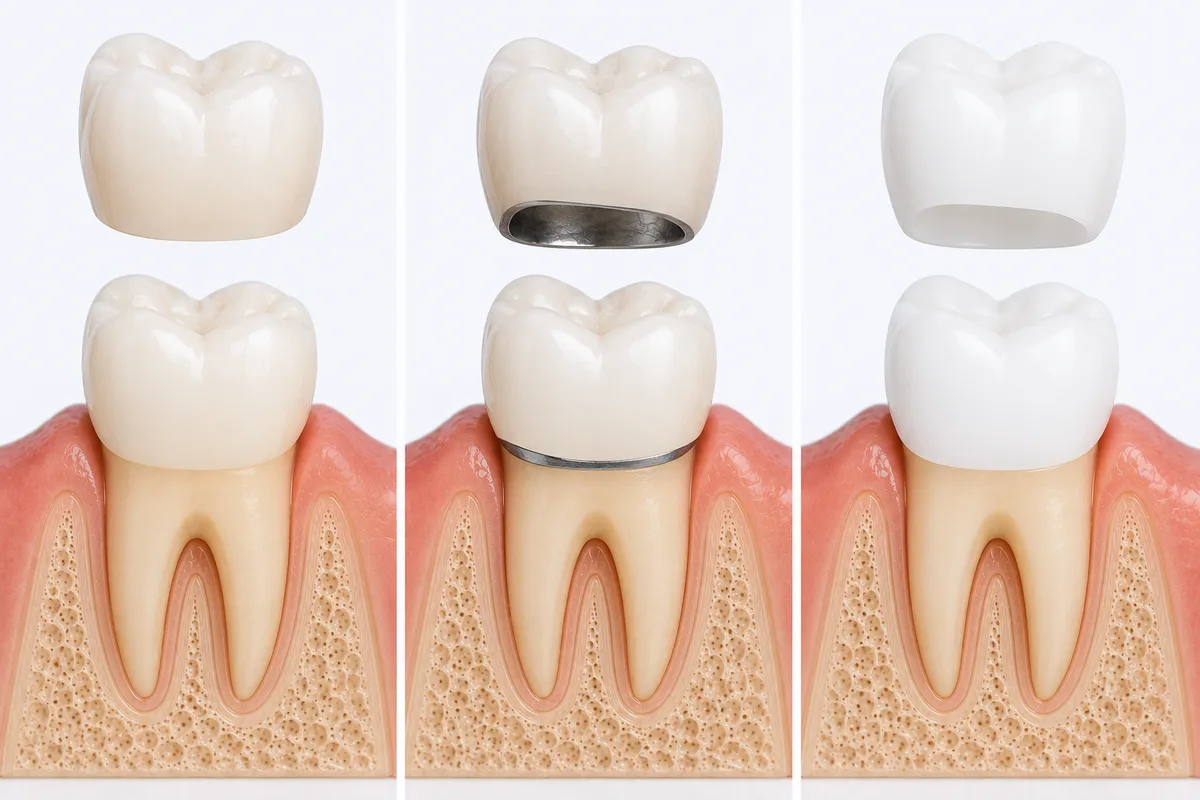
The right crown material depends on where the tooth is located, how much chewing force it handles, and what looks best for your smile. We will walk you through the options at your appointment.
Zirconia — Our Standard Choice
The strongest crown material available. Tooth-colored, chip-resistant, and durable enough for any tooth in your mouth. We use zirconia for the vast majority of our crowns — it looks natural and lasts.
Best for: Most patients, most teeth.
Aesthetic Zirconia — For Front Teeth
A high-translucency version of zirconia that lets light pass through the way natural enamel does. Same strength, more lifelike appearance.
Best for: Front teeth where appearance is the priority.
Porcelain-Fused-to-Metal (PFM)
Available when matching existing PFM crowns. Not our default recommendation.
Best for: Matching existing PFM work only.
“The whole process was smooth and pain-free.”
“Had a crown procedure done by Dr. G. The whole process was smooth and pain-free. They explained each step and what to expect during recovery. Billing was transparent with no surprises. Such a trustworthy office!”— Lena G.
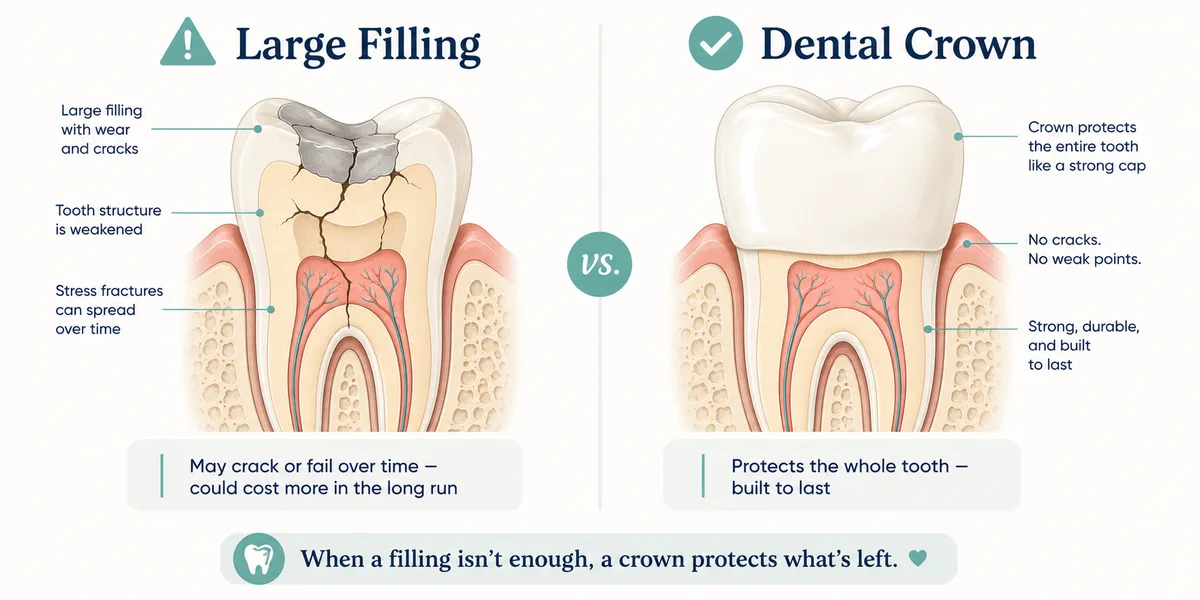
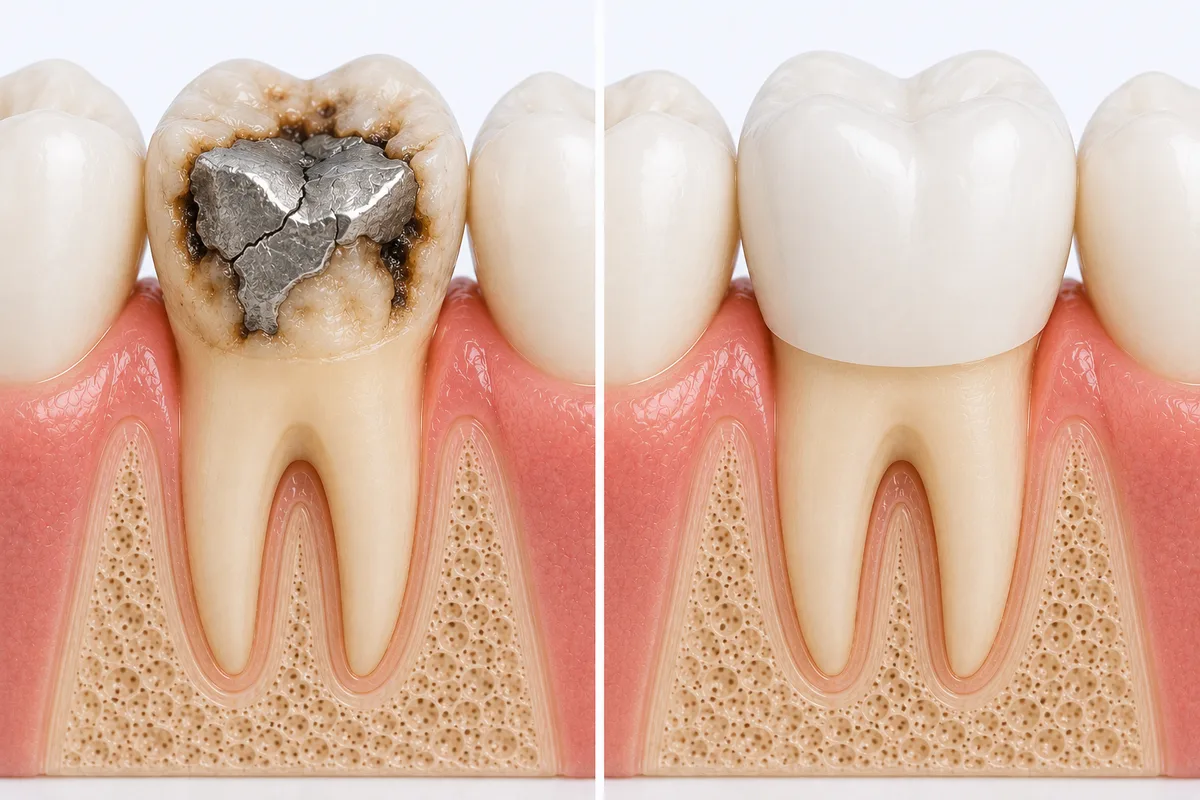
Left: large failing filling with decay. Right: crown fully protecting the tooth.
Crown or Large Filling — What's the Difference?
If your tooth has a small cavity, a filling is usually the right call. But when a cavity gets large — or when a tooth already has a big old filling that is starting to fail — a filling may not be enough to hold things together.
A tooth with a large filling is kind of like a cracked egg. It looks okay from the outside but it is weaker than it should be. If it breaks, you may lose more of the tooth and end up needing a crown anyway — or worse, losing the tooth entirely.
A crown wraps around the whole tooth and holds it together. It is not the cheapest option upfront, but it is usually the smarter one long-term.
We will always tell you honestly whether a filling will do the job or whether a crown is what the tooth actually needs.
Getting a Crown at Rabbit Creek Dental
-
1
Exam & X-Rays
We take a close look at the tooth and surrounding bone to confirm a crown is the right treatment. We will explain what we see and answer any questions before we move forward.
-
2
Tooth Preparation
We numb the area completely so you do not feel anything. Then we shape the tooth so the crown fits properly over it. We take a digital scan — no messy putty impressions. Our intraoral scanner replaces traditional putty impressions for a more comfortable, more accurate crown fitting.
-
3
Temporary Crown
While your custom crown is being made, we place a temporary crown to protect the tooth. Most patients wear this for 2 to 3 weeks.
-
4
Crown Placement
When your permanent crown is ready, we remove the temporary and check the fit, bite, and color before cementing it in place. We make any adjustments right there so it feels natural.
Most crown appointments take about an hour. The numbing injection is usually the only uncomfortable part — the rest is straightforward.
Your Crown: What to Know
What to expect during the process, how to care for your temporary and permanent crown, and how to know if you actually need one.
Caring for Your New Crown or Bridge
What to expect after your crown is cemented — sensitivity, bite feel, and the daily habit that protects it most.
Read Article →Caring for Your Temporary Crown
Your temporary protects the tooth while your permanent crown is made. What to do if it falls off.
Read Article →Do I Need a Crown or a Filling?
Dr. G explains the difference and how to know which one your tooth actually needs.
Read Article →How Long Do Dental Crowns Last?
Most crowns last 10–15 years — but some last 20+ with the right care. Here's what affects longevity.
Read Article →What to Do If Your Crown Falls Off
Lost a crown? Keep it, protect the tooth, and call us. Here's exactly what to do — and what not to do — until your visit.
Read Article →“From initial prep to final placement, everything was smooth and pain-free.”
“Dr. Shipp and his team provided excellent care during my crown procedure. From the initial prep to the final placement, everything was smooth and pain-free. Wonderful office!”— Cleo W.
“They were able to schedule me same day.”
“Super friendly staff and very accommodating! I had a crown that I needed re-cemented, and they were able to schedule an appointment same day. Great people and great service.”— Dustin D.
Frequently Asked Questions About Dental Crowns
We numb the area completely before we start, so the procedure itself should not hurt. Some patients feel mild soreness for a day or two after — that is normal and usually handled with over-the-counter pain relievers.
Two appointments, about 2–3 weeks apart. At the first appointment we prepare the tooth, take a digital scan, and place a temporary crown. Your permanent crown is made by a dental lab — we send out for crowns rather than making them in-house because lab-fabricated crowns offer better fit, strength, and aesthetics than chairside milling. When the permanent crown comes back we'll call you to schedule the second appointment to cement it in place.
Most crowns last 10 to 15 years or longer with good home care. How long yours lasts depends on where it is, how well you brush and floss, and whether you grind your teeth at night.
Yes. Porcelain and zirconia crowns are matched to the color of your surrounding teeth. Most people cannot tell the difference between a crown and a natural tooth.
Possibly yes. A tooth can have a large cavity, a crack, or a failing old filling that puts it at serious risk without causing any pain yet. Pain usually means the nerve is already involved — at that point you may need a root canal on top of the crown. Catching it before it hurts is almost always better. We'll show you exactly what we found and why we're recommending a crown before we schedule anything.
Almost always yes — especially on back teeth. A root canal removes the nerve and blood supply from the tooth, which makes it more brittle over time. Without a crown to protect it, a root canal treated tooth is at high risk of cracking — and a cracked tooth often can't be saved. The root canal saves the tooth; the crown protects the investment. Skipping the crown after a root canal is one of the most common ways patients end up losing a tooth they tried to save.
A temporary crown is a placeholder that protects your prepared tooth while the permanent crown is being made at the lab. It's not as strong as your permanent crown so treat it carefully — avoid sticky foods like gum and caramel, chew on the other side when possible, and be gentle when flossing around it. If it comes off, call us — don't leave the tooth unprotected. Some sensitivity to temperature is normal while you're in the temporary.
It can, but it's not common. The most frequent causes are the cement washing out over time, decay developing under the crown, or biting something very hard or sticky. If your crown comes off, keep it, call us, and come in as soon as possible. Don't leave the prepared tooth exposed — it's sensitive and vulnerable without coverage.
Most dental insurance plans cover crowns at least partially — usually 50% after your deductible. We will verify your benefits before your appointment so you have a clear estimate of your out-of-pocket cost.
A tooth that needs a crown but does not get one is at risk of cracking further. If it cracks bad enough, the tooth may not be saveable — meaning you would need an extraction and then a more expensive replacement like an implant or bridge. In most cases, a crown now is a lot cheaper than dealing with a broken tooth later.
Absolutely. The crown itself can't get a cavity, but the tooth underneath it can — decay can develop at the margin where the crown meets the tooth, especially if plaque builds up there consistently. Patients who don't change the habits that caused the original problem often end up with new decay under or around the restoration within a few years. Brush twice a day, floss daily, and don't skip your cleanings — our guide to how to care for your new crown walks through the daily habits that help it last.
“The crown fits perfectly. Clear billing, no surprises.”
“Had a crown replaced by Dr. Shipp. Excellent work — the new crown fits perfectly. Process was smooth, mostly pain-free, and well-explained. Clear billing, no surprises. Outstanding office!”— Rufus T.
“They made a temporary crown same day. The permanent one fit perfectly.”
“Had a crown done by Dr. Gegzna. The whole process was thoroughly explained and pain-free. They made a temporary crown same day and the permanent one fit perfectly. Great office!”— Stella W.
Flexible Financing Available
Get the care you need now and pay over time with Cherry financing. Apply in minutes with no hard credit pull.
See If You QualifyReady to Protect That Tooth? We Can Usually Get You In This Week.
Come in and let us take a look. We will tell you exactly what the tooth needs — and what it does not need. No pressure, no surprises on the bill.