
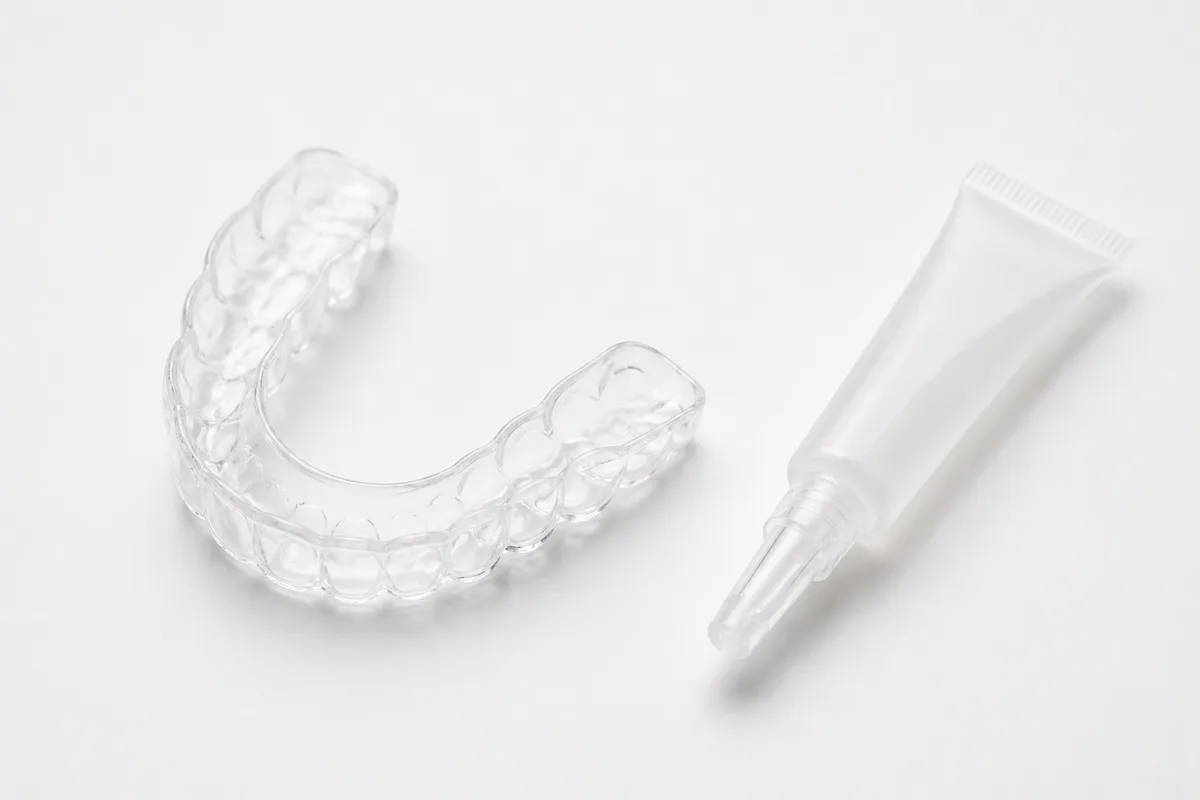
Teeth whitening is one of the most requested cosmetic dental treatments — and one of the most misunderstood. Walk into any pharmacy and you'll find dozens of products promising a dramatically brighter smile. But how do they compare to professional whitening? And what results can you realistically expect?
How Teeth Whitening Actually Works
Most whitening products — professional and over-the-counter alike — use a peroxide-based gel (hydrogen peroxide or carbamide peroxide) that penetrates tooth enamel and breaks down stain molecules inside the tooth. The higher the peroxide concentration and the longer the contact time, the more dramatic the whitening effect. Professional products use stronger concentrations than anything available over the counter, applied with custom trays designed for even, consistent contact with every tooth surface.
Over-the-Counter Options: Strips, Toothpastes, and Trays
Whitening strips are the most effective over-the-counter option — they contain real peroxide and can produce noticeable results, though typically less dramatic than professional treatment. Whitening toothpastes work primarily through mild abrasives that remove surface stains rather than chemically bleaching the tooth; they help maintain results but don't produce significant whitening on their own. Generic store-bought trays often fit poorly, causing uneven gel distribution, missed spots, and gel that leaks onto gum tissue — causing irritation without delivering consistent results.
Professional Whitening: What's Different
Professional take-home whitening uses custom trays made from a precise impression of your teeth, ensuring the gel reaches every surface evenly. The whitening gel is stronger than anything available without a prescription. Results typically develop over 1–2 weeks of daily use and can last 1–3 years with good oral hygiene and occasional touch-ups. Because you keep the custom trays, maintenance is easy and relatively inexpensive over time.
How White Can Your Teeth Actually Get?
The answer depends largely on the type of staining you have. Whitening works best on surface staining from coffee, tea, wine, and tobacco — the kind most people accumulate over time. Intrinsic discoloration (from inside the tooth, caused by certain medications, fluorosis, or trauma) does not respond to whitening agents. The natural shade of your enamel also sets a ceiling — whitening removes staining but cannot make teeth whiter than their natural baseline. At your consultation, we'll give you an honest assessment of what results are realistic for your specific teeth.
What About Veneers vs. Whitening?
Whitening brightens your natural tooth color and works best on surface staining. Veneers are thin porcelain shells bonded to the fronts of teeth — they change shape, size, and color simultaneously and are more effective for teeth with deep intrinsic staining, chips, cracks, or significant color variation. Whitening is simpler, less invasive, and substantially less expensive. Veneers are appropriate when whitening alone won't achieve the desired result. In many cases, whitening is the right first step before deciding whether veneers make sense at all.
Sensitivity: A Real Concern
Tooth sensitivity during and after whitening is a common side effect, especially for people who already experience sensitivity. It typically resolves within a few days of completing treatment. Using a sensitivity toothpaste for a week or two before whitening helps, as does spacing out treatment days if sensitivity becomes uncomfortable. Professional whitening allows us to customize the protocol — adjusting concentration and timing — to reduce sensitivity while still achieving meaningful results.
Who Should Avoid Whitening?
Whitening is not recommended for pregnant women, children under 16, or patients with active gum disease or untreated cavities. Crowns, veneers, and tooth-colored fillings do not respond to whitening agents — whitening natural teeth around existing restorations can create uneven coloring. We'll review your situation before recommending treatment and identify any factors that could affect your results or comfort.
Ready to schedule your visit?
The Bottom Line
Professional whitening delivers the most predictable, even results — and the custom trays you keep make touch-ups easy for years to come. If you're interested in whitening, start with a conversation at your next dental exam. We'll assess your current tooth shade, the type of staining you have, and whether whitening is the right approach for the results you're looking for.
Questions? Call Rabbit Creek Dental at (251) 308-0584 — we're happy to help.

Dr. Patrick Shipp, DMD is an associate dentist at Rabbit Creek Dental in Mobile, Alabama. He earned his Doctor of Dental Medicine degree from the University of Mississippi Medical Center and completed an Advanced General Dentistry Residency at UMMC before founding and operating Shipp Family Dentistry for 12 years. He joined Rabbit Creek Dental in July 2025. Dr. Shipp has additional training in botox and dermal fillers through DentalSpa and implant surgical training through Nobel Biocare.
This article is for educational purposes only and does not constitute medical advice. For personalized guidance about your dental health, please contact our office at (251) 308-0584.
Frequently Asked Questions
Professional whitening uses stronger, dentist-supervised gel and custom-fit trays, so it typically whitens faster, more evenly, and more noticeably than over-the-counter strips or toothpastes. It’s also gentler on your gums because it’s tailored to you.
Whitening toothpastes mainly remove surface stains with mild abrasives — they don’t change the underlying color of your teeth. They can help maintain results but won’t produce the deeper whitening that peroxide-based treatments do.
Temporary sensitivity is common and usually fades within a day or two. Professional whitening lets us adjust the strength and add desensitizing products to keep you comfortable. If your teeth are already sensitive, tell us before you start.
Whitening works on natural enamel but not on crowns, veneers, or fillings, which won’t change color. It’s also not recommended during pregnancy or for very young patients. A quick exam tells us whether whitening will give you the result you’re after.