
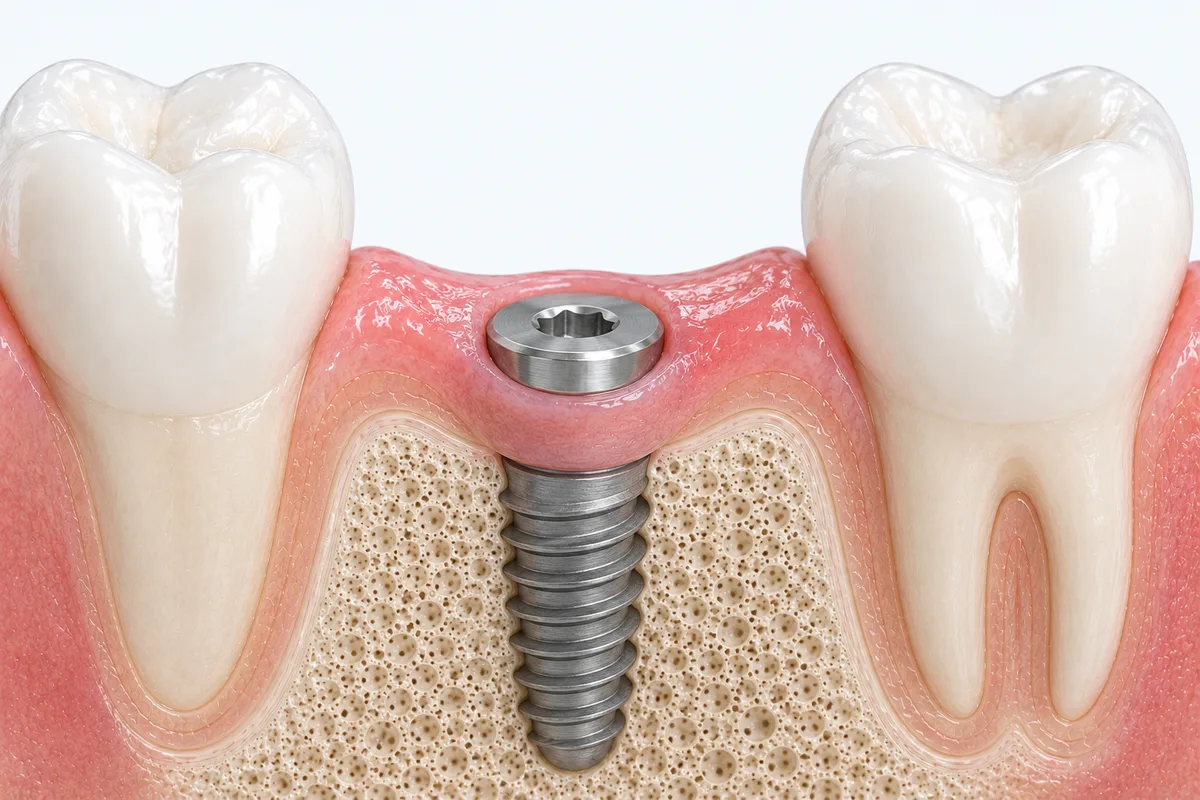
- Soft foods and no chewing on the implant side for 4–6 months while the bone heals
- No straws and no smoking — both can cause a painful dry socket
- Vitamin D3 daily for the first 6 months supports bone healing and implant success
- Call us if pain or swelling isn't improving with your medicine
You've taken a great step toward replacing a missing tooth, and most patients heal up beautifully. The key is being gentle with the area while the bone and gum tissue do their thing. Here's how to take care of your dental implant.
Bleeding
Just like after an extraction, we want a good clot to form at the implant site. Bite firmly on gauze for about 30 minutes. For most people, 15–20 minutes does it, though some need a little longer. A little oozing is normal for the first 24 hours, and it can look like more than it is once it mixes with your spit. If you have stitches, they usually dissolve and fall out on their own in about 5 days. If you also had a bone graft, expect them to last a bit longer — around 2–3 weeks. Use ice for swelling, and after 2–3 days you can switch to heat if you feel stiff.
Keeping the Area Clean (Week by Week)
Keep brushing your teeth, but stay off the surgery site at first. Here's the timeline:
- Weeks 1–2: After the first 24 hours, gently rinse the area with warm salt water (1 teaspoon of salt in 1 cup of warm water) or your prescribed mouthwash.
- Weeks 3–4: Gently wipe the site with gauze soaked in your prescribed mouthwash, 2–3 times a day. Use very light pressure.
- Week 5 and beyond: You can gently brush the site now. Go easy — too much pressure can hurt the implant and gum tissue while the bone is still healing.
Eating
Stick to soft foods, and shift your chewing away from the implant site. The bone underneath takes 4–6 months to fully heal, so go gentle for a while even after the gums look healed. If you wear a denture or partial that covers the implant site, don't chew on the part that sits over the implant. Move your chewing to the other side. Pressure there can interfere with the implant fusing to the bone.
Helping Your Body Heal
A daily vitamin D3 supplement for the first 6 months can support bone healing, implant integration, and your immune system, all of which help your implant succeed. Take your prescriptions as directed. Antibiotics and pain medicine work best with food. If it's safe for you to take Motrin or ibuprofen, you can take it along with your antibiotic and pain medicine for extra relief. One note for women on birth control: some antibiotics can make it less effective, so use a backup method while you're taking them. For a full overview of the implant process from start to finish, visit our dental implants page.
What to Avoid
- Don't eat while you're numb, so you don't bite your lip, cheek, or tongue.
- Skip hard, crunchy foods like chips, nuts, and popcorn.
- No straws and no smoking while you heal. The suction (and the smoking) can dislodge your clot and cause a painful dry socket.
A few medicines can interfere with implant healing. If you take an antidepressant in the SSRI or tricyclic family (like Celexa, Lexapro, Prozac, Luvox, Paxil, or Zoloft), or a medication for heartburn or acid reflux (like Prilosec, Nexium, or Prevacid), talk with your physician about whether to pause or switch it during healing. Always check with your doctor before stopping any prescription. If you ever have a problem you can't reach us for, our emergency care is here to help.
Frequently Asked Questions
The bone takes about 4–6 months to fully fuse with the implant. The gums heal faster, but be gentle the whole time.
Pressure on a healing implant can keep it from bonding with the bone. Chewing on the other side protects all that hard work.
Yes. Light oozing for the first day and some swelling early on are both normal. Heavy bleeding that won't stop is worth a call.
Smoking is a major cause of implant failure. Avoiding it gives your implant the best chance to succeed.
Related Reading:
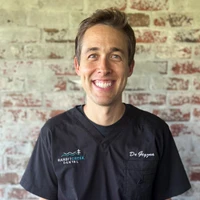
Dr. Joseph Gegzna, DMD is the founder and lead dentist at Rabbit Creek Dental in Mobile, Alabama. He earned his Doctor of Dental Medicine degree from the University of Louisville School of Dentistry and has been a licensed dentist in Alabama since 2014, with more than 12 years of experience in general, restorative, and implant dentistry. After several years practicing as an associate, he founded Rabbit Creek Dental in 2022 to build the kind of patient-first practice he believed in. He has completed advanced implant training through a 92-hour Implant Pathway program with live patient surgery and additional surgical training in impacted third molar extractions through the Koerner Center for Surgical Instruction. He is a member of the American Dental Association and is currently in his third year of the Bulletproof Dental Mastermind program, a continuing education group focused on delivering an exceptional patient experience. Before dentistry, Dr. Gegzna was a licensed pilot, bringing a calm, detail-oriented approach to patient care. Rabbit Creek Dental serves families throughout Mobile.
This article is for educational purposes only and does not constitute medical advice. For personalized guidance about your dental health, please contact our office at (251) 308-0584.