

- After implant surgery, stick to soft foods and chew away from the implant site
- The bone takes 4–6 months to fully heal, so stay gentle even after the gums look healed
- No straws and no smoking — the suction can dislodge your clot and cause a painful dry socket
You've taken a great step toward replacing a missing tooth. What you eat in the weeks and months after dental implant surgery has a real impact on how well your implant heals and integrates with the bone. Here's a practical guide.
The First 24 Hours
The first day is the most critical for clot formation. A good blood clot at the implant site is what kickstarts healing — and anything that disrupts it sets you back.
Stick to: cold or room-temperature soft foods — yogurt, applesauce, smoothies, soft scrambled eggs, mashed potatoes, pudding; plenty of water.
Avoid: hot foods and drinks — heat increases bleeding; anything requiring significant chewing; straws — the suction can dislodge the clot; alcohol — interferes with healing and interacts with pain medication; smoking — dislodges clots and significantly impairs healing.
The First Week
Swelling and tenderness typically peak in the first 2–3 days and improve from there. Your diet should stay soft.
Good options: eggs (scrambled, soft-boiled); yogurt and cottage cheese; mashed potatoes, sweet potatoes; oatmeal and cream of wheat; soft pasta, well-cooked rice; soup (lukewarm — not hot); bananas, avocado, soft melon; protein shakes (no straw); soft fish like tilapia or salmon.
Continue to avoid: hard foods — chips, crackers, raw vegetables, nuts; crunchy foods — anything that fragments and could get into the surgical site; chewy foods — bagels, tough meat, gummy candy; very hot foods and drinks; straws and smoking.
Weeks 2–4
Swelling and soreness should be significantly improved. You can gradually expand your diet — but stay away from the implant side. Chew on the opposite side of your mouth. Even if the gums look healed, the bone underneath is still in the early stages of integrating with the implant. Premature pressure on the implant site can disrupt osseointegration — the process of the implant fusing with your bone. Continue avoiding hard, crunchy, and very chewy foods.
Month 2–6: The Long Game
This is the part that surprises most patients. The gums may look completely healed within a few weeks — but the bone takes 4–6 months to fully integrate with the implant. During this period: avoid chewing directly on the implant site; if you wear a denture or partial that covers the implant, avoid chewing on the part that sits over the implant; eat a nutritious diet — good nutrition supports bone healing; take vitamin D3 daily — supports bone healing, implant integration, and immune function during the healing period.
Foods That Support Healing
What you eat doesn't just affect comfort — it affects how well your bone heals around the implant. Prioritize: protein — eggs, fish, soft poultry, Greek yogurt, cottage cheese (essential for tissue repair); calcium — dairy, soft tofu, fortified foods (supports bone density); vitamin C — soft fruits, smoothies (supports gum tissue healing); vitamin D3 — supplement daily for the first 6 months (supports bone integration and immune function).
What to Watch For
Call our office if: pain or swelling isn't improving after the first few days; you develop a bad taste or smell from the surgical site; you notice the implant feels loose; you have significant bleeding that doesn't respond to pressure.
Read our full implant aftercare guide → and What to expect during the implant process →
We serve patients from Mobile, Theodore, Grand Bay, and the surrounding Gulf Coast area.
Frequently Asked Questions
For the first 1–2 weeks, stick to soft foods entirely. You can gradually expand your diet after that — but avoid chewing directly on the implant site for 4–6 months while the bone heals.
Wait at least 24 hours, and when you do resume coffee, let it cool to a warm temperature first. Hot liquids increase bleeding in the first day or two.
The suction created by using a straw can dislodge the blood clot at the implant site, leading to a dry socket — a painful condition that significantly delays healing.
Vitamin D3 is particularly important — it supports bone healing, implant integration, and immune function. Take it daily for the first 6 months after surgery. Adequate protein and calcium also support healing.
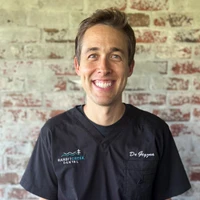
Dr. Joseph Gegzna, DMD is the founder and lead dentist at Rabbit Creek Dental in Mobile, Alabama. He earned his Doctor of Dental Medicine degree from the University of Louisville School of Dentistry and has been a licensed dentist in Alabama since 2014, with more than 12 years of experience in general, restorative, and implant dentistry. After several years practicing as an associate, he founded Rabbit Creek Dental in 2022 to build the kind of patient-first practice he believed in. He has completed advanced implant training through a 92-hour Implant Pathway program with live patient surgery and additional surgical training in impacted third molar extractions through the Koerner Center for Surgical Instruction. He is a member of the American Dental Association and is currently in his third year of the Bulletproof Dental Mastermind program, a continuing education group focused on delivering an exceptional patient experience. Before dentistry, Dr. Gegzna was a licensed pilot, bringing a calm, detail-oriented approach to patient care. Rabbit Creek Dental serves families throughout Mobile.
This article is for educational purposes only and does not constitute medical advice. For personalized guidance about your dental health, please contact our office at (251) 308-0584.