
Tooth Extraction in Mobile, AL
If you need a tooth extraction in Mobile, AL, the anxiety about it is usually worse than the procedure itself. Most patients are surprised by how manageable it is. Here's what the process actually looks like at Rabbit Creek Dental — and what to expect afterward.
“Three teeth pulled when other dentists said he’d need an oral surgeon — the best dentist he’s ever had.”
“My husband had three teeth pulled when other dentists said that he would have to go to an oral surgeon. Dr. Shipp was amazing along with the rest of the staff. My husband said he’s the best dentist he’s ever had, and we’ve been through a bunch. They will take good care of you, and they’re very gentle. It was so kind of Dr. Shipp to call and check on my husband — we appreciate that.”— Kelley W.
“I felt nothing.”
“I had a tooth extraction today. Dr. Shipp and the whole staff made me feel so comfortable. I felt nothing. Would highly recommend.”— Ciara M.
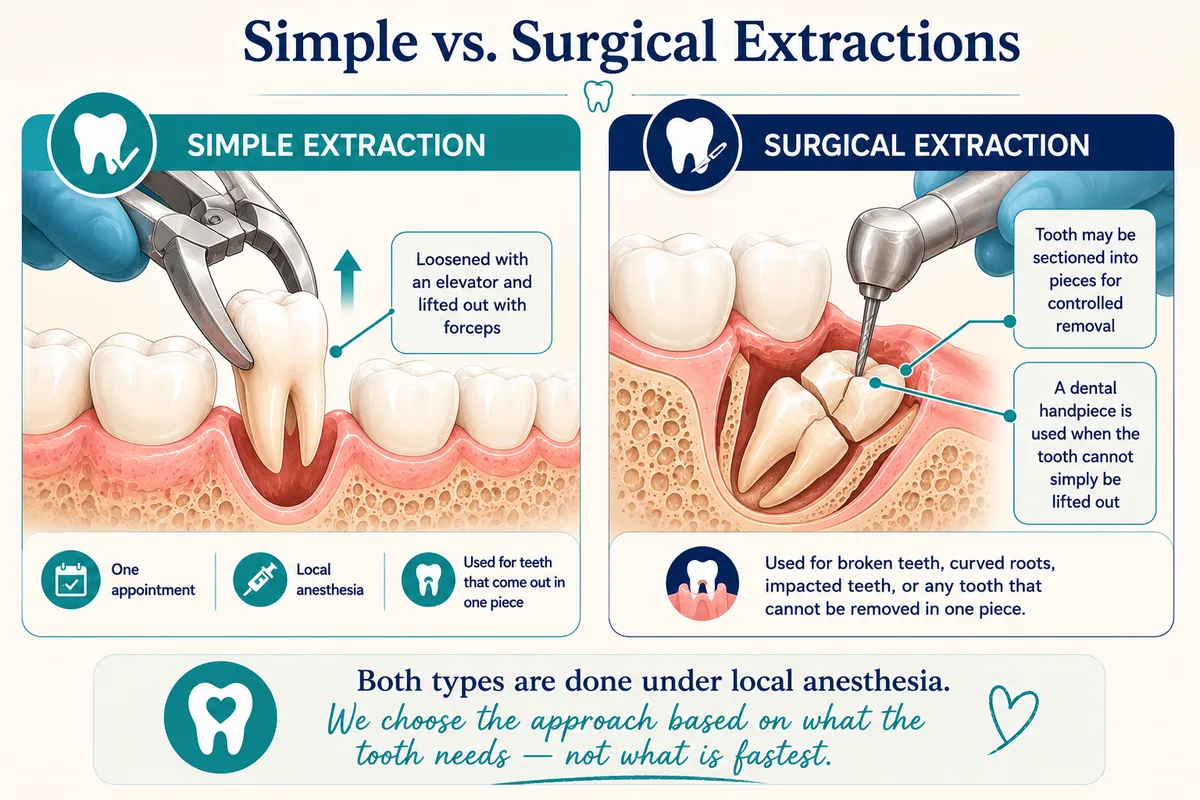
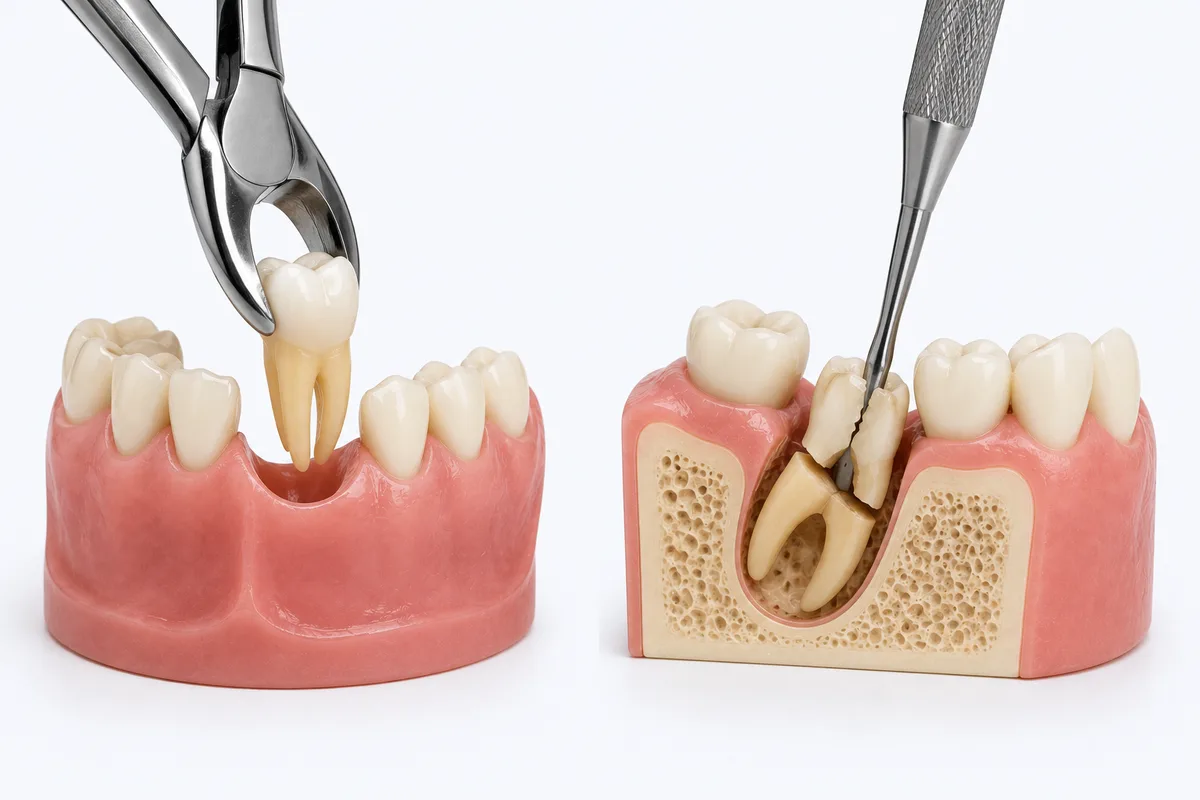
Left: simple extraction — tooth lifted straight out. Right: surgical extraction — tooth sectioned below the gumline.
Simple vs. Surgical Extractions
Not all extractions are the same. The approach depends on the tooth — where it is, how it is positioned, and whether it can come out in one piece.
A simple extraction is used when the tooth is fully visible above the gumline and can be loosened and lifted out with forceps. It is straightforward and usually takes just a few minutes once you are numb.
Both types are done right here in our office under local anesthesia. We will tell you exactly which type you need and why before we do anything.
“Quick, easy, and painless tooth pull.”
“Quick, easy, and painless tooth pull. Had a sudden crack/cavity appear in an upper wisdom tooth. They had me in and out in under an hour. Great people that took great care of me!”— Justin C.
Reasons a Tooth May Need to Come Out
Severe Decay
When a cavity has destroyed so much of the tooth that it cannot be saved with a filling or crown, extraction may be the only option left.
Broken or Fractured Tooth
A tooth that has cracked below the gumline or broken in a way that cannot be restored may need to be removed.
Advanced Gum Disease
Severe periodontal disease can destroy the bone supporting a tooth to the point where the tooth becomes loose and unsaveable.
Impacted Wisdom Teeth
Wisdom teeth that do not have room to come in properly can cause pain, infection, and crowding. Removal is often the right call.
Infection or Abscess
When an infection has spread and cannot be treated with a root canal or antibiotics, removing the tooth may be necessary to protect your overall health.
Preparation for Orthodontics
Occasionally a tooth needs to be removed to create space for proper alignment of the remaining teeth.
We only recommend extraction when we truly believe it is the right call. If there is a realistic way to save the tooth, we will tell you.
Is Extraction Really the Only Option?
Before we recommend pulling a tooth, we look at every alternative. Sometimes a root canal and crown can save a tooth that looks like it needs to come out. Sometimes it cannot.
We will be straight with you. If the tooth can be saved at a reasonable cost and the outcome is likely to be good, we will tell you that. If it is too far gone and extraction is the smarter move, we will tell you that too — along with what your replacement options look like and roughly what they cost.
A tooth that gets pulled does not have to stay gone. We offer dental implants in Mobile, AL, bridges, and dentures to restore your smile after a tooth extraction.
“The easiest, quickest, and best experience I have had.”
“Went for an extraction and it was the easiest, quickest, and best experience I have had. Dr. G is excellent and explains everything in as much detail as you would like, always answering questions in the same clear and calm manner.”— Dan
Replacing the Tooth After Extraction
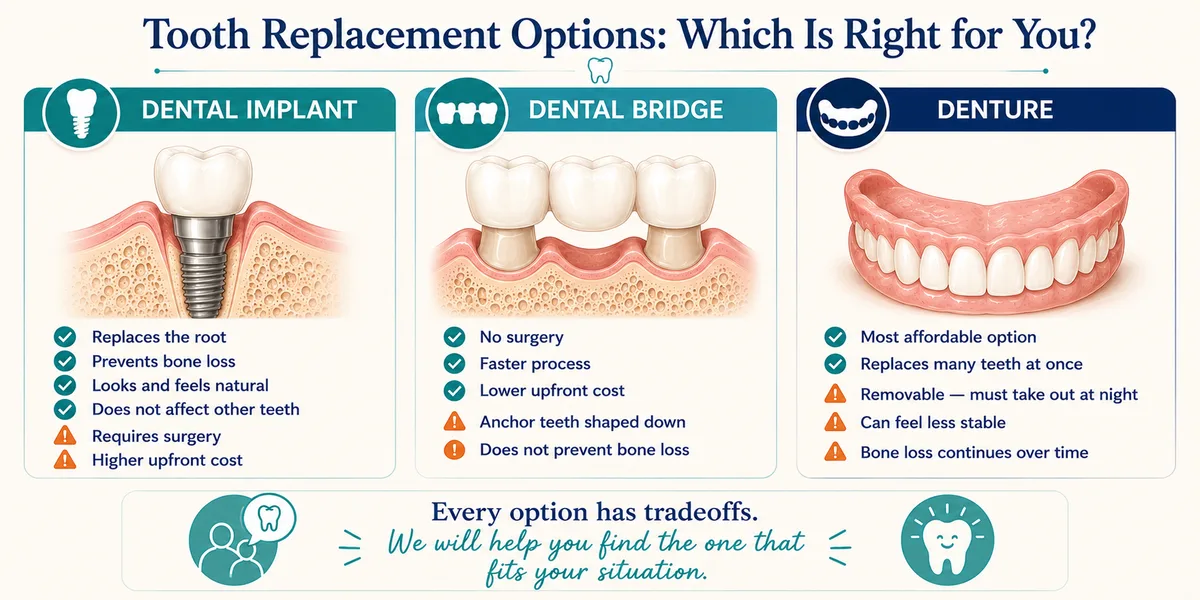
Tooth Replacement Options
Dental Implant
- Replaces the tooth root and prevents bone loss
- Looks and feels like a natural tooth
- Doesn't affect neighboring teeth
- Requires surgery and higher upfront cost
Dental Bridge
- No surgery, faster process
- Lower upfront cost than implants
- Anchor teeth must be shaped down
- Doesn't prevent jawbone loss underneath
Denture
- Most affordable option, replaces many teeth at once
- Removable — must be taken out at night
- Can feel less stable than fixed options
- Bone loss continues over time
Every option has tradeoffs. We'll help you find the one that fits your situation.
Pulling a tooth solves one problem but creates another if the gap is left empty. Once a tooth is gone the neighboring teeth start to drift. The tooth on the opposite arch starts to super-erupt — it grows out of the socket because it has nothing to bite against. Over time the bone in that area shrinks.
None of this happens overnight. But it does happen — and the longer you wait the harder it is to fix.
We will talk through your replacement options at your appointment. Whether that is an implant, a bridge, a partial denture depends on your situation, your budget, and your goals. There is no pressure — just honest information so you can make the right call for yourself.
“They scheduled me for two extractions one hour after my checkup.”
“Very professional folks! They all wore a smile the entire time! They made sure I was comfortable and taken care of pronto! They did my checkup and then scheduled me for one hour later that same day to have two extractions done! Wow, impressive!”— Joseph P.
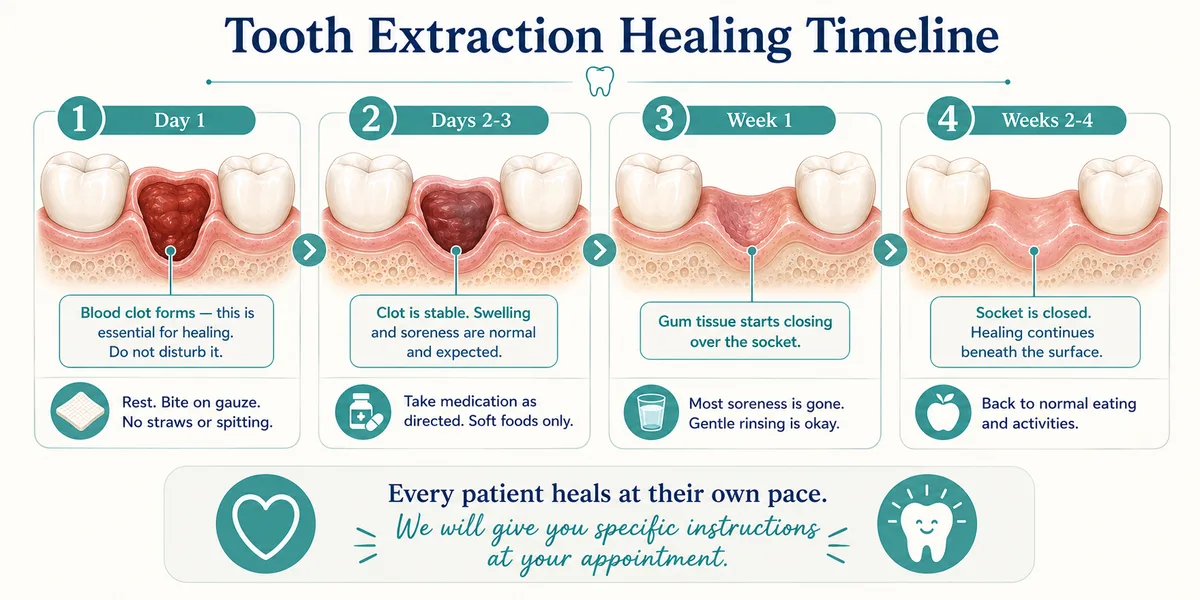
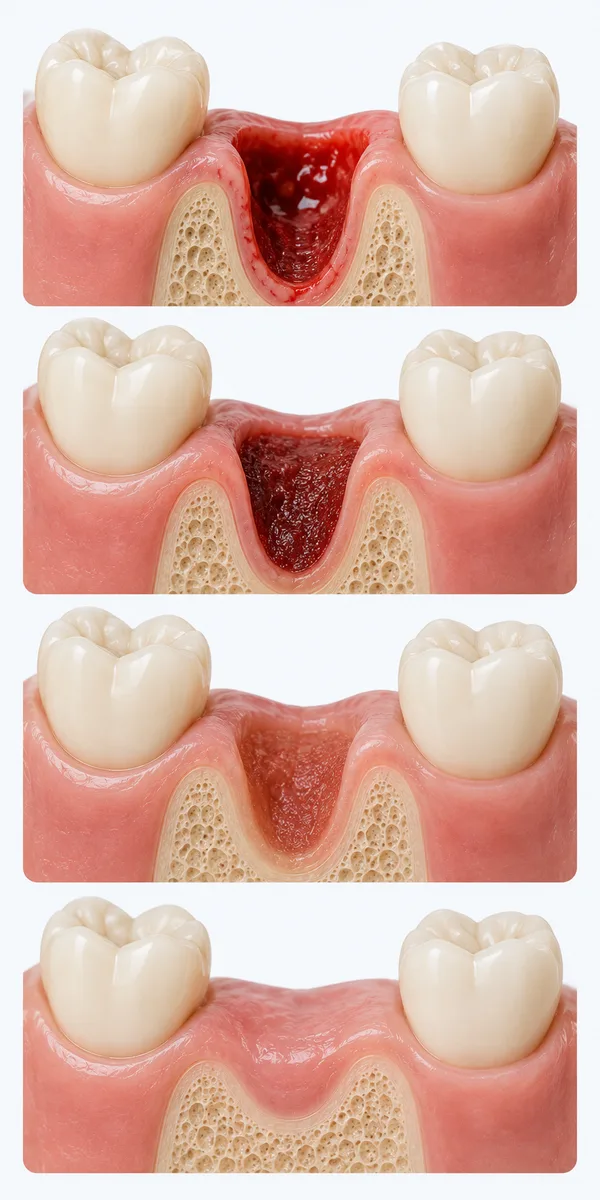
Day 1: clot forms. Days 2–3: clot stabilizes. Week 1: tissue closes. Weeks 3–4: fully healed.
What to Expect After an Extraction
The most important thing the first 24 hours is protecting the blood clot that forms in the socket. That clot is what allows the area to heal. Do not use straws, do not spit forcefully, and do not smoke — all of those things can dislodge the clot and lead to dry socket, which is significantly more painful.
We will send you home with specific aftercare instructions and our number in case you have questions — and if you want to read up beforehand, our guide on what to expect after a tooth extraction walks through the whole recovery day by day.
The First 24 Hours — What Not to Do
No Straws
Suction can dislodge the blood clot and cause dry socket. Skip the straw for at least 24 hours — 48 to be safe.
No Smoking
Smoking delays healing and dramatically increases the risk of dry socket and infection. Avoid smoking for at least 48 to 72 hours after extraction.
No Spitting
Forceful spitting creates the same suction problem as straws. Let saliva drain naturally instead.
Soft Foods Only
Stick to soft foods for the first few days — yogurt, eggs, mashed potatoes, soup. Avoid anything hard, crunchy, or chewy near the extraction site.
Learn More About Extractions
Everything you need to know about healing — what's normal, what to watch for, and when to call us.
Root Canal vs. Tooth Extraction: Which Is the Right Choice?
Trying to decide between a root canal and a tooth extraction? Learn the pros, cons, and costs of each so you can make the right call.
What to Expect After a Tooth Extraction
Protecting the blood clot is everything. A day-by-day guide to healing and when to call us.
Read Article →Healing After an Extraction and Bone Graft
A bone graft sets the stage for a future implant. How to protect it while you heal.
Read Article →Simple vs. Surgical Tooth Extraction: What's the Difference?
Not all extractions are the same. Dr. G explains when each approach is used.
Read Article →Is Tooth Extraction Painful?
You'll feel pressure, not pain. Dr. G sets realistic expectations for what extraction actually feels like.
Read Article →Tooth Extraction Aftercare Guide
Most patients feel better within 3–5 days. Here's the full healing timeline and what to watch for.
Read Article →“From the entrance to the extraction, I was treated with the utmost respect.”
“From the entrance to the extraction, I was treated with the utmost respect because I have anxiety when it comes to the dentist. It was worth it, and I'm glad I found them. If you're like me, Rabbit Creek Dental is a great place to go.”— Alexandria L.
Frequently Asked Questions About Tooth Extractions
That's the first question we ask too. We don't recommend extractions unless we've ruled out the alternatives. A tooth with a cavity, crack, or infection can often be saved with a filling, crown, or root canal. We'll take X-rays, examine the tooth, and give you an honest assessment of whether saving it is realistic — including what it would cost and how long it would likely last if saved versus extracted. Some teeth genuinely can't be saved. Others can, and we'd rather save them.
The procedure itself should not hurt — we numb everything completely before we start. You may feel pressure and movement but not pain. If at any point you feel pain during the procedure, tell us immediately and we will add more anesthetic. After the numbness wears off you will likely be sore for a day or two — that is normal and manageable.
A simple extraction is performed on a tooth that's fully visible in the mouth and can be removed in one piece with forceps. A surgical extraction is needed when a tooth is impacted, broken at the gum line, or has roots that make simple removal risky — it requires a small incision to access the tooth. Both are done with local anesthetic in our office. Surgical extractions typically have a slightly longer recovery.
A simple extraction usually takes just a few minutes once you are numb. A surgical extraction takes longer — anywhere from 20 minutes to an hour depending on the complexity. We will give you a realistic estimate at your appointment.
Eat a normal meal beforehand unless you've been told otherwise — it's easier to tolerate local anesthetic on a full stomach. Let us know about any medications you're taking, especially blood thinners, since some affect healing. If you're being sedated, follow the fasting instructions we give you. Arrange a ride if you're having sedation or expect to feel groggy afterward.
Soft foods for the first few days — yogurt, mashed potatoes, smoothies, soup (not too hot), scrambled eggs. Avoid anything hard, crunchy, or chewy that could disturb the clot or get packed into the socket. As healing progresses you can gradually return to normal eating, usually within a week for simple extractions.
Dry socket happens when the blood clot that forms in the extraction site gets dislodged or dissolves before the area heals. It is painful — more than the extraction itself — and requires a follow-up visit to treat. Avoiding straws, smoking, and spitting in the first 24 to 48 hours significantly reduces the risk.
Most patients feel well enough to return to a desk job the next day. If your job involves physical labor we recommend taking it easy for two to three days. Listen to your body.
Wait at least 72 hours — ideally longer. The suction from a straw or cigarette and the chemicals in smoke and alcohol can dislodge the blood clot that forms in the socket after extraction. That clot is what allows the site to heal. If it's disrupted you can develop dry socket (an extremely painful condition where the bone is exposed). Dry socket is one of the most common complications we see after extractions, and most cases are caused by one of these three things. It's worth waiting.
You do not have to — but we strongly recommend it for most teeth. Leaving a gap leads to shifting, bone loss, and bite changes over time. The one exception is wisdom teeth — those do not need to be replaced since they are not essential for chewing or bite stability.
Most dental insurance plans cover extractions at least partially. Simple extractions are usually covered at a higher percentage than surgical extractions. We will verify your benefits before your appointment so you have a clear cost estimate.
“Dr. Gegzna made the experience much better than expected.”
“Had wisdom teeth removed and Dr. Gegzna made the experience much better than expected. Clear explanation of the procedure, effective pain management, and helpful recovery instructions. Staff were supportive throughout. Very satisfied!”— Chester W.
Ready to Get It Taken Care Of?
Call us and we will figure out what is going on. If it needs to come out we will walk you through the whole thing — and what comes next.