
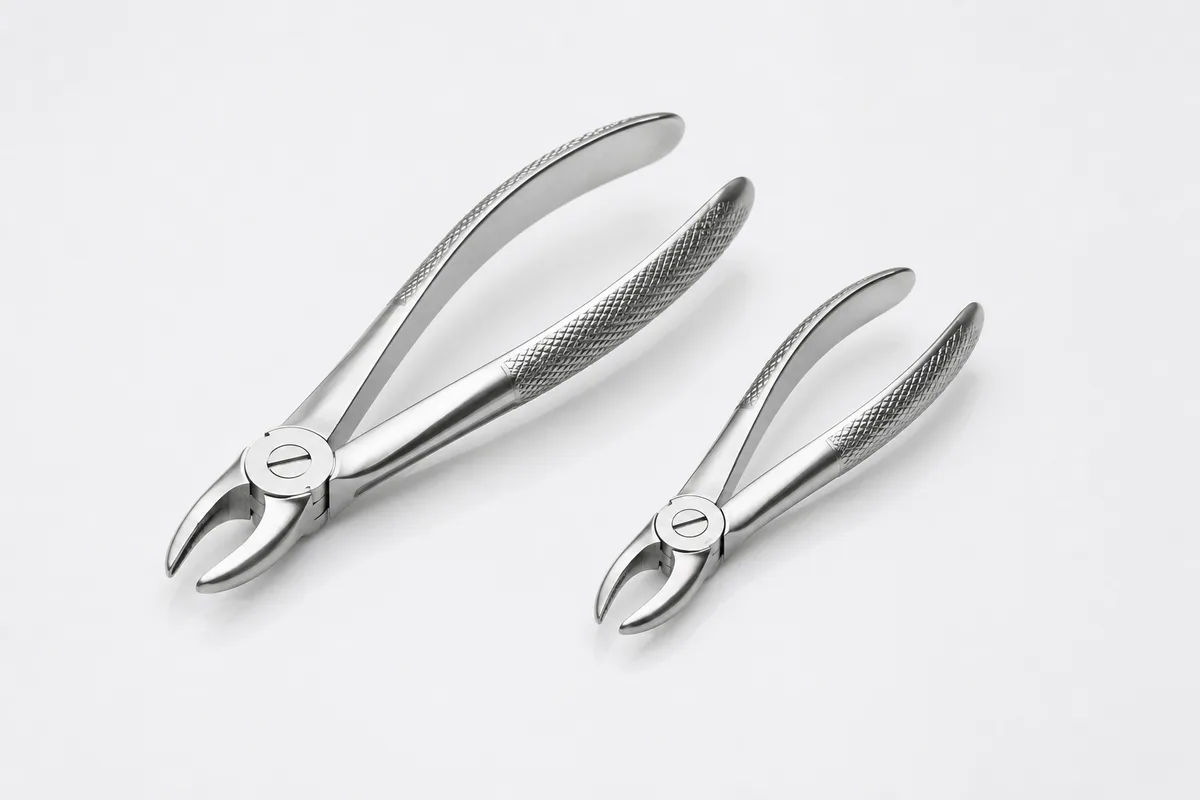
A simple extraction removes a visible tooth with forceps and takes just minutes. A surgical extraction is needed for impacted teeth, broken teeth at the gum line, or complex roots — it requires an incision and sometimes sectioning the tooth. Both are done with local anesthetic, but surgical extractions have slightly longer recovery times.
Your dentist says the tooth has to come out — and now you're wondering what that actually means. Simple or surgical? Will it hurt? How long is recovery? The short answer: both are done with local anesthetic, most patients are surprised by how manageable it is, and Dr. G will walk you through every step before anything happens. Here's a plain-English breakdown so you know exactly what to expect.
When I mention these terms to patients here in Mobile, AL, I often see a flicker of concern — especially with the word "surgical." It sounds intimidating. But the type of extraction we choose is simply about what's safest and most effective for your specific situation.
The type of extraction we use isn't about severity — it's about access. Some teeth come out straightforwardly. Others are broken, impacted, or have roots that curve in ways that make a simple approach risky. In those cases, a small incision gives us the control to remove the tooth more safely than trying to force it out. The goal is always the least trauma to the surrounding tissue.
What is a Simple Tooth Extraction?
A simple extraction is performed on a tooth that is fully visible in the mouth, has a relatively straight root structure, and can be removed in one piece.
When is a Simple Extraction Needed?
- Severe tooth decay where a filling or crown can't save the tooth
- Advanced gum disease causing the tooth to loosen
- Crowded teeth requiring removal for orthodontic treatment
- A broken tooth with enough structure above the gum line to grasp
The Simple Extraction Process
We completely numb the area with local anesthetic. I use an elevator to gently loosen the tooth from the ligaments, then forceps to carefully rock it until it lifts out. The whole process often takes just a few minutes.
What is a Surgical Tooth Extraction?
A surgical extraction is needed when a tooth isn't easily accessible — because it hasn't fully erupted or has broken off at the gum line.
When is a Surgical Extraction Needed?
- Impacted wisdom teeth trapped in the jawbone or under the gums
- Teeth broken at the gum line with not enough structure to grasp
- Teeth with complex, curved, or tangled roots that make simple extraction risky
The Surgical Extraction Process
Still performed in our comfortable Mobile office, still starting with complete anesthesia. The difference is a small incision in the gum tissue to access the tooth. In some cases I may remove a small amount of bone covering the tooth, or section the tooth into smaller pieces — which actually makes removal gentler on surrounding tissue. The area is cleaned and stitches placed to help the gums heal.
For extremely complex cases such as deeply impacted wisdom teeth, I may refer you to a trusted local oral surgeon. My priority is always your safest, best outcome.
Not sure which type you need? Call us — we can usually answer that in one quick conversation.
Recovery: Simple vs. Surgical
Simple extraction recovery typically takes a few days. Surgical extraction recovery may be closer to a week with a bit more swelling and soreness. In either case, following aftercare instructions is the key to a smooth recovery.
For a full day-by-day recovery guide, see what to expect after a tooth extraction. Our tooth extractions page covers the full process, what to expect at your appointment, and how we keep it comfortable from start to finish.
FAQ: Your Extraction Questions Answered
Yes — it's a more complex and time-consuming procedure. We will provide a clear breakdown of all costs before your procedure.
Not usually. Most surgical extractions are performed comfortably with local anesthetic. For patients with significant anxiety, we can discuss sedation options.
Not necessarily. If enough tooth structure remains above the gum line to grasp securely, a simple extraction may still be possible. We'll know after an examination and X-ray.
Wisdom teeth are often impacted, which typically requires surgical extraction. Regular tooth extractions are often simple if the tooth is fully erupted and accessible.

Dr. Joseph Gegzna, DMD is the founder and lead dentist at Rabbit Creek Dental in Mobile, Alabama. He earned his Doctor of Dental Medicine degree from the University of Louisville School of Dentistry and has been a licensed dentist in Alabama since 2014, with more than 12 years of experience in general, restorative, and implant dentistry. After several years practicing as an associate, he founded Rabbit Creek Dental in 2022 to build the kind of patient-first practice he believed in. He has completed advanced implant training through a 92-hour Implant Pathway program with live patient surgery and additional surgical training in impacted third molar extractions through the Koerner Center for Surgical Instruction. He is a member of the American Dental Association and is currently in his third year of the Bulletproof Dental Mastermind program, a continuing education group focused on delivering an exceptional patient experience. Before dentistry, Dr. Gegzna was a licensed pilot, bringing a calm, detail-oriented approach to patient care. Rabbit Creek Dental serves families throughout Mobile.
This article is for educational purposes only and does not constitute medical advice. For personalized guidance about your dental health, please contact our office at (251) 308-0584.