
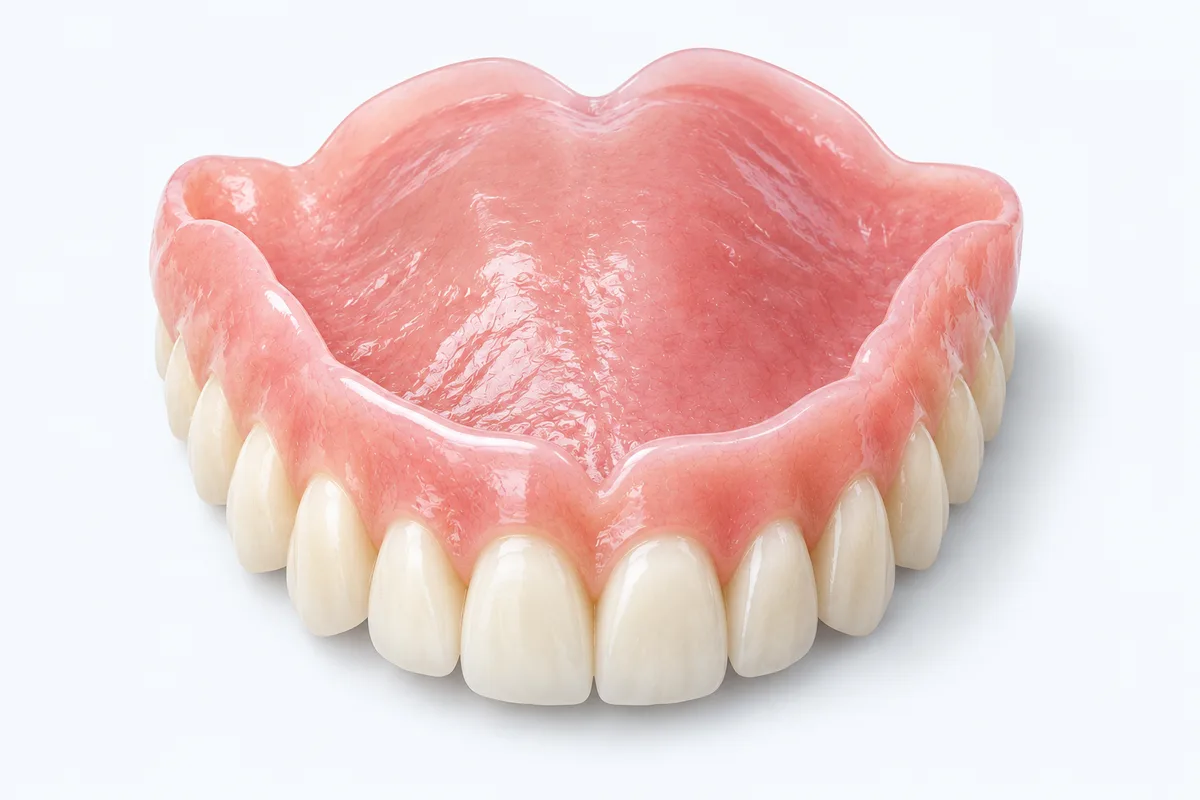
- Wear your denture as much as possible — that's how you break it in
- Soreness that doesn't improve needs an adjustment appointment — it won't fix itself
- Lower dentures almost always need adhesive — that's normal, not a fitting failure
- Never clean dentures with toothpaste or bleach — it damages the material
Congratulations on your new denture! The first few weeks take some patience, but most patients settle in and do very well. Think of it like breaking in a new pair of shoes — a little awkward at first, then it starts to feel like a part of you.
Wear It as Much as You Can
The best thing you can do early on is wear your denture as much as possible. That's how you "break it in" and get comfortable eating and talking. For most people, this takes about 1–2 months. Don't get discouraged if it feels strange at first — that's completely normal.
Your Speech Will Sound Different (At First)
When you get a new denture, your speech may sound a little different to you. That's normal and it gets better with practice. A trick that really helps: talk out loud or sing when you're alone or driving. It's a low-pressure way to train your mouth to speak with the denture.
Expect a Few Adjustments
Just about every new denture needs a few adjustments to get it as comfortable as possible. That's a normal part of the process, not a sign something's wrong. If your denture causes a sore spot or pain, make an appointment so we can adjust it as soon as possible. The soreness won't get better on its own, so please don't wait it out. If your denture gives you a gagging or sick feeling, let us know — that can often be fixed with a quick adjustment too. Even if you've worn a denture before, a new one will feel different from what you're used to. Be patient with yourself while you practice eating and talking.
A Word About Denture Adhesive
If you wear a complete upper or lower denture, plan on using some denture adhesive. We always do our best to get a great fit, and many patients don't need much (especially with upper dentures). But lower dentures are famous for being harder to keep in place, and they usually need adhesive. In fact, the modern standard for lower dentures is to place implants to help hold them. There are a few kinds of adhesive — paste, powder, and strips. We suggest trying paste and powder to see which you like better. Both work well, so it really comes down to your preference. Strips are fine to try, but they tend to cost more and aren't necessary, since they work best for older dentures that don't fit tightly anymore.
Keeping Your Denture Clean
Dentures aren't meant to be worn 24 hours a day. Clean yours at least once a day, and take it out before bed. A few do's and don'ts:
- Do clean it with a soft toothbrush and water. A mild soap is fine too.
- Don't use toothpaste, bleach, or other strong cleaners. They can create tiny pits in the denture that lead to staining, discoloration, and odor.
- Do use a denture soaking tablet if you want a deeper clean or if your denture has picked up an odor.
Frequently Asked Questions
That's normal at first. Your mouth needs time to adjust, and the more you wear it, the quicker it starts to feel natural.
No — please come see us. A sore spot means the denture needs a small adjustment, and it won't improve on its own.
Many upper dentures do fine without much. Lower dentures usually need some help. Try paste and powder and see what feels best for you.
We recommend taking it out at night and cleaning it. Your gums need a rest, and the denture stays in better shape.
Related Reading:
Dr. Joseph Gegzna, DMD is the founder and lead dentist at Rabbit Creek Dental in Mobile, Alabama. He earned his Doctor of Dental Medicine degree from the University of Louisville School of Dentistry and has been a licensed dentist in Alabama since 2014, with more than 12 years of experience in general, restorative, and implant dentistry. After several years practicing as an associate, he founded Rabbit Creek Dental in 2022 to build the kind of patient-first practice he believed in. He has completed advanced implant training through a 92-hour Implant Pathway program with live patient surgery and additional surgical training in impacted third molar extractions through the Koerner Center for Surgical Instruction. He is a member of the American Dental Association and is currently in his third year of the Bulletproof Dental Mastermind program, a continuing education group focused on delivering an exceptional patient experience. Before dentistry, Dr. Gegzna was a licensed pilot, bringing a calm, detail-oriented approach to patient care. Rabbit Creek Dental serves families throughout Mobile.
This article is for educational purposes only and does not constitute medical advice. For personalized guidance about your dental health, please contact our office at (251) 308-0584.