
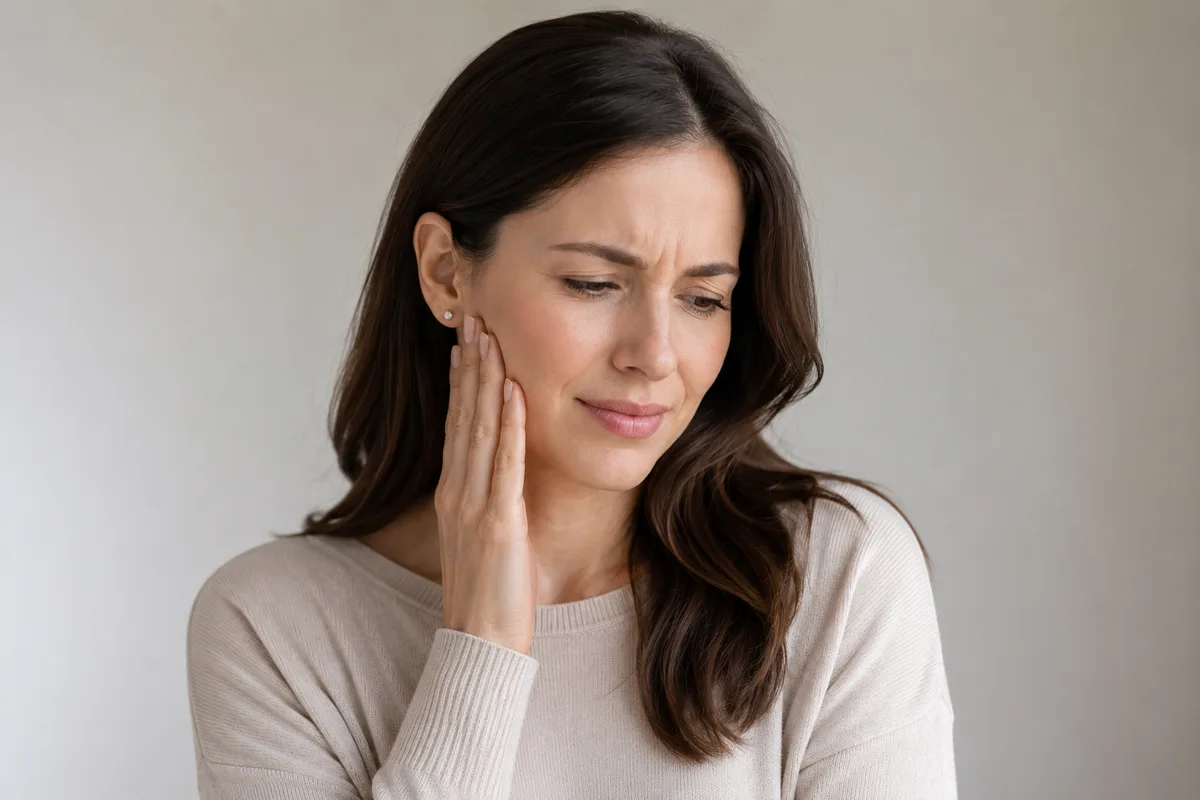
- TMJ disorder affects the jaw joint and muscles, causing pain, clicking, headaches, and difficulty chewing
- We treat most TMJ cases with custom nightguards and bite adjustments
- Complex cases may be referred to a specialist
- If your jaw is hurting, don't ignore it — it rarely resolves on its own
Jaw pain is one of those problems that's easy to dismiss. You figure it'll go away. Maybe you've been stressed lately. Maybe you slept wrong. Sometimes that's true. But if jaw pain is happening regularly — or if you're also dealing with headaches, ear pain, or a jaw that clicks or locks — you may have a TMJ disorder.
TMJ Pain in Mobile, AL: Causes, Symptoms, and Treatment
Here's what a TMJ disorder means and what you can do about it. The good news is that most cases are very manageable, and a routine dental exam is often the first step toward figuring out what's going on.
What Is the TMJ?
TMJ stands for temporomandibular joint — the joint that connects your lower jaw to your skull, just in front of each ear. You have one on each side. This joint is unique. It has to slide and rotate with every bite, every word you speak, every yawn. It's one of the most frequently used joints in your body — and one of the most complex. When something goes wrong with the joint, the surrounding muscles, or the disk inside the joint, you get what's commonly called a TMJ disorder (sometimes written as TMD).
What Causes TMJ Disorders?
There's rarely one single cause. TMJ disorders usually develop from a combination of factors:
Teeth grinding (bruxism). Grinding puts enormous pressure on the jaw joint and muscles. Many people grind at night without knowing it. If you wake up with jaw soreness or your teeth look worn flat, grinding may be involved.
Clenching. Stress-related clenching — often during the day without realizing it — creates similar strain on the joint and surrounding muscles.
Bite problems. A misaligned bite can put uneven stress on one side of the jaw.
Injury. A blow to the jaw or whiplash can damage the joint or disk.
Arthritis. Inflammatory arthritis can affect the TMJ just like any other joint.
Disk displacement. The small disk inside the joint can slip out of position, causing clicking, popping, or locking.
What Are the Symptoms?
TMJ disorders can cause a surprisingly wide range of symptoms: jaw pain or soreness, especially in the morning; clicking, popping, or grinding sounds when you open or close your mouth; difficulty opening your mouth fully; jaw that locks open or closed; headaches, especially in the temples; ear pain or fullness (without an ear infection); facial pain or fatigue; neck and shoulder tension; tooth sensitivity from grinding. Not everyone has all of these. Some people have just the clicking. Some have headaches and jaw pain with no obvious clicking at all.
How Is TMJ Treated?
Most TMJ cases respond well to conservative treatment. Surgery is rarely needed and usually the last resort.
Custom nightguard. This is the most common first-line treatment we use at Rabbit Creek Dental. A nightguard is a custom-fit appliance that fits over your upper or lower teeth while you sleep. It prevents your teeth from grinding against each other and reduces the muscle tension that drives much of the pain. A well-made nightguard fits precisely, stays in place, and is much more effective than over-the-counter options from the drugstore. It also helps protect worn-down teeth, which sometimes need crowns when grinding has damaged them over time.
Bite adjustment. If your bite is contributing to joint strain, minor adjustments can sometimes help redistribute how your teeth come together.
Jaw exercises and stretching. Specific exercises can reduce muscle tension and improve joint mobility. We can show you what to do at home.
Anti-inflammatory medication. Over-the-counter ibuprofen can help manage pain and inflammation during flare-ups.
Heat and cold therapy. Warm compresses relax tight jaw muscles. Ice packs can reduce acute inflammation.
Stress management. If stress is driving clenching and grinding, addressing the source helps. Some patients find significant relief through changes in routine, therapy, or relaxation techniques.
Referral to a specialist. For complex cases — significant disk displacement, joint damage, or cases that don't respond to conservative treatment — we'll refer you to an oral and maxillofacial surgeon or a TMJ specialist. We'd rather get you the right help than push through a case that needs a different level of care.
When Should You Come In?
Come in if jaw pain has been going on for more than a few weeks; you hear clicking or popping regularly when you chew; you're waking up with headaches or jaw soreness; your jaw has ever locked open or shut; jaw pain is affecting your ability to eat or speak comfortably. TMJ disorders don't usually resolve on their own if there's an underlying structural or grinding issue. The sooner we look at it, the more options we have. We serve patients from Mobile, Theodore, Grand Bay, and across the Gulf Coast area.
Frequently Asked Questions
Jaw pain, clicking or popping sounds, difficulty opening your mouth, morning headaches, and ear pain are the most common signs. A dental exam can help confirm whether the jaw joint is involved.
A nightguard won't fix structural problems in the joint, but it can significantly reduce pain and prevent further damage from grinding. For many patients, it's the difference between daily discomfort and manageable symptoms.
It depends on the cause and severity. Many TMJ cases are mild and respond well to conservative treatment. Left untreated, grinding can wear down teeth significantly and cause lasting joint changes.
Sometimes mild cases improve on their own, especially if they're stress-related and the stress resolves. But recurring or worsening TMJ symptoms usually need treatment to improve.

Dr. Joseph Gegzna, DMD is the founder and lead dentist at Rabbit Creek Dental in Mobile, Alabama. He earned his Doctor of Dental Medicine degree from the University of Louisville School of Dentistry and has been a licensed dentist in Alabama since 2014, with more than 12 years of experience in general, restorative, and implant dentistry. After several years practicing as an associate, he founded Rabbit Creek Dental in 2022 to build the kind of patient-first practice he believed in. He has completed advanced implant training through a 92-hour Implant Pathway program with live patient surgery and additional surgical training in impacted third molar extractions through the Koerner Center for Surgical Instruction. He is a member of the American Dental Association and is currently in his third year of the Bulletproof Dental Mastermind program, a continuing education group focused on delivering an exceptional patient experience. Before dentistry, Dr. Gegzna was a licensed pilot, bringing a calm, detail-oriented approach to patient care. Rabbit Creek Dental serves families throughout Mobile.
This article is for educational purposes only and does not constitute medical advice. For personalized guidance about your dental health, please contact our office at (251) 308-0584.