
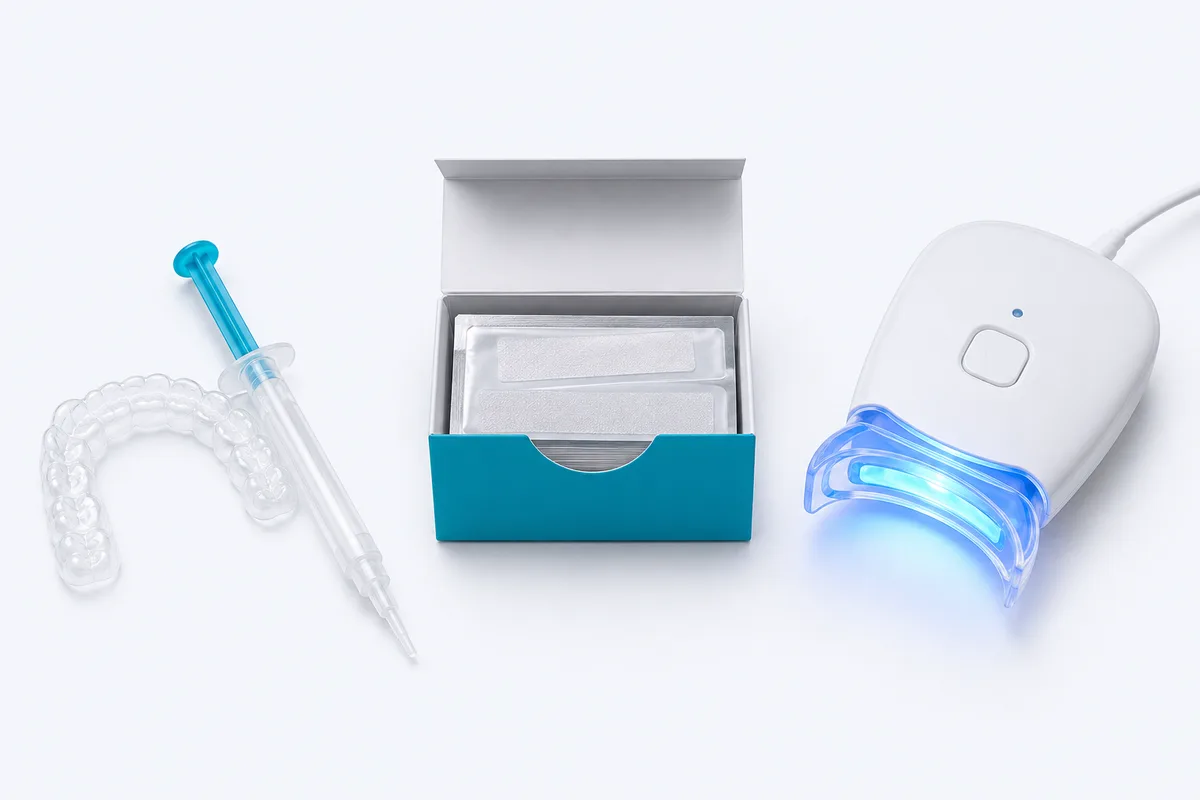
- Custom trays and in-office whitening can lighten teeth 5–7 shades
- Fillings, crowns, and implants don't whiten — bleach before getting dental work done
- Sensitivity is common but manageable with sensitivity toothpaste or prescription fluoride
- Results aren't permanent — avoid coffee, tea, red wine, and tobacco to make them last longer
A brighter smile is one of the easiest ways to feel more confident, and there are plenty of ways to get there. Let's walk through your options so you can pick the one that fits your goals, your timeline, and your budget.
Your Whitening Options
Whitening toothpastes are the gentlest option. They work by polishing away surface stains rather than using strong chemicals, so they don't have many side effects. The trade-off is they don't get teeth as white as chemical products, and they lighten just a little at a time over days, weeks, or months.
Whitening strips are an over-the-counter choice. They have a low concentration of peroxide that whitens the surface of your teeth, but it takes weeks or months to see results.
Custom whitening trays are trays we make just for your upper and lower teeth. You add a stronger whitening gel and wear them for a short time (about 10–15 minutes) during the day. In just two weeks, you may lighten your teeth 5–7 shades. Wearing them too long can cause sensitivity, but using sensitivity toothpaste in the trays after the gel helps. Best of all, you can keep your trays for touch-ups whenever you want.
In-office teeth whitening is the fastest route. Using heat and modern LED light technology, we can lighten your teeth 5–7 shades in about an hour. This method has very little sensitivity and comes with a take-home kit so you can keep whitening for 1–2 weeks, plus touch-ups down the road.
One Important Tip About Timing
Here's something a lot of people don't realize: dental work like fillings and crowns won't whiten. They stay the same color. So if you're planning to have dental work done, it's smart to whiten your natural teeth first. That way, we can match your new fillings or crowns to your brighter smile.
Things to Keep in Mind
Side effects. Whitening can make your teeth sensitive to hot and cold. Sensitivity toothpaste or a prescription fluoride toothpaste helps. It may also irritate your gums for a short time, which usually happens when too much gel spills out of the tray onto the soft tissue.
Whitening isn't for everyone. If you have gum recession, gum disease, exposed roots, or active decay, we'll want to treat those first. And keep in mind that fillings, crowns, implants, and certain kinds of staining (like tetracycline stains or white spots) may not respond to whitening.
Keeping Your Smile Bright
Right after whitening, your teeth are a little more likely to pick up stains. A good rule of thumb: avoid anything that would stain a white t-shirt — tobacco, coffee, soda, tea, red wine, berries, dark fruits, tomatoes, and foods with artificial dyes. Whitening also isn't permanent, so you'll want to touch up now and then with any of the methods above. Just ask us about refills for your trays and take-home kits to keep your smile extra bright.
Frequently Asked Questions
In-office whitening is the quickest — about 5–7 shades in roughly an hour, with very little sensitivity.
No. Dental work doesn't whiten. If you're planning new fillings or crowns, whiten first so we can match them to your brighter teeth.
It can. Sensitivity toothpaste or a prescription fluoride toothpaste usually takes care of it, and our in-office method tends to cause very little.
Whitening isn't permanent, so you'll touch up from time to time. Avoiding staining foods and drinks helps your results last longer.
Dr. Joseph Gegzna, DMD is the founder and lead dentist at Rabbit Creek Dental in Mobile, Alabama. He earned his Doctor of Dental Medicine degree from the University of Louisville School of Dentistry and has been a licensed dentist in Alabama since 2014, with more than 12 years of experience in general, restorative, and implant dentistry. After several years practicing as an associate, he founded Rabbit Creek Dental in 2022 to build the kind of patient-first practice he believed in. He has completed advanced implant training through a 92-hour Implant Pathway program with live patient surgery and additional surgical training in impacted third molar extractions through the Koerner Center for Surgical Instruction. He is a member of the American Dental Association and is currently in his third year of the Bulletproof Dental Mastermind program, a continuing education group focused on delivering an exceptional patient experience. Before dentistry, Dr. Gegzna was a licensed pilot, bringing a calm, detail-oriented approach to patient care. Rabbit Creek Dental serves families throughout Mobile.
This article is for educational purposes only and does not constitute medical advice. For personalized guidance about your dental health, please contact our office at (251) 308-0584.