
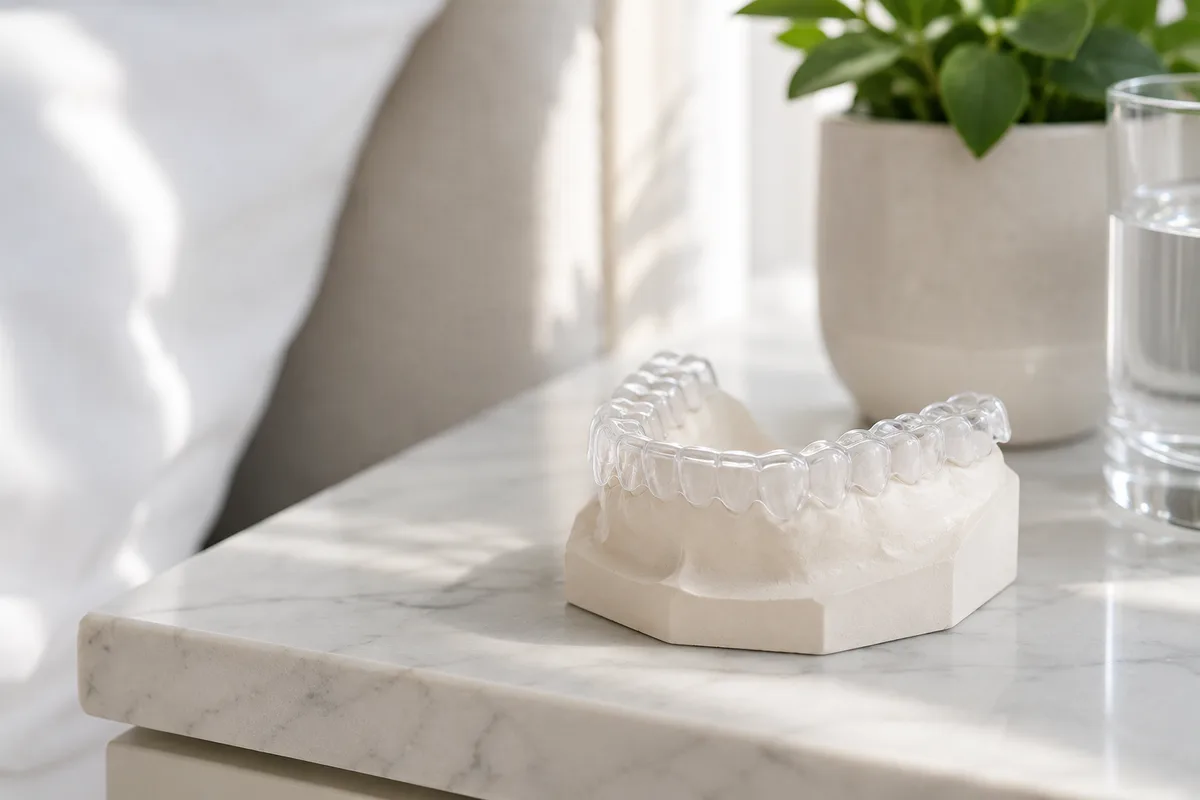
- If you grind or clench — especially at night — a custom nightguard is one of the most effective ways to protect your teeth from long-term damage
- Signs include morning jaw soreness, headaches, worn or flattened teeth, and sensitivity
- A custom nightguard fits precisely and works far better than store-bought options
Do You Need a Nightguard for Teeth Grinding in Mobile, AL?
Teeth grinding — clinically called bruxism — is more common than most people realize. Many patients do it at night without knowing, and only find out when a dentist points out the wear patterns on their teeth or a partner mentions the sound. Left untreated, grinding wears down enamel, cracks teeth, strains the jaw joint, and causes headaches that patients often attribute to stress or poor sleep. Here's how to know if grinding is affecting you — and what a nightguard can do about it.
Signs You Might Be Grinding Your Teeth
- Jaw soreness or stiffness in the morning
- Headaches, especially in the temples, when you wake up
- Teeth that look flat, worn, or shorter than they used to
- Increased tooth sensitivity — especially to temperature
- Chipped or cracked teeth with no obvious cause
- A partner telling you they hear grinding at night
- Clicking or popping in the jaw joint
You don't need all of these. Even two or three are worth mentioning at your next appointment.
What Causes Teeth Grinding?
There's rarely a single cause. Bruxism is usually driven by a combination of:
Stress and anxiety. This is the most common driver. Many people clench and grind during stressful periods — at work, at night, sometimes even during the day without realizing it.
Sleep disorders. Bruxism is strongly associated with sleep apnea and disrupted sleep patterns.
Bite alignment issues. An uneven bite can cause the jaw to seek a more comfortable position during sleep, leading to grinding.
Stimulants. Caffeine and certain medications can increase the likelihood of nighttime grinding.
What Is a Nightguard?
A nightguard (also called an occlusal guard) is a custom-fitted appliance that fits over your upper or lower teeth while you sleep. It creates a barrier between your upper and lower teeth so they can't grind against each other directly. A nightguard won't stop the grinding behavior itself — that's driven by muscle activity and sleep patterns. What it does is absorb the force and protect your teeth from the damage that grinding causes. Think of it like a helmet for your teeth. The grinding may still happen, but the damage doesn't.
Custom vs. Store-Bought Nightguards
Walk into any drugstore and you'll find boil-and-bite nightguards for $20–$30. They seem like an easy solution. But there's a significant difference between those and a custom appliance made from impressions of your teeth.
Store-bought nightguards: one-size-fits-all — often bulky and uncomfortable; don't stay in place well during sleep; can actually worsen jaw positioning for some patients; made from softer materials that wear through quickly with heavy grinding.
Custom nightguards: made from precise impressions of your teeth — fit exactly; stay in place comfortably through the night; made from durable materials appropriate for your grinding severity; properly balanced so they don't shift your bite.
Patients who try store-bought guards and find them uncomfortable or ineffective often give up on the idea entirely. A custom guard is a completely different experience. We can fit you for one at your appointment as part of your routine exam.
How Does a Nightguard Help with TMJ?
Bruxism and TMJ disorders are closely related — grinding puts enormous stress on the jaw joint and surrounding muscles, which is a primary driver of TMJ pain. A nightguard is our first-line treatment for most TMJ cases. By reducing the direct force on the joint during sleep, it often significantly reduces morning jaw pain, headaches, and muscle tension. For patients whose TMJ symptoms don't respond to a nightguard alone, we may refer to an oral and maxillofacial surgeon or TMJ specialist for more advanced evaluation.
Read more about TMJ pain and treatment →
What Does a Nightguard Cost?
At Rabbit Creek Dental, a custom nightguard is $650. RCD Dental Savings Plan members pay approximately $520. If your grinding has already caused tooth damage — chips, cracks, or significant wear — addressing that damage may add to the overall cost of treatment. A nightguard protects against future damage, but existing wear doesn't reverse itself. With PPO insurance, some plans cover a portion of nightguard costs when bruxism is documented. We'll check your benefits. RCD Dental Savings Plan members receive 20% off treatment fees.
Learn more about the RCD Dental Savings Plan →
What Else Can Help?
In addition to a nightguard: Stress management — if stress is driving the grinding, addressing it helps. Reducing caffeine — especially in the afternoon and evening. Jaw exercises — gentle stretching can reduce muscle tension. Sleep evaluation — if sleep apnea may be involved, a sleep study can identify it. We serve patients from Mobile, Theodore, Grand Bay, and the surrounding Gulf Coast area.
Frequently Asked Questions
Common signs include jaw soreness in the morning, headaches, flattened or worn teeth, and increased sensitivity. Your dentist can also see wear patterns on your teeth during a routine exam that indicate grinding.
For most patients who grind significantly, yes. Custom guards fit better, last longer, and are more effective at protecting teeth. Drugstore guards are often uncomfortable, don't fit well, and may be abandoned quickly.
A nightguard reduces the stress on the jaw joint during sleep and often significantly reduces TMJ symptoms. It doesn't fix structural problems in the joint, but for most patients it's an effective first-line treatment.
Most custom nightguards last 3–5 years with proper care. Heavy grinders may wear through them faster. Bring your guard to your regular appointments so we can check for wear and replace it before it loses effectiveness.

Dr. Joseph Gegzna, DMD is the founder and lead dentist at Rabbit Creek Dental in Mobile, Alabama. He earned his Doctor of Dental Medicine degree from the University of Louisville School of Dentistry and has been a licensed dentist in Alabama since 2014, with more than 12 years of experience in general, restorative, and implant dentistry. After several years practicing as an associate, he founded Rabbit Creek Dental in 2022 to build the kind of patient-first practice he believed in. He has completed advanced implant training through a 92-hour Implant Pathway program with live patient surgery and additional surgical training in impacted third molar extractions through the Koerner Center for Surgical Instruction. He is a member of the American Dental Association and is currently in his third year of the Bulletproof Dental Mastermind program, a continuing education group focused on delivering an exceptional patient experience. Before dentistry, Dr. Gegzna was a licensed pilot, bringing a calm, detail-oriented approach to patient care. Rabbit Creek Dental serves families throughout Mobile.
This article is for educational purposes only and does not constitute medical advice. For personalized guidance about your dental health, please contact our office at (251) 308-0584.