

- Most healthy adults with a missing tooth are candidates for dental implants
- Key factors: enough jawbone, healthy gums, and no uncontrolled medical conditions that impair healing
- If you don't currently meet those criteria, there are often steps to get you there
- A consultation is the first step to a clear answer
Dental implants are the closest thing to a natural tooth that modern dentistry offers. But they're not right for everyone — at least not right away. Here's what makes someone a good implant candidate, what can complicate the process, and what options exist if you're not quite there yet.
What Makes a Good Implant Candidate?
Adequate jawbone. The implant fixture is a titanium post that anchors into your jawbone. If there isn't enough bone — in height, width, or density — the implant doesn't have a solid foundation to integrate with. Bone loss happens naturally when a tooth is missing for a long time, which is one reason replacing a tooth sooner rather than later leads to better outcomes.
Healthy gums. Active gum disease is one of the most significant factors affecting implant success. Bacteria from periodontal disease can attack the bone and tissue around an implant just as it does around natural teeth. Before implant placement, gum disease needs to be treated and under control.
Good overall health. Implants require surgery and a healing period of several months. Conditions that affect healing — particularly uncontrolled diabetes — increase the risk of implant failure. Patients with well-controlled diabetes can often still receive implants; uncontrolled diabetes is the concern.
Non-smoker or willing to quit around surgery. Smoking significantly reduces blood flow to healing tissues and is one of the strongest predictors of implant failure. We'll discuss this honestly at your consultation.
Completed growth. Implants aren't placed in patients whose jawbones are still developing. This generally means waiting until the late teens or early 20s.
What Can Complicate Implant Placement?
Some factors don't disqualify you from dental implants — they just mean more planning or preparatory work.
Insufficient bone. If bone loss has occurred, a bone graft may be needed before implant placement. Bone grafting adds time to the process (typically several months for the graft to heal) but makes implant placement possible for patients who wouldn't otherwise qualify. Read more about bone graft aftercare →
Severe periodontal disease. Active gum disease must be treated before implants are placed. This usually means scaling and root planing (deep cleaning) and a period of monitoring to confirm the infection is under control.
Smoking. Heavy smokers have meaningfully higher implant failure rates. We'll have an honest conversation about risk and what stopping or reducing smoking before and after surgery can do for your outcomes.
Certain medications. Some medications — particularly bisphosphonates (used for osteoporosis) and some cancer treatments — can affect bone metabolism and healing. This doesn't automatically disqualify you, but it needs to be discussed.
The combination effect. Insufficient bone, active gum disease, uncontrolled health conditions, and smoking together create compounding risk. Any one factor is manageable. Several together requires careful evaluation and honest conversation about whether implants are the right path.
What If I'm Not Currently a Candidate?
Not being a candidate right now doesn't mean not ever. If you have bone loss, a bone graft may restore enough volume for implant placement. If you have gum disease, treating it successfully may make implants possible. If your diabetes is uncontrolled, working with your physician to improve management may open the door to implants. If you smoke, reducing or stopping around the time of surgery meaningfully improves outcomes. Dr. Gegzna will give you a clear, honest assessment at your consultation — including whether implants are realistic for your situation and what steps, if any, could make them possible.
What's the First Step?
A consultation and imaging. We use cone beam 3D imaging to evaluate your bone volume, bone density, and the anatomy of your jaw in detail before making any recommendations. This gives us — and you — a complete picture before any decisions are made. Keeping up with regular cleanings and monitoring also plays an important role in keeping your gums and bone healthy enough for implant success. We serve patients from Mobile, Theodore, Grand Bay, and across the Gulf Coast.
Frequently Asked Questions
Often yes — with a bone graft first. A graft restores bone volume so the implant has a solid foundation. The process adds several months but makes implants possible for many patients who wouldn't otherwise qualify.
Not until the gum disease is treated and under control. Active infection around an implant significantly increases the risk of failure. We'll treat the gum disease first and monitor your response before proceeding.
Uncontrolled diabetes significantly affects healing and implant success. Well-controlled diabetes is a much smaller concern. Work with your physician on blood sugar management and discuss your specific situation at your consultation.
From consultation to final crown, most single implant cases take 4–9 months. The majority of that time is the healing and integration period after the implant is placed — not active treatment time. See the full implant timeline for a step-by-step breakdown.
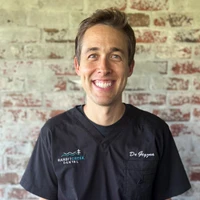
Dr. Joseph Gegzna, DMD is the founder and lead dentist at Rabbit Creek Dental in Mobile, Alabama. He earned his Doctor of Dental Medicine degree from the University of Louisville School of Dentistry and has been a licensed dentist in Alabama since 2014, with more than 12 years of experience in general, restorative, and implant dentistry. After several years practicing as an associate, he founded Rabbit Creek Dental in 2022 to build the kind of patient-first practice he believed in. He has completed advanced implant training through a 92-hour Implant Pathway program with live patient surgery and additional surgical training in impacted third molar extractions through the Koerner Center for Surgical Instruction. He is a member of the American Dental Association and is currently in his third year of the Bulletproof Dental Mastermind program, a continuing education group focused on delivering an exceptional patient experience. Before dentistry, Dr. Gegzna was a licensed pilot, bringing a calm, detail-oriented approach to patient care. Rabbit Creek Dental serves families throughout Mobile.
This article is for educational purposes only and does not constitute medical advice. For personalized guidance about your dental health, please contact our office at (251) 308-0584.