

A dental emergency rarely gives you time to prepare. Knowing what to do in the first few minutes — before you can reach a dentist — can make a meaningful difference in the outcome, especially for situations like a knocked-out tooth where every minute counts.
Knocked-Out Tooth: Act Fast
Pick up the tooth by the crown (the visible top), not the root. Rinse it gently with clean water if it's dirty — do not scrub it, and do not dry it. If possible, carefully reinsert it into the empty socket and bite gently on a cloth to hold it in place. If you cannot reinsert it, keep it moist by storing it in milk or holding it between your cheek and gum. The chance of saving the tooth drops significantly after 60 minutes, so call your dentist immediately and go straight to the office.
Severe Toothache
Rinse your mouth with warm water and gently floss around the tooth to check whether trapped food is causing the pain. Take over-the-counter pain medication as directed on the label. Do not place aspirin directly on the tooth or gum — it can burn soft tissue. Persistent, severe tooth pain often signals an infection or abscess that requires professional treatment. Call your dentist to be evaluated as soon as possible.
Chipped or Broken Tooth
Rinse your mouth with warm water. If there is bleeding, apply gentle pressure with gauze or a clean cloth. Save any broken pieces if you can. Pharmacy dental wax can be used to cover sharp edges and protect your cheek and tongue in the meantime. The urgency depends on how much of the tooth broke and whether the nerve is exposed — call your dentist, describe the situation, and get guidance on how quickly you need to be seen.
Lost Crown or Filling
A lost crown or filling is rarely a true emergency, but leaving the tooth unprotected can cause sensitivity and increase the risk of further damage. Try to keep food out of the area and avoid chewing on that side. Temporary dental cement (sold at pharmacies) can be used to protect the tooth until you can be seen. Call your dentist to schedule a repair promptly — most lost crowns can be recemented at a short appointment.
Dental Abscess
A dental abscess is a bacterial infection at the root of a tooth or in the gum tissue. Signs include severe throbbing toothache, a pimple-like bump on the gum, swelling in the face or jaw, and sometimes fever. Rinsing with warm salt water can ease discomfort temporarily. Call your dentist right away — do not wait on an abscess. If swelling is spreading to your jaw, cheek, or neck, or if you have difficulty swallowing or breathing, seek emergency care immediately.
When to Go to the ER Instead
Some dental situations are medical emergencies that require a hospital emergency room, not a dental office. Go to the ER or call 911 if you have difficulty breathing or swallowing, swelling spreading to your throat or neck, jaw trauma from an accident, uncontrolled bleeding that won't stop, or signs of a spreading infection with high fever. A dental office cannot manage airway emergencies — don't delay.
What Counts as a Dental Emergency?
A dental emergency is any situation involving severe pain, significant swelling, risk of spreading infection, or trauma to the teeth or mouth that cannot safely wait. This includes knocked-out or severely broken teeth, dental abscesses, severe toothaches, injuries to soft tissue, and objects stuck between teeth causing pain or swelling. When you're unsure, call your dentist and describe your symptoms — that's always the right first move.
Ready to schedule your visit?
The Bottom Line
Save your dentist's number in your phone before you ever need it. Learn more about how we handle emergencies on our emergency dentistry page. For dental concerns during office hours, call as early in the day as possible — (251) 308-0584. For situations outside of office hours that truly cannot wait, seek care at an urgent care center or emergency room, and contact us first thing when the office reopens.
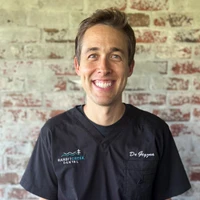
Dr. Joseph Gegzna, DMD is the founder and lead dentist at Rabbit Creek Dental in Mobile, Alabama. He earned his Doctor of Dental Medicine degree from the University of Louisville School of Dentistry and has been a licensed dentist in Alabama since 2014, with more than 12 years of experience in general, restorative, and implant dentistry. After several years practicing as an associate, he founded Rabbit Creek Dental in 2022 to build the kind of patient-first practice he believed in. He has completed advanced implant training through a 92-hour Implant Pathway program with live patient surgery and additional surgical training in impacted third molar extractions through the Koerner Center for Surgical Instruction. He is a member of the American Dental Association and is currently in his third year of the Bulletproof Dental Mastermind program, a continuing education group focused on delivering an exceptional patient experience. Before dentistry, Dr. Gegzna was a licensed pilot, bringing a calm, detail-oriented approach to patient care. Rabbit Creek Dental serves families throughout Mobile.
This article is for educational purposes only and does not constitute medical advice. For personalized guidance about your dental health, please contact our office at (251) 308-0584.
Questions? Call Rabbit Creek Dental at (251) 308-0584 — we're happy to help.
Frequently Asked Questions
Handle it by the crown, not the root, and gently rinse it if dirty. Try to place it back in the socket; if you can’t, keep it in milk or between your cheek and gum and call us immediately. A knocked-out permanent tooth has the best chance of being saved within 30 to 60 minutes.
A toothache with swelling, fever, or pain that keeps you up at night can signal an infection that needs prompt care. Call us right away rather than waiting it out. Over-the-counter pain relief and a cold compress can help until you’re seen.
For most dental problems — broken teeth, lost crowns, abscesses — a dentist is the right call. Go to the ER for uncontrolled bleeding, injury to the jaw, trouble breathing or swallowing, or swelling that spreads toward your eye or throat.
Save the crown if you can, keep the area clean, and avoid chewing on that side. Temporary dental cement from a pharmacy can protect the tooth short-term. Call our office at (251) 308-0584 to get it re-cemented or replaced before the tooth is damaged further.