

- Dental care during pregnancy is not only safe — it's important
- Pregnancy hormones increase gum disease risk, which is linked to preterm birth and low birth weight
- Routine cleanings are safe throughout pregnancy; for procedures needing anesthesia or X-rays, the second trimester is preferred
- Always tell your dentist you're pregnant
Pregnancy brings a lot of questions about what's safe — and dental care is near the top of the list for many expecting mothers. The good news: most dental care is safe during pregnancy, and some of it is more important than ever. Here's what you need to know.
Why Pregnancy Affects Your Oral Health
Hormonal changes during pregnancy — particularly increased estrogen and progesterone — affect how your gum tissue responds to plaque. Even with the same oral hygiene routine, pregnant patients are more susceptible to:
Pregnancy gingivitis. Gum inflammation that affects up to 70% of pregnant women. Signs include red, swollen gums that bleed easily. It usually appears in the second trimester and improves after delivery.
Pregnancy tumors (pyogenic granulomas). Noncancerous growths on the gum tissue that can develop during pregnancy. They're not dangerous but can be uncomfortable. Most resolve after delivery.
Morning sickness and enamel erosion. Frequent vomiting exposes teeth to stomach acid, which erodes enamel over time. Rinsing with water or a baking soda solution (not brushing immediately) after vomiting helps protect enamel.
Increased cavity risk. Changes in diet, more frequent snacking, and morning sickness can all contribute to higher cavity risk during pregnancy.
Why Dental Visits Are Important During Pregnancy
Untreated gum disease during pregnancy has been associated with: preterm birth; low birth weight; preeclampsia. This doesn't mean gum disease causes these outcomes in every case — but the association is well-documented enough that maintaining oral health during pregnancy is genuinely important, not just for your teeth. A cleaning during pregnancy removes the plaque and tartar that drive gum disease. Don't skip your cleaning because you're pregnant — if anything, it's more important.
What's Safe During Pregnancy
Routine cleanings and exams: Routine cleanings are safe throughout all three trimesters. The second trimester is generally the most comfortable for longer appointments.
X-rays: Safe when necessary, with proper shielding. At Rabbit Creek Dental, we use digital X-rays (lower radiation than traditional X-rays) and provide additional lead shielding for pregnant patients. Routine X-rays are generally deferred during pregnancy unless needed for diagnosis, but necessary X-rays should not be avoided out of fear — the radiation exposure from modern dental X-rays is extremely low.
Local anesthesia: Safe. Lidocaine (the most commonly used local anesthetic in dental settings) is considered safe during pregnancy. We coordinate with your OB-GYN when needed to confirm the right choice of anesthetic and dose for your specific situation.
Fillings and other necessary treatment: Treating active decay during pregnancy is recommended — untreated infections can pose more risk to the pregnancy than treatment. Our fillings and other necessary treatment can be done safely, and the second trimester is the preferred window for elective procedures.
What to Avoid During Pregnancy
Teeth whitening: Not recommended. Insufficient safety data for peroxide during pregnancy — conservative approach is to wait until after delivery and nursing.
Elective cosmetic procedures: Best deferred until after delivery.
Nitrous oxide: Generally avoided during pregnancy, particularly in the first trimester.
How to Tell Us You're Pregnant
Always let our team know at check-in. Tell us: how far along you are; your OB-GYN's name and contact information; any medications you're taking; any complications or high-risk factors. We coordinate with your OB-GYN on medication and anesthetic choices when needed. Your prenatal provider's guidance takes priority, and we work as a team to make sure care is appropriate for your specific situation.
Tips for Oral Health During Pregnancy
- Keep up with brushing twice a day and flossing daily — even if your gums are more sensitive
- Rinse with water after vomiting rather than brushing immediately
- Choose water over sugary drinks and limit sugary snacks
- Take prenatal vitamins — calcium and vitamin D support both your bone health and your baby's developing teeth
- Schedule a cleaning early in pregnancy and again in the third trimester if your hygienist recommends it
We serve patients from Mobile, Theodore, Grand Bay, and the surrounding Gulf Coast area.
Frequently Asked Questions
Yes — routine dental care is safe and recommended during pregnancy. Untreated gum disease and tooth infections can pose more risk to pregnancy than dental treatment.
The second trimester (weeks 14–28) is generally the preferred window for elective procedures. Emergency care should not be delayed regardless of trimester.
Modern dental X-rays involve very low radiation. With proper shielding — which we provide — the risk is negligible. Routine X-rays are generally deferred during pregnancy, but necessary X-rays for diagnosis should not be avoided.
After vomiting, rinse with water or a baking soda solution to neutralize acid. Wait at least 30 minutes before brushing — acid-softened enamel is more susceptible to abrasion from brushing immediately after.
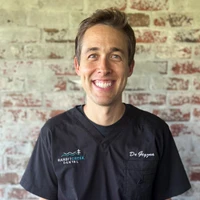
Dr. Joseph Gegzna, DMD is the founder and lead dentist at Rabbit Creek Dental in Mobile, Alabama. He earned his Doctor of Dental Medicine degree from the University of Louisville School of Dentistry and has been a licensed dentist in Alabama since 2014, with more than 12 years of experience in general, restorative, and implant dentistry. After several years practicing as an associate, he founded Rabbit Creek Dental in 2022 to build the kind of patient-first practice he believed in. He has completed advanced implant training through a 92-hour Implant Pathway program with live patient surgery and additional surgical training in impacted third molar extractions through the Koerner Center for Surgical Instruction. He is a member of the American Dental Association and is currently in his third year of the Bulletproof Dental Mastermind program, a continuing education group focused on delivering an exceptional patient experience. Before dentistry, Dr. Gegzna was a licensed pilot, bringing a calm, detail-oriented approach to patient care. Rabbit Creek Dental serves families throughout Mobile.
This article is for educational purposes only and does not constitute medical advice. Always consult your OB-GYN and dental provider for guidance specific to your pregnancy. For personalized guidance, please contact our office at (251) 308-0584.