
General Dentistry in Mobile, AL

Most dental problems are easier — and less expensive — to fix when we catch them early.

Most Problems Start Small

General dentistry is what keeps everything else from becoming a bigger deal. A small cavity caught at a routine exam is a thirty-minute appointment. The same cavity ignored for two years might be a root canal and a crown. We're not saying that to scare you — we're saying it because it's true and most people don't realize it until it happens to them.

At Rabbit Creek Dental, a general dentistry visit means an actual exam — not a rushed cleaning with someone you've never met before. We take X-rays, measure your gum pockets, look at your bite, check for early signs of wear or decay, and take photos of anything worth showing you. Then we talk through what we found before recommending anything.

Whether you haven't been in years, just moved to Mobile, or are trying to get ahead of something you've been ignoring — this is a good place to start. We'll figure out where things stand and what actually needs to happen next.

★★★★★

“My entire family comes here. Highly recommend!”

“I cannot say enough good things about Rabbit Creek Dental! Dr. G is exceptional. Hygienists are wonderful. Office is immaculate. No wait times. Billing is always clear and honest. My entire family comes here. Highly recommend!”
— Solomon F.
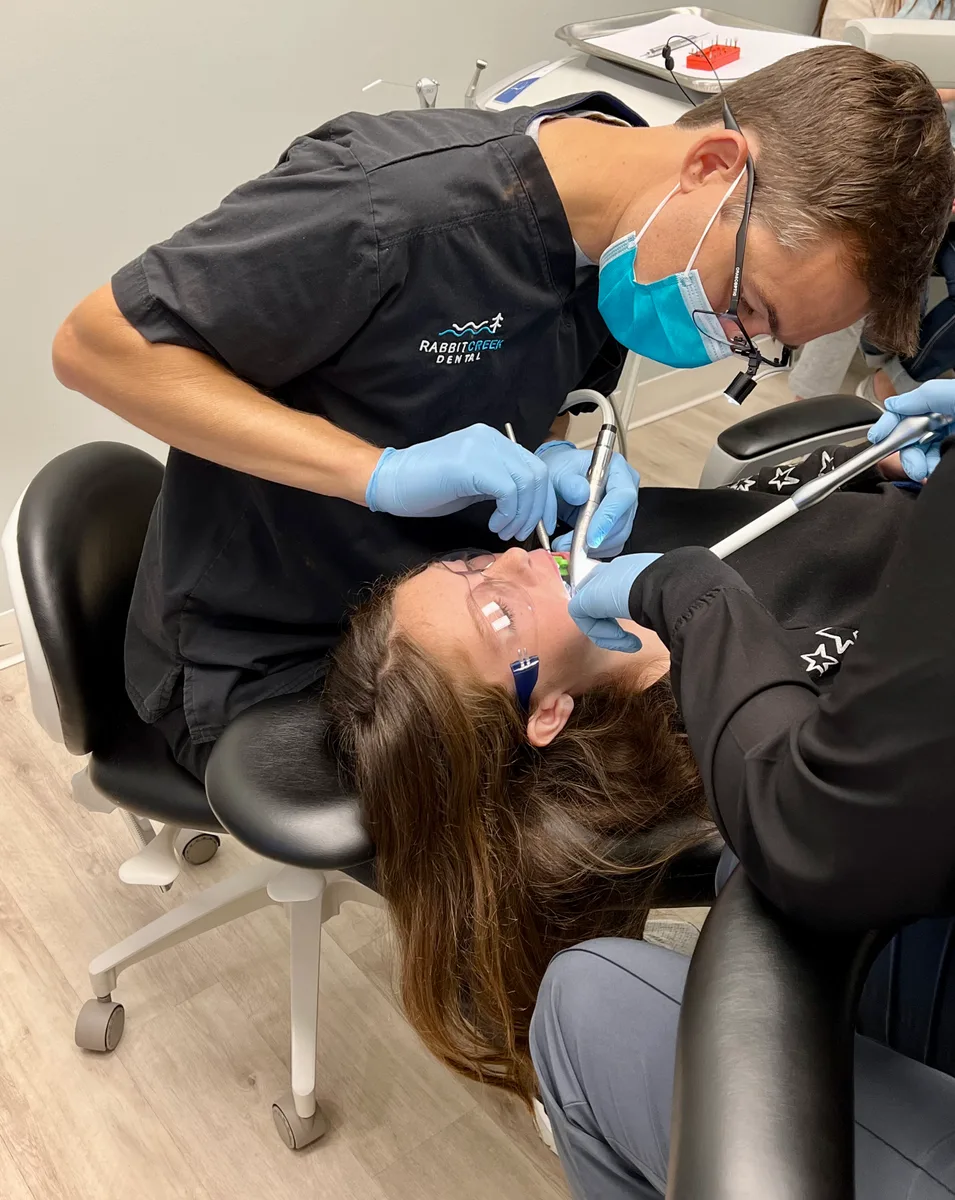
Dr. Gegzna treating a patient at Rabbit Creek Dental in Mobile Alabama
Preventive

Dental Cleanings & Exams

A professional cleaning removes plaque and tartar that brushing and flossing can't reach, reducing your risk of cavities and gum disease. A comprehensive exam includes a full evaluation of your teeth, gums, bite, and oral tissues — including screening for oral cancer.

Most patients benefit from a cleaning and exam every six months.

Learn more →

Restorative

Tooth-Colored Fillings

When a tooth develops a cavity, we remove the decay and restore it with a tooth-colored composite resin filling. These modern fillings are durable, blend naturally with your smile, and require less removal of healthy tooth structure than older amalgam fillings.

Learn more →

Restorative

Dental Crowns

A crown is a custom-made cap that covers a damaged, cracked, or heavily restored tooth — protecting it and restoring normal function and appearance. We use digital impressions for precise, comfortable fittings with no messy putty.

Learn more →

Restorative

Dental Bridges

A bridge uses crowns on the teeth neighboring a gap to support one or more artificial teeth in between — restoring your bite and preventing surrounding teeth from shifting. A good option when implants aren't the right fit.

Learn more →

Restorative

Root Canal Therapy

Root canals have an undeserved reputation. The procedure relieves the pain of an infected or abscessed tooth — it doesn't cause it. Modern techniques and anesthesia make root canal therapy comfortable, and saving a natural tooth is almost always preferable to extraction.

Learn more →

Oral Surgery

Extractions & Wisdom Teeth

When a tooth cannot be saved, or when wisdom teeth are causing crowding or infection, extraction may be the best option. We perform both simple and surgical extractions and will walk you through aftercare to ensure comfortable healing.

Learn more →

Urgent Care

Emergency Dentistry

Dental emergencies don't wait for a convenient time. If you're in pain, have a broken tooth, or notice sudden swelling, call us as early as possible during office hours — we'll work to see you as soon as we can.

We treat: Severe toothaches • Broken or chipped teeth • Lost fillings or crowns • Dental abscess • Trauma to teeth or gums

Call (251) 308-0584 Now

Call us to ask about pricing and our RCD Dental Savings Plan for uninsured patients.

Family Care

Children's Dentistry

Children benefit from gentle, positive dental experiences from an early age. Our team is experienced with young patients and knows how to make kids feel safe, comfortable, and even excited about their dental visits. While Dr. Gegzna and Dr. Shipp are general dentists, they warmly welcome patients of all ages — from first teeth to grandparent smiles.

We recommend a first dental visit by age one or within six months of the first tooth erupting.

Learn more →

Gum Health

Periodontal (Gum Disease) Treatment

Gum disease is one of the most common dental conditions — and one of the most underdiagnosed. Left untreated, it can lead to tooth loss and has been linked to systemic health conditions including heart disease and diabetes.

Treatment includes deep cleanings (scaling and root planing), maintenance therapy, and referrals to a periodontist when needed.

Learn more →

★★★★★

“Dr. Gegzna and Dr. Shipp are both outstanding.”

“Everything about this office is excellent. Modern clean facility, incredibly friendly staff, no wait times, thorough and gentle cleanings, skilled dentists. Dr. Gegzna and Dr. Shipp are both outstanding. Highly recommend!”
— Teresa M.
★★★★★

“Went in with a broken tooth. They fixed it and did not try to upsell other services.”

“My first experience with Rabbit Creek Dental was top notch. I went in with a broken tooth, they fixed it with a crown and did not try to upsell other services to me. I consider them my new dentist now.”
— Scott E.
FAQ

General Dentistry FAQs

Most patients benefit from a cleaning and exam every six months. However, some patients — particularly those with gum disease or a higher risk of cavities — may need more frequent visits. We'll recommend a schedule based on your individual needs.

Yes. We use digital X-rays, which emit up to 90% less radiation than traditional film X-rays. The exposure is minimal — comparable to a short airplane flight. X-rays are essential for detecting problems that aren't visible during a visual exam.

Frequency depends on your individual risk level. Patients with a history of cavities, gum disease, or complex dental work may need X-rays more frequently. Patients with consistently healthy exams may need them less often. We follow evidence-based guidelines and won't take X-rays on a fixed schedule just to take them — but skipping them entirely means relying on visual examination alone, which misses decay between teeth and below the gumline entirely.

Yes, we love treating children of all ages. We recommend a first dental visit by age one or within six months of the first tooth appearing. Our team is experienced with young patients and focused on building positive dental experiences from the start.

Call us at (251) 308-0584 as early as possible during office hours (Monday–Thursday). We will do our best to see you promptly. If you're experiencing a life-threatening emergency — difficulty breathing, severe swelling affecting your airway — go to your nearest emergency room or call 911.

You won't know until we measure your gum pockets at your exam. We use a small probe to measure the space between your teeth and gums — healthy pockets are 1–3mm. Deeper pockets with bleeding and buildup below the gumline indicate gum disease, which requires a deep cleaning to treat properly. We'll tell you exactly what we find and why we're recommending what we recommend.

A routine cleaning — called a prophylaxis — removes plaque and tartar from above and just below the gumline. It's for patients with healthy gums. A deep cleaning (scaling and root planing) goes further, removing buildup from root surfaces below the gumline. It's recommended when gum disease has progressed beyond early inflammation. We measure your gum pocket depths at every exam to determine which is appropriate.

We'll show you what we found — including photos from our intraoral camera — and explain the recommended treatment, the cost, and your options. Nothing gets scheduled without your understanding and approval first. If it's early decay, we may monitor it. If it needs a filling, we'll get you scheduled at a separate appointment.

Often you don't — at least not early on. Most cavities cause no symptoms until they've grown significantly. That's the main reason regular X-rays matter. By the time a cavity is causing pain or sensitivity, it's usually become a larger problem than it would have been if caught at a routine exam.

Every exam at our office includes a visual and physical screening for signs of oral cancer — checking the lips, tongue, cheeks, floor of the mouth, and throat. It takes about two minutes and requires no special preparation. Early detection dramatically improves outcomes. Tobacco and alcohol use increase risk, but oral cancer also occurs in patients with no traditional risk factors.

Tartar builds up in areas brushing can't reach, gum inflammation can progress to bone loss, and small cavities grow into larger ones. The longer the gap, the more likely the first appointment back involves more than a routine cleaning. That said — coming in after a long break is always better than continuing to wait. We'll assess where things stand without judgment and build a plan from there.

Brief sensitivity to cold that resolves quickly is usually not serious — it can come from a small cavity, a micro-crack, gum recession, or worn enamel. Sensitivity that lingers for 30 seconds or more after the cold source is removed is more significant and often indicates nerve involvement. If you're noticing sensitivity, mention it at your next visit — we can often identify the cause without additional treatment.

A soft-bristled brush — manual or electric — is appropriate for most patients. Medium and hard bristles cause more abrasion than most people realize. For toothpaste, fluoride is the clinically important ingredient — whitening additives, charcoal, and other marketing features matter far less than consistent twice-daily brushing with a fluoride paste. Electric toothbrushes outperform manual for most patients in clinical studies, but a manual brush used correctly is far better than an electric brush used poorly.

General dentists provide comprehensive care covering prevention, diagnosis, and most restorative and cosmetic treatment. Specialists — endodontists, periodontists, oral surgeons, orthodontists — focus on specific areas. Many general dentists, including ours, handle procedures that some offices refer out: dental implants, extractions, root canals, and clear aligners. When a case is beyond the scope of what we do well here, we'll tell you and refer you to the right person.

Schedule Your Appointment Today

Whether you're new to Mobile, coming back after a gap, or just looking for a practice that takes the time to explain things — we're accepting new patients and would be glad to see you.